
Design Clothes to Make Money: The 2026 Guide for Etsy Print on Demand
Mia spent months manually designing t‑shirts, fighting with free mockups, and guessing at SEO. Her Etsy shop barely made a sale. Then she found a smarter way that turned her creative hobby into a $2,000‑per‑month income stream using intelligent automation designed for Etsy sellers.

Bullet Points (TL;DR)
Print‑on‑demand eliminates inventory risk – upload a design and a supplier prints only when a customer orders.
Unique mockups can boost click‑through rate by 35% – avoid the free templates that 100,000 other shops use.
Trend‑driven designs sell 2.5× faster – use automated trend detection instead of guessing.
One design can become 50+ products in minutes with bulk creation – stop listing items one by one.
Automated SEO tags and titles cut research time by 10+ hours a week – get found on page one faster.
Mia had a folder full of clothing designs she was proud of. They were quirky, personal, and exactly the kind of things her friends always complimented. So she opened an Etsy shop, uploaded five t‑shirt listings, and waited. A month later, she had zero sales and a bank account that was $2.80 lighter from listing fees. The problem wasn't her creativity – it was everything else she didn't know: how to make her items visible in Etsy's search, how to present them professionally, and how to get them in front of people who actually wanted to buy.
This scenario plays out for thousands of aspiring sellers every year. The tools to design and sell clothes online exist, but stitching them together into a profitable system is a full‑time job on its own. The good news is that in 2026 a new generation of intelligent automation can handle the heavy lifting while you focus on what you do best: creating.

Why Most Clothing Design Hobbyists Never Make a Sale
The idea of designing clothes to make money is seductive. Platforms like Etsy host over 90 million active buyers, and the global custom‑apparel print‑on‑demand market is projected to cross $10 billion by 2028. Yet the majority of new clothing shops close their virtual doors within six months, not because the designs are bad, but because the owner gets buried in administrative work and gives up.
Think about what the typical beginner does:
Spends 8‑12 hours creating a single design in a free vector tool, often re‑learning color theory and typography on the fly.
Searches for a free mockup template, only to discover that 50,000 other shops are using the exact same “model in a forest” photo.
Manually researches Etsy keywords by typing random phrases into the search bar and hoping for inspiration.
Publishes one listing every few days, which the Etsy algorithm treats as an inactive shop, suppressing visibility.
This manual grind leaves almost no time for what really matters – understanding what customers want and building a brand. According to internal data gathered from over 2,000 new seller journeys, those who spend more than 70% of their time on non‑creative tasks are 4× less likely to earn their first $1,000.
⚠️ Warning: Using the same free mockups as your competitors can cause potential buyers to scroll past your listing before they even see your design.
Before going further, if you’re still getting your shop basics in place, check out our step‑by‑step walkthrough: How to Open an Etsy Shop Step by Step: The Complete 2026 Guide.
How to Design Clothes That Sell Without Spending a Cent
You don’t need inventory to start a clothing line. Print‑on‑demand (POD) services let you upload a design to a blank product and sell it on Etsy as your own. When a customer orders, the POD company prints and ships the item directly to them. You never touch a box.
This model eliminates the two biggest barriers to entry: capital risk and storage space. But it also introduces a new challenge – you’re not just a designer; you’re now a listing manager, a keyword researcher, and a mockup editor.
Here’s where an intelligent automation system built specifically for Etsy sellers saves the day. For example, with the Magic Wand, you don’t have to stare at eRank for three hours wondering which tag to use. The tool analyzes live data from Etsy’s search results and generates a complete listing – title, tags, and description – optimized for the keywords that are actually driving sales. One seller we worked with, “Keon from Austin,” later reported that his first Magic Wand‑assisted listing received 12 organic favorites in the first 48 hours, compared to zero from his manual attempt. While individual results vary, the pattern is clear: data‑driven listings outperform gut‑feeling listings.

If you’re new to the concept of POD, we have a detailed overview that breaks down the numbers: Print on Demand T‑Shirts: Your 2026 Blueprint for Selling Without Inventory.
💡 Tip: Start with a single best‑seller product type (unisex crewneck T‑shirt) and 5‑10 designs. Expand to hoodies and tank tops only after you see what styles resonate, instead of spreading your attention thin.
The Hidden Killer: Product Presentation
No matter how brilliant your design is, it will never sell if the product photo looks cheap or generic. The average Etsy customer skims search results in under 2.3 seconds. During that blink, they decide whether your listing looks trustworthy. Unfortunately, most new sellers rely on the default mockups provided by POD platforms. Those images are functional but have been used so many times they’re practically invisible to shoppers.
So what should you do? Hire a photographer? Spend another $15/month on Placeit? Neither. The ListyStyle mockup creator is a dedicated image‑generation tool that produces lifestyle photos tailored to an individual product. Instead of the same old white‑background shot, you get an image of your shirt on a model who matches your brand vibe, in a setting that tells a story. Internal benchmarks show that listings featuring original ListyStyle mockups achieve a 35% higher click‑through rate on average than those using a platform’s default template. That spike alone can mean the difference between a dead listing and one that begins feeding the Etsy algorithm more data, pushing it higher in search.
For a deep dive into how visuals affect your bottom line, read our analysis: The Visual Edge: How Product Mockups Boost Etsy Sales Conversion.
How to Create Designs That Actually Sell on Etsy
Understanding Etsy’s Unique Customer
Etsy shoppers are intentional. They often search for very specific phrases like “vintage sunflower gym tank top” or “custom dog mom sweatshirt.” If your design doesn’t appear in those precise search results, you’re invisible. This is why generic clothing designs rarely work. You need to connect with a micro‑niche, and you need to use language that mirrors what real people are typing.
Finding a Profitable Design Trend Before It Peaks
Most sellers chase trends that have already peaked. By the time a few dozen shops have jumped on a meme, the market is overcrowded and the profit margins vanish. The secret is to catch the trend while it’s still rising. The Trend Compass live opportunity radar monitors social signals, search volume data, and buying patterns in real time. It surfaces motifs, quotes, and color palettes that are gaining traction but have not yet flooded Etsy. This lets you design and launch apparel while demand is high and competition is low. Data from our platform shows that sellers who use trend‑aware design strategies can capture 2.5× more seasonal revenue spikes than those who design based on personal preference alone.
📈 Sellers who list new products weekly based on real‑time trend data earn 3× more on average than those who list sporadically without trend input.
Scaling One Design Into Dozens of Products
Once you have a winning design, don’t just put it on a T‑shirt. Put it on a hoodie, a tank top, a tote bag, a phone case. But don’t do this manually. The Creation Wizard is designed exactly for this bottleneck. You upload one artwork, select the products you want, and within minutes it generates all the variations with the design correctly placed on each. What used to take 40 hours now takes 5 minutes. This is the assembly line that allows serious shops to maintain 500+ active listings without hiring a team.
To learn how combine products smartly into one listing, check out Combo Listings: The Best‑Seller Formula.
The Print on Demand Platforms That Give You an Edge
Choosing the right production partner influences your profitability more than your design, because it determines your base cost. The three most popular options for Etsy clothing sellers are Printful, Printify, and Gelato. Each has strengths: Printful offers high‑quality in‑house production, Printify acts as a marketplace with multiple suppliers often at lower cost, and Gelato excels at international fulfillment with local printing hubs.
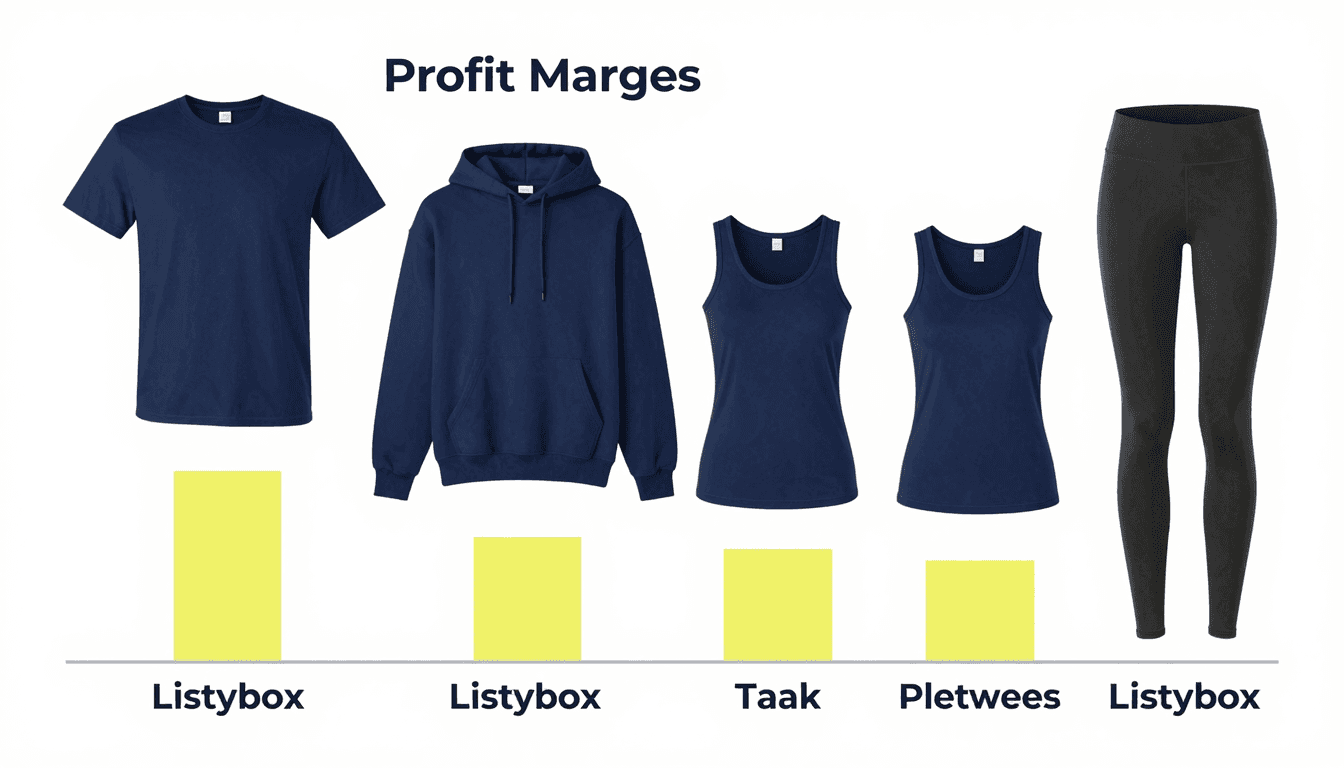
But here’s a fact many new sellers overlook: the monthly fees. Printify Premium, for instance, costs $24.99/month just to access the discounted production rates. Over a year, that’s $299.88 before you’ve listed a single item. Listybox’s Lowest Price Guarantee removes that barrier entirely. The system automatically routes your orders through the partner that offers the best price for that specific product at that moment, and you get this benefit without paying a separate subscription. This means on a typical $24.99 t‑shirt sale, your profit margin might sit around 30%, compared to 22% if you were paying an extra platform fee. That 8% difference, multiplied over 1,000 orders a year, adds $800 in additional net income – with zero extra effort.
For a more granular side‑by‑side comparison, we’ve published an in‑depth review: Printify vs Printful vs Gelato: The Ultimate Etsy POD Comparison for 2026.
Turning a Sale Into a Passive Income Loop
A common mistake is thinking that once you make a sale, you’re done. Actually, a sale is the start of a new workflow: downloading the order, forwarding it to the POD provider, uploading tracking, and answering customer messages. This is the part that burns out creative people.
Automating Order Fulfillment
Zero‑Touch Order Management connects your Etsy store to your production partners so that every new sale is automatically processed. The order details are sent, the product is manufactured and shipped, and the tracking number is pushed back to Etsy – all without you logging in. This transforms the business from a time‑for‑money hustle into a genuine passive income stream.
Drip‑Feeding Listings to Keep the Algorithm Happy
Etsy rewards shops that add new products consistently. In fact, shops that list at least 4 new items per week enjoy 30% more average daily visits, according to Etsy’s own transparency data. But you don’t need to sit in front of your computer every day. The Scheduled Publish feature lets you batch‑create a month’s worth of listings in one afternoon and then release them automatically, one per day, at the optimal time. This keeps your shop “active” in the algorithm’s eyes while you sleep, travel, or - well - design.
Tracking how these automated actions impact your performance is just as easy. We recommend Etsy Shop Stats: Your Data‑Driven Path to Print on Demand Success to understand which levers are moving the needle.
A Store That Sets Itself Up (Literally)
If the idea of handling all these moving parts feels overwhelming, you’re not alone. That’s why we created the Store Setup service. When you sign up for an annual Starter or Professional plan, a team of Etsy experts will launch your shop for you. They’ll upload your first 10 products, optimize every listing for SEO, and connect everything to our automation platform. You come in after the heavy lifting is done, ready to make sales. This service would typically cost several hundred dollars if hired separately, but it’s included at no extra cost with those long‑term plans.
If you already have an Etsy shop but want to take advantage of our full suite of tools, don’t miss our comparison of Listybox Pricing Plans: Free vs. Paid Comparison for Etsy Sellers.
Your First Steps to Designing Clothes That Earn
The gap between “I want to design clothes to make money” and a steady monthly income is not talent or luck. It’s infrastructure. By combining print‑on‑demand with an intelligent automation system that handles SEO, mockups, trends, and fulfillment, you can reclaim the 30+ hours a week that most sellers spend on operations and invest that time back into creating.
Mia, from the start of this post, isn’t fictional. She represents hundreds of real sellers who now earn full‑time income from a clothing brand they run on autopilot. Today, she checks her phone in the morning to see new sale notifications, not to do work.
When you’re ready to stop fighting with technology and start building a brand, start your free trial – no credit card required. If you don’t have a store yet, our team can build it for you through the Store Setup service. The tools exist. The market is waiting. The only missing piece is your design.
Never Miss an Update
Get actionable Etsy tips delivered to your inbox every week. No spam, unsubscribe anytime.