


Key takeaways
Optimize your product photos with at least 5-7 high-quality images, including lifestyle and detail shots.
Write clear, keyword-rich titles that match buyer search intent and include top attributes.
Offer free shipping or competitive rates to reduce cart abandonment and boost conversion.
Use Etsy Ads strategically to drive targeted traffic and test listing performance.
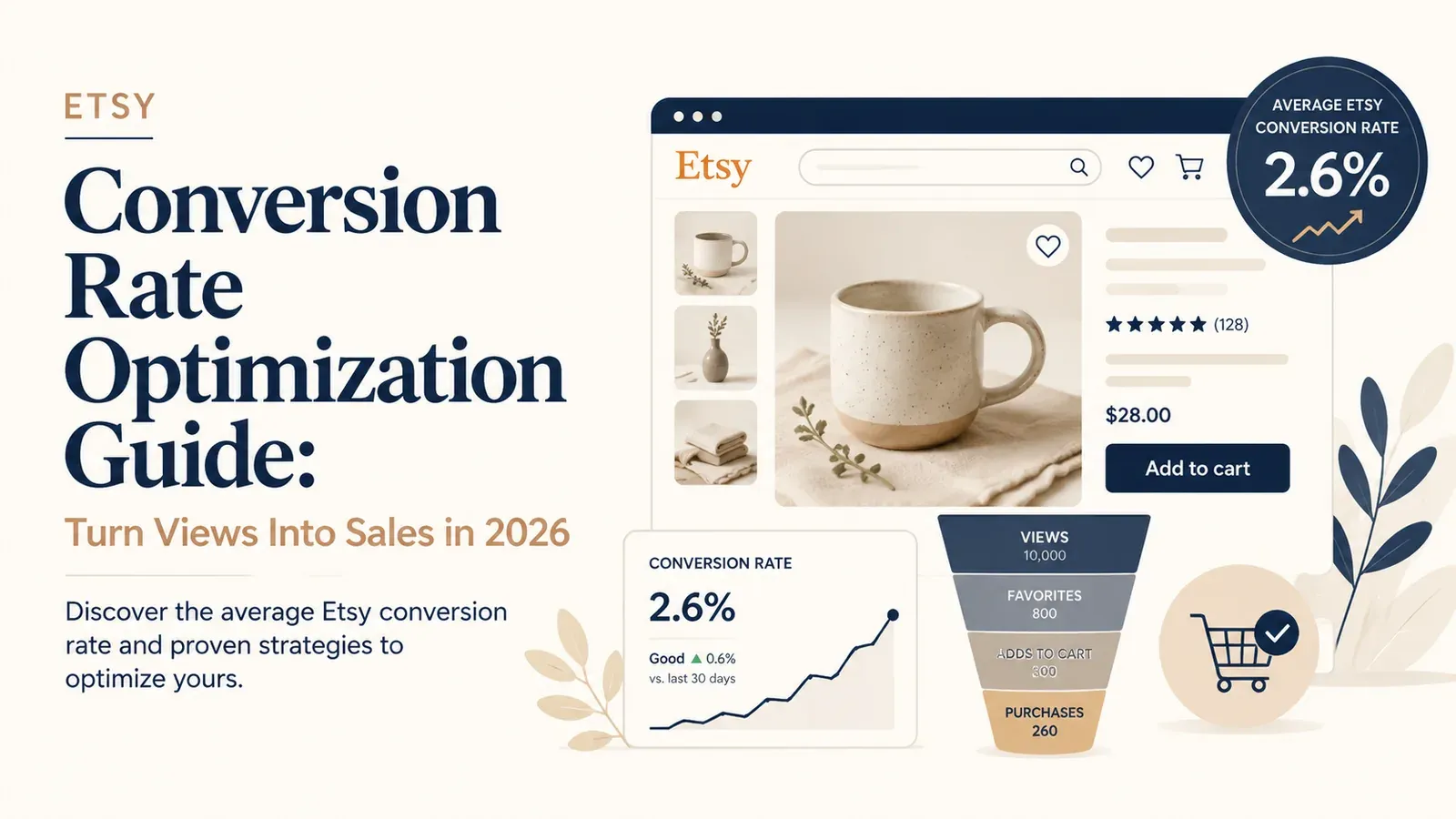
Monitor your shop stats regularly and aim for a conversion rate of 2-3% as a healthy baseline.
Getting traffic to your Etsy shop feels like a massive victory. You spend hours researching keywords, running ads, and promoting your items on social media. The views start rolling in, and the visitor count on your dashboard climbs. But then, silence. The notifications for passive income never arrive. You have visitors, but no buyers.
This is the most frustrating phase for any print-on-demand seller. You are doing the hard work of bringing people to your digital storefront, but they are walking out without opening their wallets. The problem is not your traffic; the problem is your ability to close the deal.
Focusing solely on getting more views while ignoring your ability to sell is like pouring water into a bucket with a massive hole in the bottom. Before you spend another dollar on ads or another hour on social media, you need to fix the leak. You need to master the art of turning a casual browser into a committed buyer.
This guide will walk you through the exact steps to improve your sales metrics. We will look at what numbers you should aim for, the specific elements that make buyers click “Add to Cart,” and how you can use modern tools to fix your listings carefully and effectively.
What is a Good Conversion Rate on Etsy in 2026?
Before you can improve your store, you need to understand where you currently stand. Your conversion rate is a simple mathematical formula: it is the total number of orders divided by the total number of visits, multiplied by 100. If you get 100 visits and make 2 sales, your rate is 2%.
Many new sellers panic when they look at their numbers, believing they should be converting 20% or 30% of their traffic. That belief is a myth. E-commerce is a game of large numbers and small percentages.

The Baseline Metrics
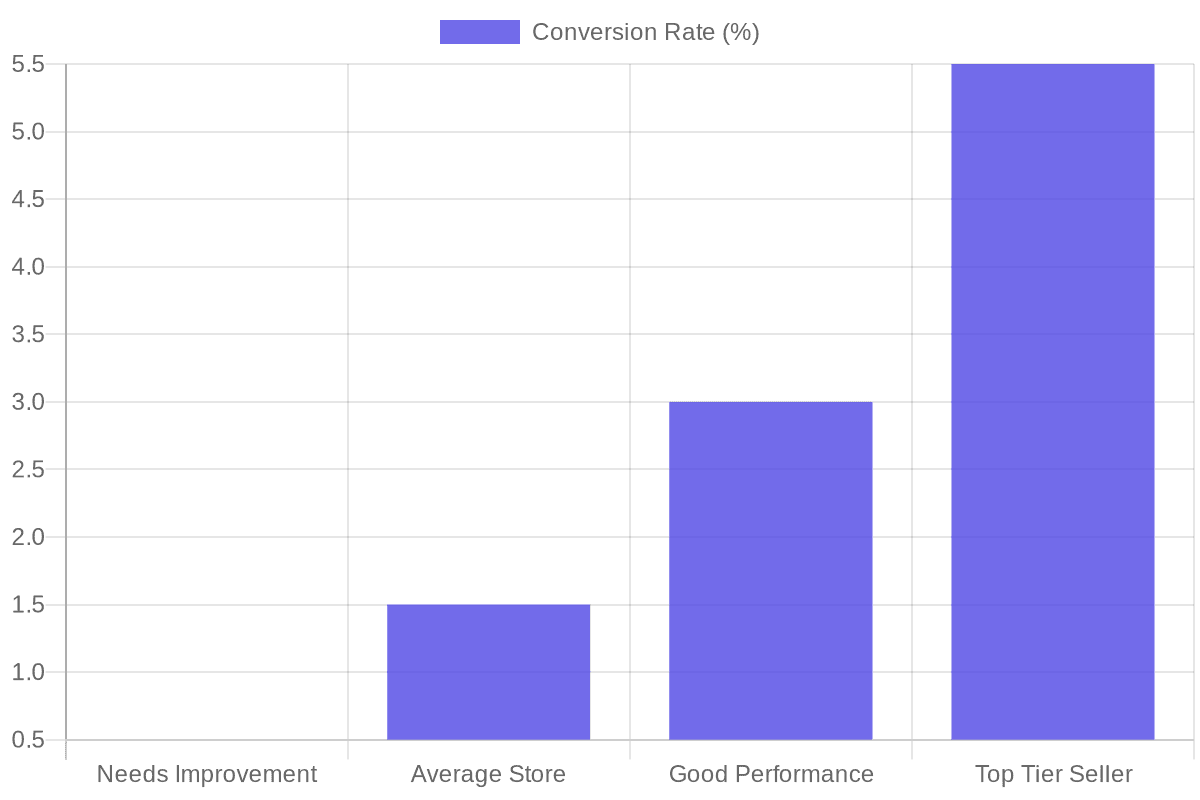
On Etsy, a normal, healthy conversion rate falls between 1% and 5%. If your store is operating within this range, you are doing well. You have a functional business that resonates with buyers.
If your number drops below 1%, it is a clear signal that something is broken. Buyers are finding your items, which means your SEO might be working, but they are immediately turned off by what they see. This could be due to poor pricing, bad photos, or confusing descriptions.
The Top Tier of Sellers
If you consistently maintain a rate above 5%, you are in the top segment of Etsy sellers. At this level, your store is a highly efficient sales machine. Every piece of traffic you generate is highly valuable because you extract maximum revenue from it.
A clear increase in your conversion rate means more of the visitors you already get become buyers.
Why does this number matter so much to Etsy? The platform wants to make money. They make money when a sale occurs. Therefore, How the Etsy Algorithm Works in 2026: The Complete Guide dictates that listings with high conversions are rewarded with better search rankings. If your item gets 1,000 views but zero sales, Etsy’s algorithm assumes your item is irrelevant or low quality, and it will quickly bury your listing on page ten. Improving your ability to sell actually improves your SEO at the same time.
Try it in your shop.
Every step from design to live listing, on one platform. Start on the free plan.
The Hierarchy of Etsy Conversions: What Actually Makes Buyers Buy?
When a buyer lands on your listing, they go through a rapid, subconscious checklist. If you fail any of these checks, they click the back button. To improve your numbers, you must address these factors in order of priority.
1. The Undisputed King: First Photo Quality
Online shoppers cannot touch, feel, or try on your products. They shop entirely with their eyes. Your first photo is the single most important asset in your entire business. It does two jobs: it stops the scroll in the search results, and it sets the immediate perceived value of your item.
A flat, poorly lit, generic mockup tells the buyer that your product is cheap and mass-produced. A vibrant, contextual lifestyle photo tells the buyer that your product is premium, desirable, and worth their money.
Furthermore, you must use all 10 photo slots provided by Etsy. Leaving slots blank leaves money on the table. When a buyer swipes through your images, they are looking for reasons to trust you. If you only provide one image, you force them to guess about the details.
Here is a proven formula for your 10 image slots:
Slot 1: The Hero Image (A stunning lifestyle shot that grabs attention).
Slot 2: Close-up detail (Showing fabric texture or print quality).
Slot 3: Scale and size context (The item next to a recognizable object or worn by a model).
Slot 4: Color variations (Showing the different options available).
Slot 5: Size chart (Crucial for apparel to reduce returns).
Slot 6: Packaging or behind-the-scenes (Builds a human connection).
Slot 7 to 10: Additional lifestyle angles and use cases.
2. Title Clarity: Tell Them Exactly What It Is
For years, sellers were taught to stuff their titles with as many keywords as possible to please the search engine. This resulted in titles like “Cat Shirt Funny Cat Gift For Mom Cute Kitten Tee Womens Animal Top.”
While this might catch a search bot’s attention, it actively pushes human buyers away. It looks like spam. In 2026, Etsy’s search engine is smart enough to understand context. Your title must be clear, readable, and appealing to a human being.
The first 40 characters of your title are the most important because that is often all a buyer sees on a mobile device. Make those first few words count. Tell them exactly what the item is and who it is for in natural, conversational English.
3. Detailed and Skimmable Descriptions
Buyers rarely read a description from start to finish. They skim it to find specific answers to their questions. If they have to hunt for information about shipping times, materials, or sizing, they will simply leave.
Your description should be formatted for easy reading on small mobile screens. Use short paragraphs. Use bullet points to highlight key features. Anticipate the buyer’s questions and answer them immediately.
A strong description should include:
A warm, inviting opening sentence.
A bulleted list of material and sizing details.
Clear instructions on how to care for the item.
Transparent information about production and shipping times.
A gentle reminder to check out other items in your store.
4. Competitive Shipping Prices
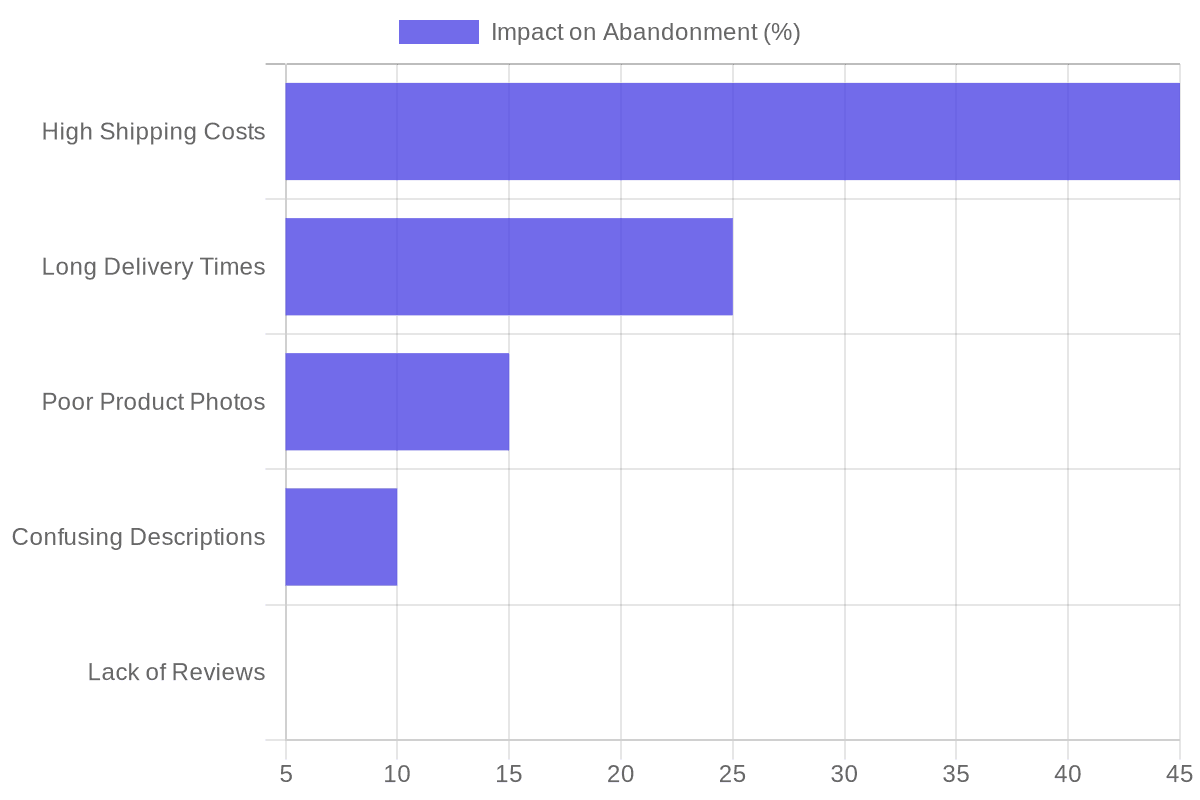
High or unexpected shipping costs are the number one reason for cart abandonment across the entire e-commerce industry. A buyer might be excited to purchase a t-shirt, but if they reach the checkout page and see a high shipping fee, the perceived value of the deal collapses.
Whenever possible, you should offer competitive shipping rates. Many successful sellers use a “Free Shipping” strategy by baking the cost of shipping into the item’s base price. A shirt with shipping built into its price and free shipping can convert better than a lower-priced shirt with a separate shipping charge, even though the total cost to the buyer is exactly the same.
If you cannot offer free shipping on everything, consider offering a free shipping guarantee for orders over a set threshold. Buyers who are close to the threshold may add another item to reach it.
5. Customer Reviews and Social Proof
No matter how good your photos and descriptions are, buyers will always trust other buyers more than they trust you. Social proof is a massive driver of sales. A listing with twenty 5-star reviews will always outperform a brand-new listing with zero reviews, even if the new listing has a slightly better design.
To build this social proof, you must focus on the post-purchase experience. Ship items quickly, package them nicely, and respond to customer messages promptly.
How Professional Mockup Visuals Directly Impact Your Sales
The gap between a struggling print-on-demand store and a highly profitable one usually comes down to visual presentation. When you use the exact same generic mockups as thousands of other sellers, you blend into the background. You commoditize your own product.
Buyers do not buy a t-shirt; they buy the feeling of wearing that t-shirt. They buy the identity associated with it. A flat-lay image on a white background provides zero emotional context. A lifestyle image creates a story.
Creating these stories used to require expensive photo shoots, professional models, or pricey monthly software subscriptions. When you try to do this manually, you waste hours tweaking files, and the results often look like cheap stickers pasted onto stock photos.
This is where smart tools change the game. Instead of settling for basic visuals, you can use the Listystyle mockup creator inside Listybox, the workspace where you create products, write listings and publish them to your Etsy shop. Listystyle studies your design and its intended audience, then creates a selected set of realistic lifestyle scenes that keep your product presentation relevant, and you can review and edit everything before publishing.
Replacing a standard, generic mockup with a contextual, high-quality lifestyle image gives buyers a clearer picture of how your product fits into their lives. It allows you to present your store as a premium brand, so you stop competing only on price and start competing on perceived value.

Optimizing Your Product Variations for Maximum Sales
Another major factor in closing a sale is offering the right amount of choice. If you only offer a design on a basic black t-shirt, you lose the buyer who prefers hoodies or the buyer who wanted a canvas print for their wall.
However, creating a separate listing for every single product type spreads your sales out too thin. If your design gets 10 sales on a t-shirt, 5 on a hoodie, and 5 on a mug across three different listings, none of those listings will gain enough momentum to become an Etsy Bestseller.
To solve this, you should combine your variations. By using Combo Listings, you can group multiple product types (like a shirt, a sweatshirt, and a mug) under one single Etsy listing.
When a buyer clicks your listing, they see all their options in one place, and the product images update when they select an item from the variation menu. This provides a superior, “all-in-one” shopping experience. More importantly, every sale, whether it is a mug or a hoodie, counts toward the same listing. This concentrates your sales momentum on one listing instead of spreading it out. A Bestseller badge is a strong form of social proof for future visitors.
Reducing Friction: The Hidden Trap of Slow Fulfillment
You might have the perfect listing, but if your backend operations are messy, your sales will eventually suffer. When a buyer places an order, they expect a smooth, fast process.
If you are manually copying and pasting addresses, manually ordering from suppliers, and manually updating tracking numbers, you are introducing the risk of human error and delays. A delayed order leads to a frustrated customer. A frustrated customer leaves a 1-star review. A 1-star review can hurt the conversion rate for that listing.
Furthermore, if your production costs are too high because you are paying for premium supplier subscriptions, you cannot afford to offer the competitive shipping prices we discussed earlier. You are forced to pass those high costs onto the buyer, which causes cart abandonment.
How to Automate Your Etsy Conversion Rate Optimization Strategy
Understanding what makes a buyer click “buy” is the first step. The real challenge is applying these principles to hundreds or thousands of listings.
If you have 500 items in your store, manually rewriting every title for clarity, manually generating 10 new lifestyle photos for every item, and manually updating all your descriptions is an impossible task. You will burn out before you see any meaningful results.
The Etsy algorithm tracks your sales metrics at the listing level. A listing with high traffic but zero sales will quickly be hidden from buyers. You cannot afford to leave unoptimized listings sitting in your store.
To truly scale your business, you need a system built around how you run your shop. You need tools that handle the repetitive work while you keep editing control, so every item in your catalog is prepared carefully before it goes live.
Instead of staring at a blank screen wondering what to write, you can use the Magic Wand SEO tool. It studies relevant products and trends, then writes an SEO-focused title, a full tag set, and a sales-focused description for each product and design combination. You can edit everything before publishing, keeping the clarity buyers need along with the keywords search relies on.
Instead of settling for one boring photo, you use Listystyle to create a selected set of realistic lifestyle scenes for your image slots. Instead of splitting your sales momentum, you use Combo Listing to bring related products into one Etsy listing, so every sale counts toward the same listing.
Does all of this feel overwhelming? You don’t have to start from scratch. With Listybox Store Setup, the Listybox team sets up your Etsy store, prepares core branding, publishes an initial product set from the Listybox catalog with SEO-focused copy, and guides you through running the shop from one workspace. It is available inside a custom Enterprise+ offer, so plan a demo or write to [email protected].
You can spend your weekends stressing over analytics and manually tweaking listings, or you can build a system that naturally turns views into revenue. Stop letting your hard-earned traffic go to waste. Start for free - no credit card required and see how easy it is to build a store that actually sells.

Listybox
Listybox keeps your Etsy shop work in one place. Create products, publish listings, edit them in bulk and pass print-on-demand orders to production.
Frequently asked questions
Put this into practice in your shop.
Every step from design to live listing, on one platform. Start on the free plan.
Related posts



Want to go deeper? Read our in-depth Etsy guides · Browse 100 Etsy niche guides