



Key takeaways
A drop in Etsy sales is often a symptom of multiple small issues, not one big disaster.
Etsy’s search algorithm prioritizes listing quality and shop completeness: your titles, tags, and images must work together.
Seasonal shifts and increased competition are external factors you can counter with a proactive strategy.
Shipping costs and pricing perception directly affect where you rank in search results.
The manual fix for hundreds of listings is slow and error-prone; a structured approach saves time and protects your shop’s momentum.
You open your Etsy dashboard expecting the usual rhythm of orders, but instead you see a flat line. The views are trickling in, but the sales have stalled. It’s a quiet panic that every seller knows: the fear that the algorithm has finally forgotten you. If you’ve been searching for answers about why your Etsy sales are down in 2026, you are not alone. The platform is more competitive than ever, and a drop in sales is rarely about one big mistake. It’s usually a collection of small, silent problems that have piled up.
Lucas, a hypothetical first-time seller we will follow through this guide, opened his shop in January. He listed 50 print-on-demand t-shirts with designs he loved. For three months, sales were steady. Then, in April, everything stopped. He assumed the market was just slow. But the market wasn’t slow; his shop was slowly losing visibility because of fixable, structural issues he hadn’t noticed.
What are the most common reasons for an Etsy sales drop in 2026?
When a shop’s momentum dies, the root cause is rarely a mystery. It falls into a few predictable categories. The pain comes from not knowing which one is hurting you right now. Lucas spent two weeks blaming the economy before he actually looked at his data. The reality is that a sales decline in 2026 is usually a mix of external shifts and internal decay.
External factors include a change in the season. A Christmas sweater design will naturally die in January. Competition is another external force. While you were sleeping, three other shops might have entered your niche with better mockups. But the internal factors are the ones that sting the most because they feel like self-sabotage. These are things like letting your listing tags become stale, ignoring your shop score, or not updating your shipping profiles. For a deeper look at how the platform ranks shops, it helps to understand the mechanics behind the scenes. Our guide on How the Etsy Algorithm Works in 2026 breaks down exactly what signals the system is reading from your shop.
The silent killer: stale SEO data
Keywords have a lifespan. A phrase that was high-volume six months ago might be dead today. If you set your tags once and never touched them again, your listings are invisible to the current search terms buyers are using. This is the most common invisible anchor dragging down a shop. You still have a great product, but the bridge connecting it to the buyer has collapsed.
The trust factor decay
Etsy tracks how buyers interact with your shop. If you have a late shipment, a case opened, or a slow response time, your shop’s quality score drops. A lower score means Etsy is less confident recommending your products. It’s a slow bleed. You might not notice a single late order, but the algorithm does.
How does the Etsy algorithm affect my shop’s visibility and sales?
Etsy’s algorithm is not a mysterious villain. It’s a matching engine that gets paid when you sell. Its only job is to predict what a buyer will click and buy. When your sales are down, the algorithm hasn’t turned against you; it has simply lost confidence in your listing’s ability to convert.
The algorithm looks at “listing quality.” This is a score built from your click-through rate, your conversion rate, and your customer experience. If a buyer searches for “funny gym t-shirt” and sees your listing but doesn’t click, your quality score drops for that term. If they click but don’t buy, it drops further. The algorithm learns that your listing is not the best match for that search, and it pushes you down. This is why you can’t just rely on getting views. You need the right views. For a step-by-step breakdown of how to climb back up, see our Etsy Listing SEO Optimization Guide.

The recency bias
Etsy favors shops that are active. A shop that lists one new product a week is seen as more relevant than a shop that hasn’t added anything in a month. Lucas stopped listing new products after his initial push. He thought 50 was enough. But the algorithm saw a dormant shop. Without fresh listings, your entire shop can lose its “freshness” signal.
The context collapse
The algorithm also tries to understand what your shop is an authority on. If you sell yoga mats, dog bandanas, and car decals, the algorithm is confused. It doesn’t know who to show your products to. A focused niche helps the algorithm confidently match your products to a specific buyer. When sales drop, it’s often because your shop has drifted from its core identity.
Can my pricing and shipping strategy really cause a sales decline?
Yes, and it hurts more than you think. Pricing and shipping are not just a math problem for your profit margin; they are a direct ranking signal. Etsy has explicitly stated that shipping price is a factor in search placement. Buyers hate paying for shipping. They will often choose a more expensive item with free shipping over a cheaper item with a shipping charge.
A competitor’s item with free shipping can show up higher in search results than yours, even when the buyer pays the same total. The psychology of “free shipping” is that powerful. If your sales are down, you need to look at your shipping profiles immediately. Our guide on The Etsy Free Shipping Strategy for 2026 explains how to build this cost into your price without losing money.
💡 Practical tip: Check your top three competitors right now. If they all offer free shipping and you don’t, that alone could explain a significant portion of your visibility drop.
The hidden cost of a listing
Before you adjust your pricing, you need to know exactly what you are paying to the platform. Many sellers price their items without a clear understanding of the fees, which leads to thin margins. A small miscalculation can mean you are barely breaking even on a sale, which makes a sales slump even more painful. You can find a detailed breakdown in our article on How Much Does Etsy Take From Sellers? The 2026 Fee Breakdown.
Etsy charges a $0.20 USD fee for listing an item for sale. Taxes may also apply.
Why is my listing quality hurting my sales even with good traffic?
High traffic and no sales is a conversion problem, and it’s the most frustrating version of a sales slump. It means people are finding you, but they are rejecting what they see. The problem is almost always in the images or the description.
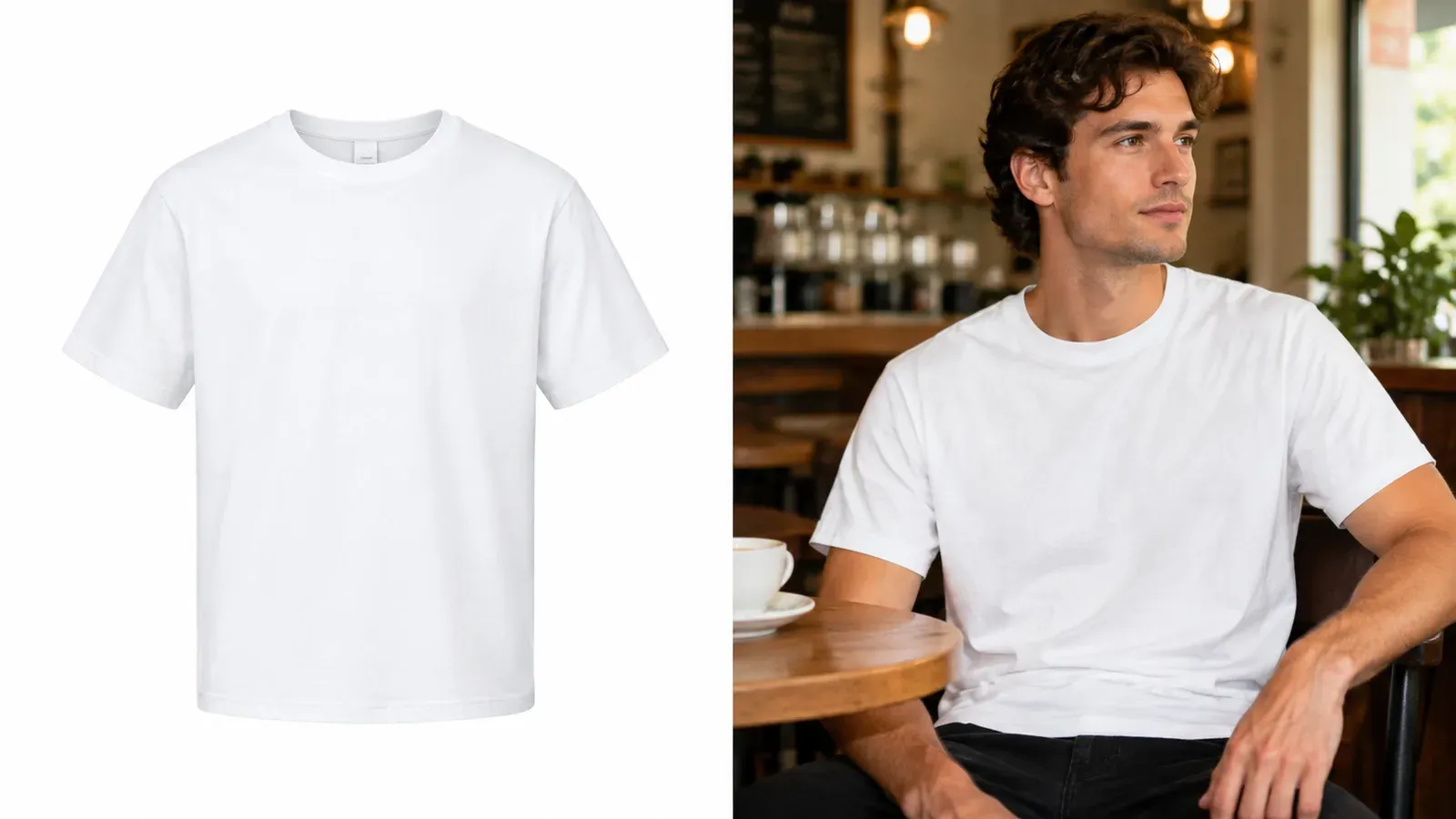
In 2026, print-on-demand mockups have become a battleground. A generic mockup with bad lighting screams “dropshipping.” A buyer on Etsy wants to imagine the product in their life. If your main image is a flat digital render of a t-shirt on a white background, you are losing to the seller who uses a lifestyle image of a person wearing that shirt in a sunlit coffee shop. The visual gap is costing you sales. Our piece on The Visual Edge: How Product Mockups Boost Etsy Sales Conversion dives into why this matters so much.
The description disconnect
If your images get the click, your description needs to close the sale. A description that just lists the material and size is a missed opportunity. Buyers scan descriptions for emotional reassurance. They want to know who this product is for and why they need it. A description that tells a story converts better than a dry spec sheet.
The tag mismatch
You might also be attracting the wrong traffic. If your tag is “funny gift for dad” but your image shows a generic floral pattern, the buyer will bounce. The bounce signals to Etsy that your listing is irrelevant. High bounce rates will eventually kill your visibility, even if the initial click numbers look good.
How can I recover from an Etsy sales slump without manual burnout?
The manual fix for a sales slump is a trap. To fix a 50-listing shop by hand, you would need to research new keywords for each one, rewrite 50 titles, generate 650 tags, and update images. This takes weeks of tedious work. During that time, your shop is still invisible, and you are losing money. The real agony of a sales drop is not just the lost revenue; it’s the overwhelming mountain of work required to fix it.
Lucas tried to do this. He spent a full Saturday re-tagging 10 listings. By Sunday, he was exhausted and made mistakes. He copied the same tags onto different products, which is against Etsy’s best practices. He missed typos. The burnout is real, and it leads to errors that can further damage your shop’s score.
A structured path to recovery
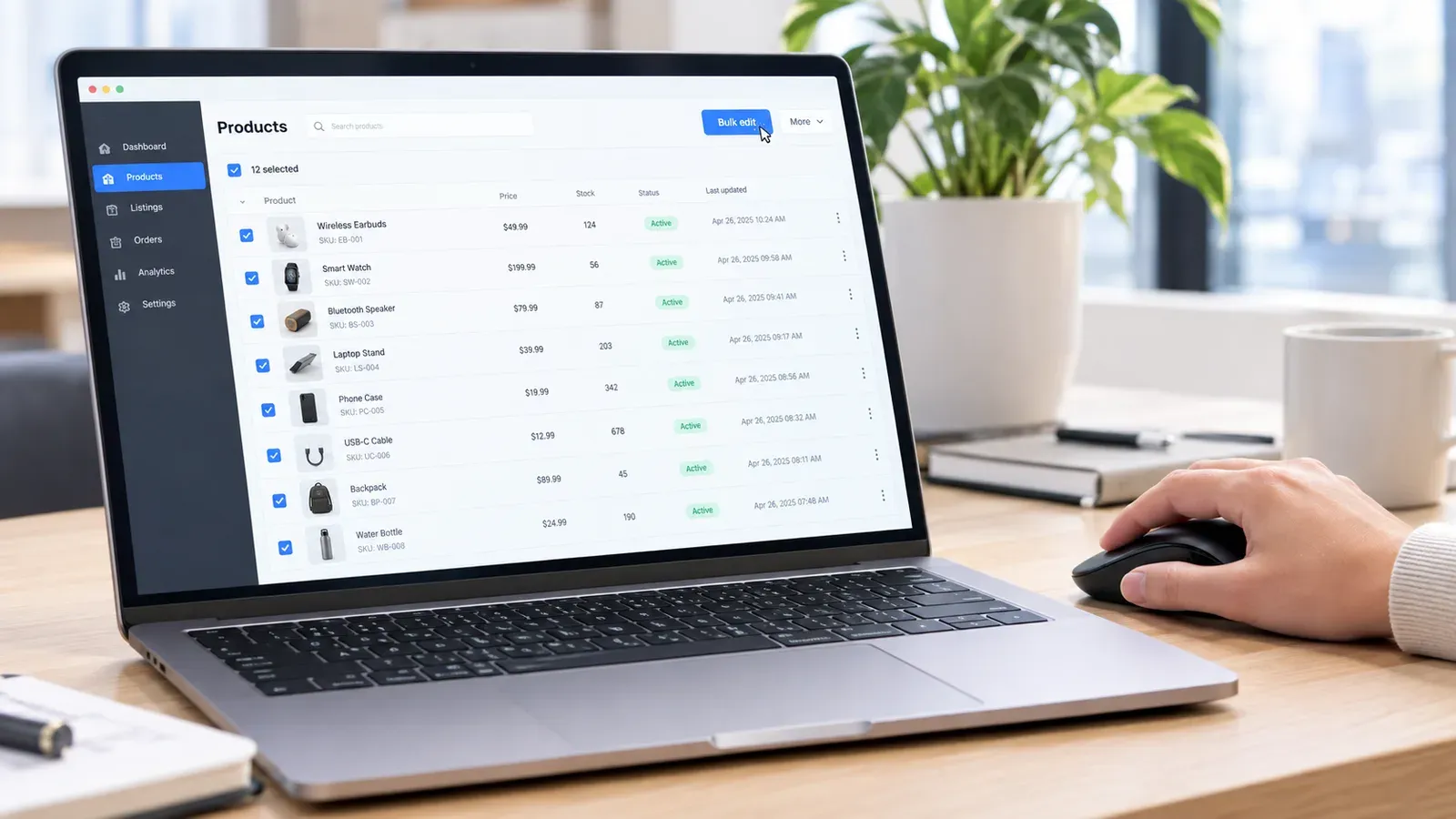
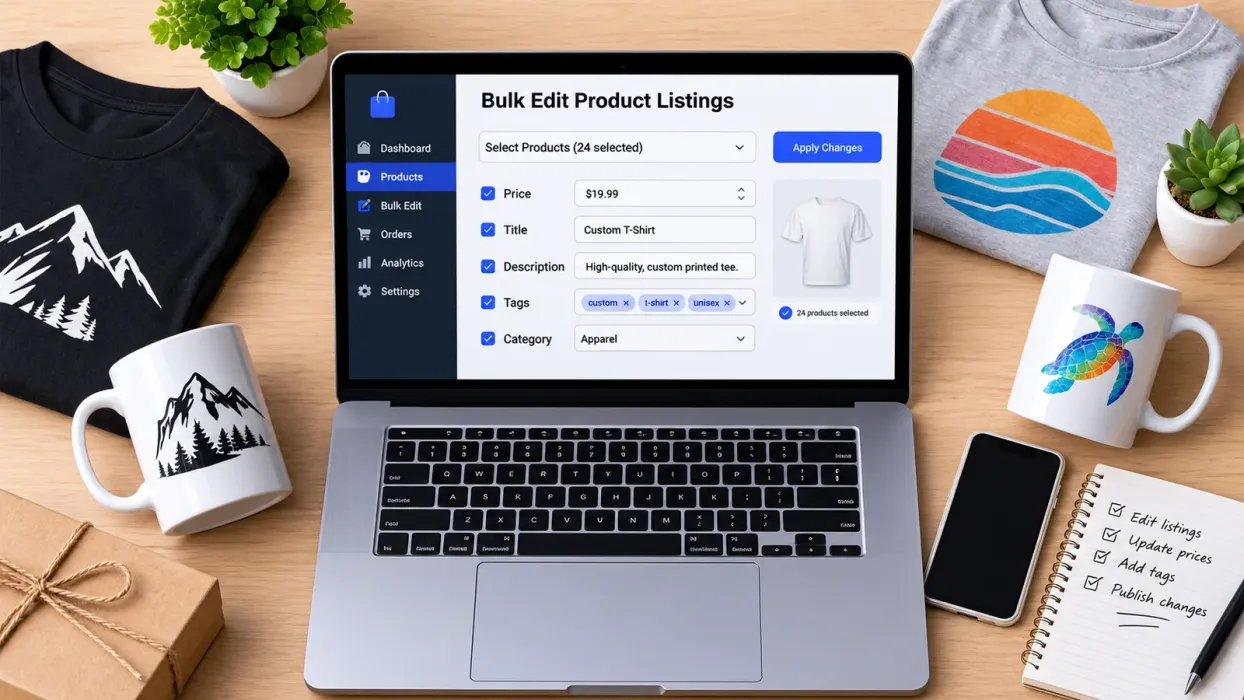
The smartest way to recover is to stop treating each listing as a separate project. You need a command center where you can fix the structural problems across your entire shop at once. This is where a tool like Listybox changes the game. Instead of clicking into 50 different listings, you can use the Bulk Edit feature. You select the listings you want to fix, choose the field you want to update (like tags or titles), and apply the change across all of them. What used to take a weekend now takes minutes, leaving you time to actually check the quality of the changes.
Refreshing your listing content intelligently
Once you have the bulk editing capability, the next step is to fix the content itself. Writing SEO-optimized titles and tags for dozens of products is the hardest part of the recovery. The Magic Wand feature is built for this exact problem. It analyzes your product and design, then generates SEO-compatible titles, 13 tags, and a sales-focused description. You don’t get a generic block of text; you get content tailored to the specific product you are selling. You review it, tweak it if you need to, and apply it. You keep full control, but you skip the blank-page paralysis.
⚠️ Important warning: Never copy the exact same tags across different listings. Etsy’s algorithm views duplicate content as low-quality. Always ensure your tags are unique and specific to each product.
The visual overhaul
If your images are the problem, you need a way to fix them without expensive photo shoots. The Listystyle feature allows you to take your existing product image and generate lifestyle photos. It places your design into realistic, relevant scenes. A t-shirt doesn’t have to float on a white background; it can be shown on a model in a setting that matches your target audience. This directly addresses the conversion problem we discussed earlier.
The consistency engine
The final piece of recovery is consistency. You need to show the algorithm that you are an active, healthy shop. The Scheduled Publish feature lets you prepare a batch of new or updated listings and then set them to go live on a schedule, like once a day. This creates a steady pulse of activity that the algorithm rewards, without requiring you to be at your computer at a specific time every day.
To see the full range of products you can apply this strategy to, browse the Product Catalog. A recovery is also a chance to expand into new, trending items that can capture fresh search traffic.
Does all of this feel like a lot to rebuild on your own? You don’t have to start the recovery from zero. With Listybox Store Setup, our team can restructure your shop’s branding, audit your current listings, and optimize your top products for SEO, giving you a clean foundation to grow from.
Taking control of a sales slump is about replacing the slow, manual grind with a process that lets you act on your strategy. You have the insights; the missing piece is the speed to implement them before the market shifts again. Start free - no credit card required and begin the recovery in minutes, not hours.
Listybox
Create listings 10x faster with Listybox.
Frequently asked questions
Put this into practice in your shop.
Every step from design to live listing, on one platform. Start on the free plan.
Related posts


Want to go deeper? Read our in-depth Etsy guides · Browse 100 Etsy niche guides