


Key takeaways
Understand the critical difference between making a sale and actually receiving the funds in your bank account.
Learn how Etsy’s payment schedules and new seller reserves impact your daily cash flow.
Discover the processing timelines for Shopify Payments and third-party gateways.
See how print-on-demand sellers manage supplier costs while waiting for platform payouts.
Explore tools to automate fulfillment and protect your profit margins during payment delays.
Meet Ava. She is an illustrator who recently decided to scale her handmade designs by launching a print-on-demand business. After weeks of preparation, her store finally goes live. A customer clicks “buy,” the notification chimes on her phone, and she celebrates her very first sale. But when she logs into her bank account the next morning to pay her print provider, the balance is exactly the same as it was yesterday. The money is nowhere to be found.
Ava has just encountered the most common, yet least discussed, hurdle in e-commerce: the payout delay. Making a sale is only the first half of the transaction. The second half is the waiting game - the period between the customer’s credit card being charged and the platform actually depositing those funds into your checking account. For print-on-demand sellers, this gap is critical because you often need to pay your suppliers to manufacture and ship the product before you have received the customer’s money.
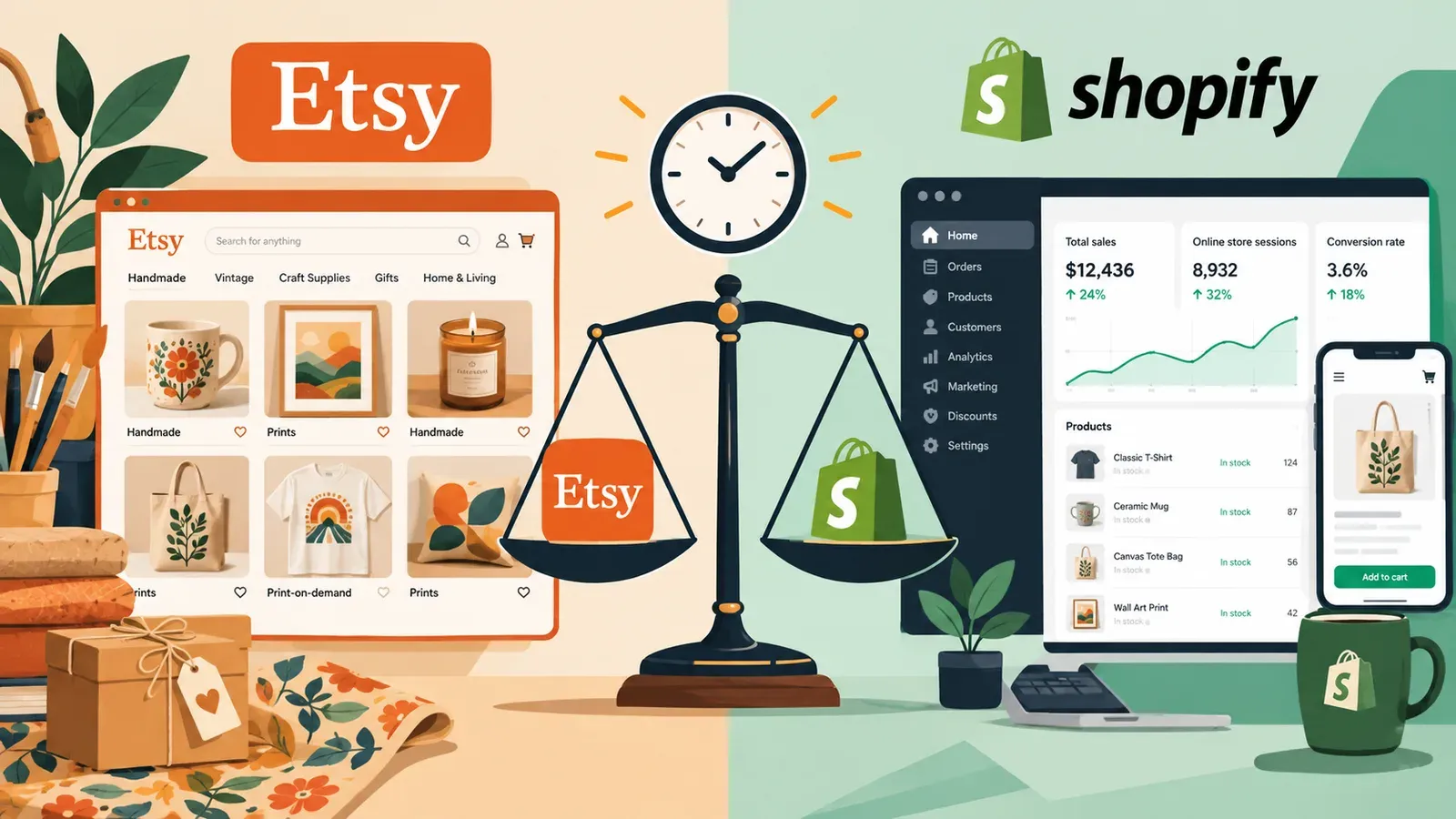
Choosing the right platform often comes down to understanding these financial mechanics. If you are debating between the two biggest giants in the industry, you need to know exactly how their financial systems operate. In this guide, we will break down the primary keyword, “etsy vs shopify when is the money deposited,” explore the hidden mechanics of e-commerce cash flow, and show you how to build a resilient business that never runs out of working capital.
The Reality of E-commerce Cash Flow
Before diving into specific platforms, it is important to understand why payout delays exist in the first place. When a customer purchases an item from your store, the money does not travel directly from their bank account to yours. It passes through a payment gateway, a merchant account, and various security checks designed to prevent fraud and money laundering.
This processing time is standard across the internet. Payment processors need time to verify that the transaction is legitimate, that the buyer actually has the funds, and that the credit card is not stolen. For a seller like Ava, this means her capital is temporarily locked up in cyberspace. If you want to learn more about setting up a sustainable business model that accounts for these delays, you can read our guide on How to Make Money Online in 2026: The Realistic Path to Passive Income.
The challenge multiplies when you run a print-on-demand store. Unlike selling digital downloads where there is no cost of goods sold per transaction, physical products require capital. You must pay your manufacturing partner to print the t-shirt, mug, or canvas and ship it to the customer. If you are waiting days or weeks for your platform payout, you have to cover those manufacturing costs out of your own pocket. This is why understanding deposit schedules is the lifeblood of your e-commerce strategy.
When Does Etsy Deposit Money?
Etsy is a massive marketplace that brings its own built-in audience, which is a huge advantage for new sellers. However, they also have strict financial controls to protect that audience from fraudulent sellers.
The Etsy Payment Schedule
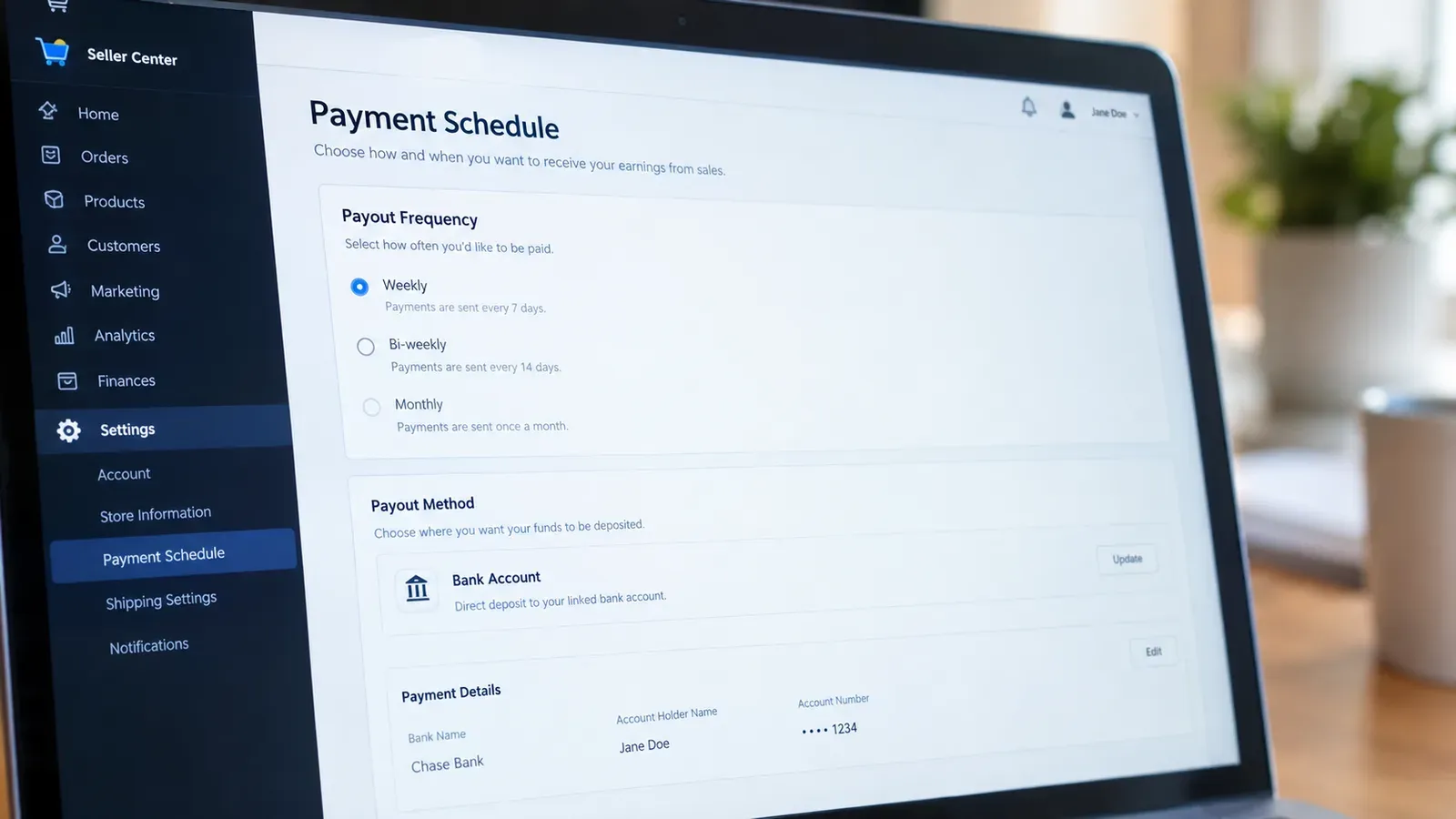
By default, Etsy processes payments through Etsy Payments. Once a transaction clears, the funds appear in your Etsy Payment account. From there, Etsy allows you to choose your deposit schedule. You can opt to have your available funds deposited daily, weekly, biweekly, or monthly.
Daily deposits sound ideal, but there is a catch. Depending on your bank and your country, it can still take a few business days for the ACH transfer to clear and show up in your checking account. Furthermore, daily deposits often have a minimum threshold. If your daily sales do not meet that minimum, the funds roll over to the next day.
New Seller Reserves
If you are a brand new seller like Ava, you will likely encounter the Etsy Payment Reserve. To ensure that new shops are actually fulfilling orders and not just taking money and running, Etsy may place a reserve on your account for a period of time (often up to 90 days after your first sale).
During this reserve period, a portion of your funds is held back until you provide a valid tracking number showing the item is in transit, or until a certain number of days have passed. This means your cash flow will be significantly tighter during your first few months. You must have enough personal capital to float your print-on-demand costs while you wait for the reserve funds to be released.
It is also important to remember the basic costs of doing business on the platform.
Etsy charges a $0.20 USD fee for listing an item for sale. Taxes may also apply.
These fees, along with transaction and processing fees, are deducted directly from your payout before the money is ever deposited into your bank account. For a comprehensive look at how these deductions work, check out our article on How Much Does Etsy Take From Sellers? The 2026 Fee Breakdown.
How Long Do Shopify Payouts Take?
Shopify operates differently. Because it is a standalone website builder rather than a marketplace, you have more control over your payment gateways, but you also take on more responsibility for driving your own traffic.
Shopify Payments Processing
If you use Shopify’s native gateway, Shopify Payments, your payout schedule is largely determined by the country where your business is located. In many major regions, the pay period is typically a few business days. This means that if a customer buys an item on Monday, the funds might be sent to your bank by Wednesday or Thursday.
However, weekends and public holidays can disrupt this flow. If a flurry of sales comes in on Friday night, those transactions might not even begin processing until Monday morning, meaning you might not see the deposit until Wednesday of the following week. This weekend lag is a common source of frustration for sellers trying to manage tight production schedules.
⚠️ Always account for bank holidays when projecting your weekly cash flow, as they will delay your deposits by at least one full business day.
Third-Party Payment Gateways
If you choose not to use Shopify Payments, or if it is not available in your region, you will have to rely on third-party gateways like PayPal or Stripe. Each of these providers has its own deposit schedule. PayPal, for instance, might make funds available almost immediately in your PayPal account, but transferring that balance to your actual bank account still takes time.
Additionally, using third-party gateways on Shopify often incurs an extra transaction fee from Shopify itself, further eating into your margins. Understanding these layered costs is crucial, which is why we highly recommend reading Shopify Dropshipping in 2026: The Brutal Truth About Costs, Profits, and the Smarter Alternative before committing to a standalone store model.
Etsy vs Shopify: The Cash Flow Showdown
When comparing the two platforms purely on deposit speed, they are relatively similar for established sellers. Both platforms generally take a few business days to move money from a cleared transaction into your bank account. The real difference lies in the broader business model and how it impacts your capital.
Traffic Costs vs Payout Speed
With Etsy, the primary challenge is the new seller reserve. Your money might be tied up for weeks when you first launch. However, Etsy brings you organic traffic. You do not necessarily have to spend money on advertising to get your first sale.
With Shopify, you might not face a 90-day reserve, but you have a different cash flow problem: advertising costs. Because Shopify is a standalone island on the internet, you have to drive your own traffic. This usually means paying for Facebook, Instagram, or TikTok ads. You have to pay the advertising platforms immediately, long before the customer buys, and long before Shopify deposits the sales revenue into your account.
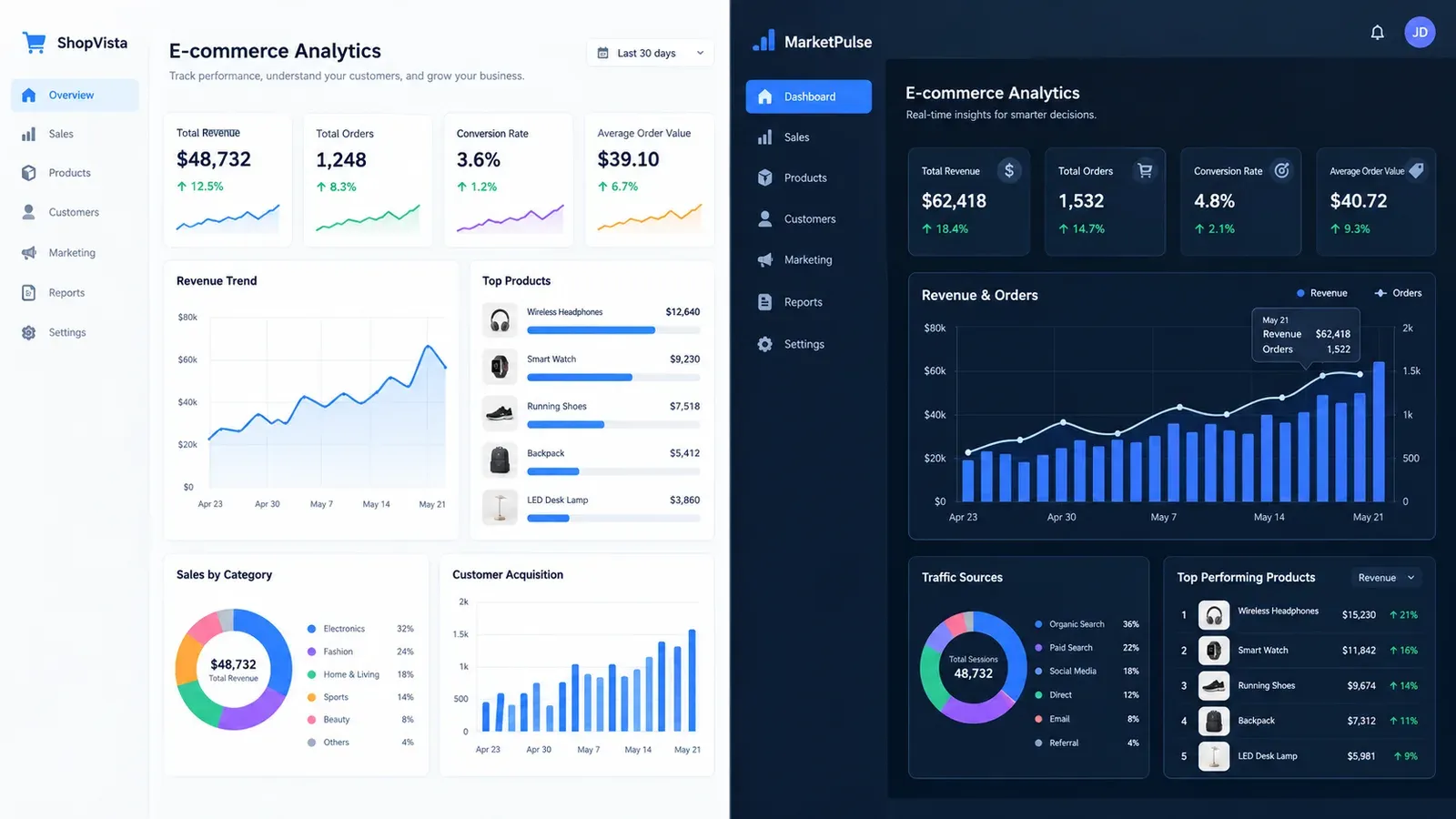
This means Shopify requires significantly more upfront capital to launch and sustain than Etsy. If you are trying to decide which interface and ecosystem suits your workflow better, you can explore our breakdown in The E-commerce Seller Dashboard Showdown: Etsy, Amazon, Shopify, and Trendyol.
Managing Print on Demand Costs During Payment Delays
For a seller like Ava, the deposit delay is a logistical puzzle. She needs to ensure her customers receive their products quickly to maintain a good shop rating, but she also needs to manage her bank balance so she doesn’t overdraft while waiting for platform payouts.
The Supplier Payment Gap
When you use a print-on-demand service, the production process begins when you pay the supplier. If you wait for Etsy or Shopify to deposit the funds before you pay the supplier, you are adding 3 to 5 days to your fulfillment time. Customers in 2026 expect fast shipping, and adding a week to the delivery time just to manage your cash flow will lead to bad reviews and a drop in search rankings.
To bridge this gap, successful sellers use credit cards to pay their print providers. This allows them to start production immediately. By the time the credit card bill is due at the end of the month, the platform deposits have cleared, and the funds are available to pay off the balance. However, this strategy requires strict financial discipline and a clear understanding of your profit margins.
Automating Operations to Protect Margins
When your cash flow is tight, every penny of profit matters. You cannot afford to overpay for production or make mistakes in fulfillment. This is where Listybox changes the game for sellers.
Instead of manually logging into different print providers, checking prices, and placing orders one by one, sellers use Listybox’s Zero-Touch Fulfillment. When an Etsy order comes in, Listybox automatically detects it and routes it to the best-performing manufacturer. It sends all the necessary details without you lifting a finger. Once the item is shipped, Listybox retrieves the tracking number, updates the Etsy order, and notifies the customer.
This automation does more than just save time; it protects your margins. By utilizing the Custom Product Hub, you can clone catalog items and manage your costs and suppliers efficiently. When you are waiting for deposits to clear, knowing that your fulfillment is being handled at the most competitive price point gives you the peace of mind to focus on creating new designs.
Scaling Your Store Without the Stress
Cash flow management becomes easier as your daily sales volume increases. When you have a steady stream of sales every single day, the daily deposits eventually catch up, creating a continuous flow of incoming capital that covers your outgoing production costs. The key to reaching this stage is expanding your product catalog rapidly.
Expanding Your Catalog Fast
To get more daily sales, you need more high-quality listings. But creating listings manually is exhausting. You have to design the artwork, generate mockups, write titles, and research SEO tags.
Listybox accelerates this entire workflow. Using the Creation Wizard, you can combine multiple designs with multiple products with a single click, generating hundreds of ready-to-publish creations in minutes, not hours. Instead of spending your weekend doing data entry, you can build a massive, diverse catalog quickly.
💡 A larger catalog increases your chances of being found in search results, which leads to more consistent daily sales and smoother cash flow.
Optimizing for Search
Having products is not enough; they need to be found. Instead of guessing which keywords will work, you can use the Magic Wand feature. It analyzes best-selling products and trends to write SEO-optimized titles, sales-driven descriptions, and relevant tags for your creations. By ensuring your listings are highly relevant to what buyers are searching for, you increase your conversion rate, which is essential when you are trying to build momentum and overcome early cash flow hurdles. If you want to dive deeper into how different providers handle fulfillment, you can read our Printify vs Printful vs Gelato: The Ultimate Etsy POD Comparison for 2026.
Launching Your Store the Right Way
Understanding deposit schedules, navigating new seller reserves, and managing supplier payments can feel incredibly daunting if you are just starting out. The technical setup alone can delay your launch by weeks.
Does all of this feel overwhelming? You don’t have to start from scratch. With Listybox Store Setup, our expert team sets up your Etsy store, lists your first 10 products, and optimizes everything for SEO. See the pricing page for what this service covers and what it costs. It is the fastest way to get your foundation built correctly so you can focus on your art and your strategy.
Conclusion
The answer to “etsy vs shopify when is the money deposited” is that both platforms take a few business days to process transactions, but their broader ecosystems impact your capital in vastly different ways. Etsy may hold your funds initially through reserves, but it provides the traffic. Shopify might process payments slightly faster depending on your region, but it requires you to drain your cash flow on advertising upfront.
Ultimately, surviving the payout delay requires smart operational management. By using credit strategically to float production costs, and by leveraging automation tools to handle fulfillment and catalog expansion, you can build a print-on-demand business that scales smoothly, regardless of how many days it takes for the bank transfer to clear.
Ready to streamline your operations and scale your catalog in minutes? Start free - no credit card required and see how Listybox can transform your workflow today.
Listybox
Create listings 10x faster with Listybox.
Frequently asked questions
Put this into practice in your shop.
Every step from design to live listing, on one platform. Start on the free plan.
Related posts



Want to go deeper? Read our in-depth Etsy guides · Browse 100 Etsy niche guides