


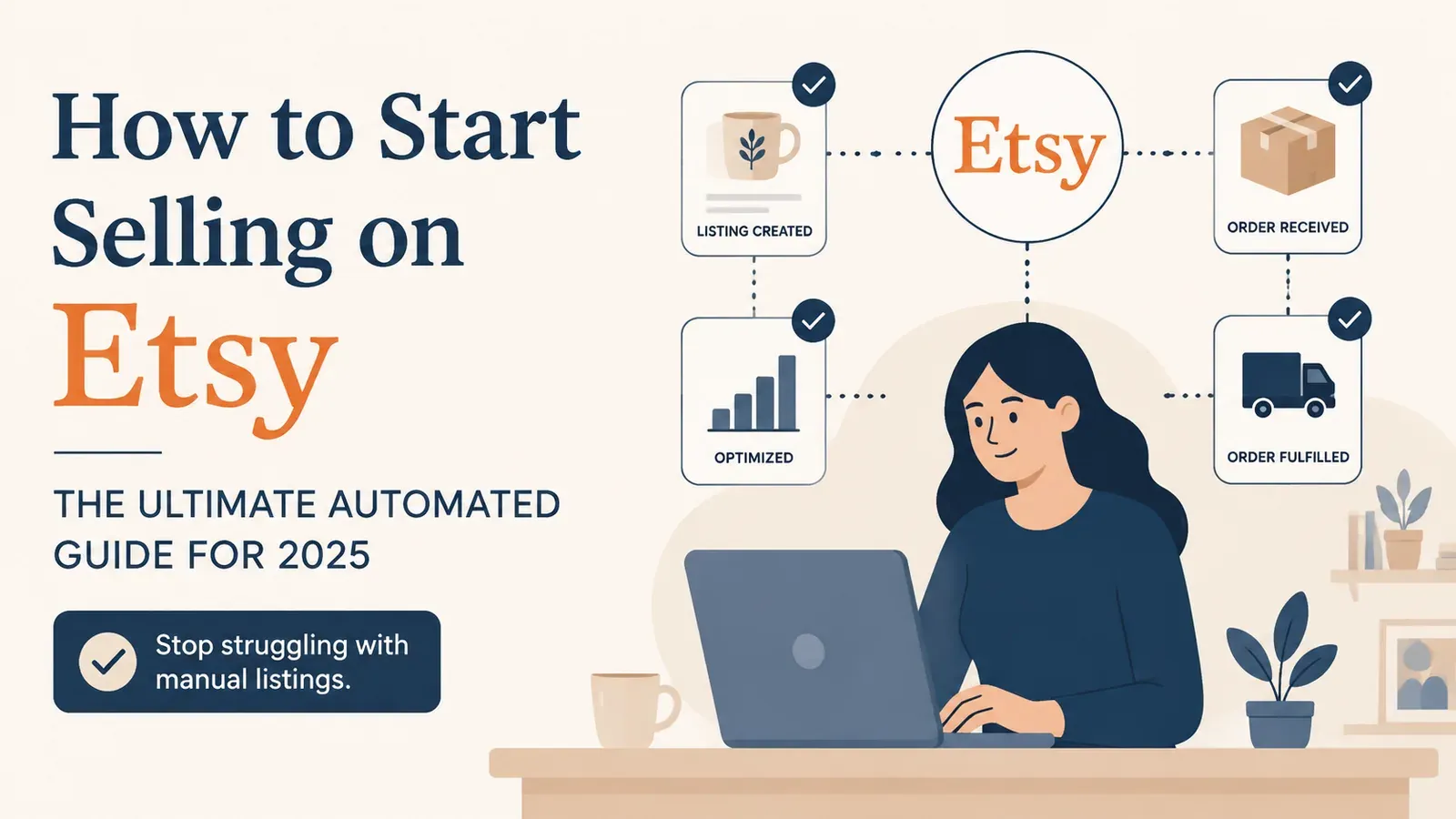
Key takeaways
Automate Your Launch: Bypass the weeks of manual setup by using tools that list products in bulk.
Eliminate Inventory Risk: Use the Print-on-Demand model to sell products without buying them first.
Master SEO Instantly: Stop guessing keywords and use AI to write data-driven titles and tags.
Professional Designs Without Skills: Access galleries of ready-to-sell artwork to fill your shop with competitive products.
Scale with Hands-Off Fulfillment: Let automated systems handle order processing so you can focus on growth.
The dream of starting an Etsy shop is powerful. You imagine a passive income stream, creative freedom, and the thrill of your phone buzzing with new order notifications. But for thousands of aspiring entrepreneurs, this dream hits a brick wall the moment they sit down to actually do the work. The reality of researching niches, designing products, figuring out SEO, and manually creating listings one by one is overwhelming. It turns what should be an exciting business launch into a tedious, confusing grind.
In 2025, the secret to success isn’t working harder; it’s building a smarter infrastructure from day one. This guide will walk you through exactly how to start selling on Etsy by bypassing the manual struggle and leveraging automation technology that was once available only to top-tier sellers. It is time to stop thinking like a crafter and start thinking like a CEO.
Is Selling on Etsy Still Profitable in 2025?
The short answer is yes, but the landscape has shifted. The market is crowded with millions of sellers, and the “post and pray” method no longer works. New sellers often get discouraged because they launch a few products, hear crickets, and assume the platform is dead. The pain of putting hours into a shop that generates zero traffic is real and demoralizing.
However, profitability in 2025 is a game of speed and data. While manual sellers struggle to list one item a day, automated sellers are testing dozens of designs weekly, finding winning niches faster. By using tools like our Trend Compass trend finder, you can identify what shoppers want right now and supply it before the competition reacts. This agility turns saturation into opportunity, allowing you to surf waves of demand that others miss.
Building a Business Without Inventory Risk
The biggest barrier to starting a traditional retail business is the upfront cost of inventory. Buying hundreds of t-shirts or mugs hoping they will sell is a financial gamble most beginners cannot afford to take. This risk often paralyzes new sellers, keeping them stuck in the planning phase for months.
The Power of Print on Demand
Print on Demand (POD) eliminates this risk entirely. You create a digital product listing, and the item is only manufactured after a customer buys it. This model is perfect for beginners, but managing it manually can still be a headache. You have to copy customer addresses, order from suppliers, and track shipments manually.
This is where Zero-Touch Order Management changes everything. Instead of becoming a shipping clerk, our system acts as your personal Chief Operating Officer. It detects orders, routes them to the best production partners, and updates customers with tracking numbers automatically. You focus on growing your brand while the logistics run on autopilot.
Creating Products Without Being a Designer
“But I’m not an artist.” This is the most common objection that stops potential sellers in their tracks. You see beautiful, intricate designs on the front page of Etsy and feel inadequate. The fear of producing amateur-looking products that damage your brand reputation is a valid concern.
Accessing a Library of Opportunities
You do not need to be a graphic designer to run a design-focused business. Successful shop owners are often curators, not creators. With the Artwork Gallery, you gain access to thousands of data-driven, commercially licensed designs that are ready to sell. Instead of staring at a blank canvas, you can browse a gallery of proven concepts and add them to your shop in minutes. This removes the creative block and lets you fill your store with high-quality products from day one.
If you do have your own designs, the My Artworks upload feature allows you to bulk upload your portfolio. Our efficient Background Remover tool will even clean up your images instantly, ensuring they look professional on any product color.
The Secret to Ranking Fast on Etsy (SEO)
You can have the best product in the world, but if no one can find it, you have no business. Etsy Search Engine Optimization (SEO) is critical, yet it is arguably the most tedious part of selling. Manually researching long-tail keywords, checking search volumes strategies, and writing unique descriptions for 50 listings can take entire weekends. It is mentally exhausting and prone to human error.
Automated SEO Strategy
Imagine having a world-class copywriter and SEO expert working for you 24/7. Magic Wand SEO tool analyzes your product and automatically generates high-ranking titles, 13 perfectly targeted tags, and persuasive descriptions. For a deeper dive into this, read our AI SEO automation guide.
Launching Your Shop: The Manual Grind vs. The Fast Track
Let’s look at a realistic scenario to illustrate the difference automation makes.
Meet Sarah. She wants to launch an Etsy shop for pet lovers. She has 20 cute dog slogans she wrote down.
The Manual Grind: Sarah spends her Saturday manually creating listings on Etsy. She has to upload each design, select the shirt colors, write a unique title, come up with 13 tags, and write a description 20 separate times. After 6 hours of repetitive clicking and typing, she has only listed 5 products. She is tired, her eyes hurt, and she gives up for the weekend. Her shop looks empty and unprofessional.
The Listybox Fast Track: Sarah logs into Listybox. She uploads all 20 designs to the Creation Wizard. With a few clicks, she applies them to t-shirts, hoodies, and mugs. The Creation Wizard generates hundreds of product variations instantly. She clicks the Magic Wand button, and all her SEO is written for her. In less than 30 minutes, she pushes 60 fully optimized listings to her Etsy shop. She spends the rest of her Saturday planning her Instagram marketing, feeling energized and productive.
This transformation is not magic; it is the power of a dedicated operating system for Etsy sellers. Additionally, using tools like the Listystyle mockup creator ensures Sarah’s products look like they were photographed in a professional studio, drastically increasing her click-through rate.
Don’t Want to Do It Yourself? We’ll Do It For You.
Does all of this still feel a bit overwhelming? Maybe you love the idea of owning a store but dread the technical setup. You don’t have to start from scratch. With Learn more about Store Setup, our expert team sets up your Etsy store, creates your professional branding, lists your first 10 products, and optimizes everything for SEO. See our pricing page for which plans include it.
Starting an Etsy business doesn’t have to be a struggle. By choosing the right tools, you can skip the frustration and go straight to the rewarding part: building a brand.
Frequently asked questions
Put this into practice in your shop.
Every step from design to live listing, on one platform. Start on the free plan.
Related posts



Want to go deeper? Read our in-depth Etsy guides · Browse 100 Etsy niche guides