


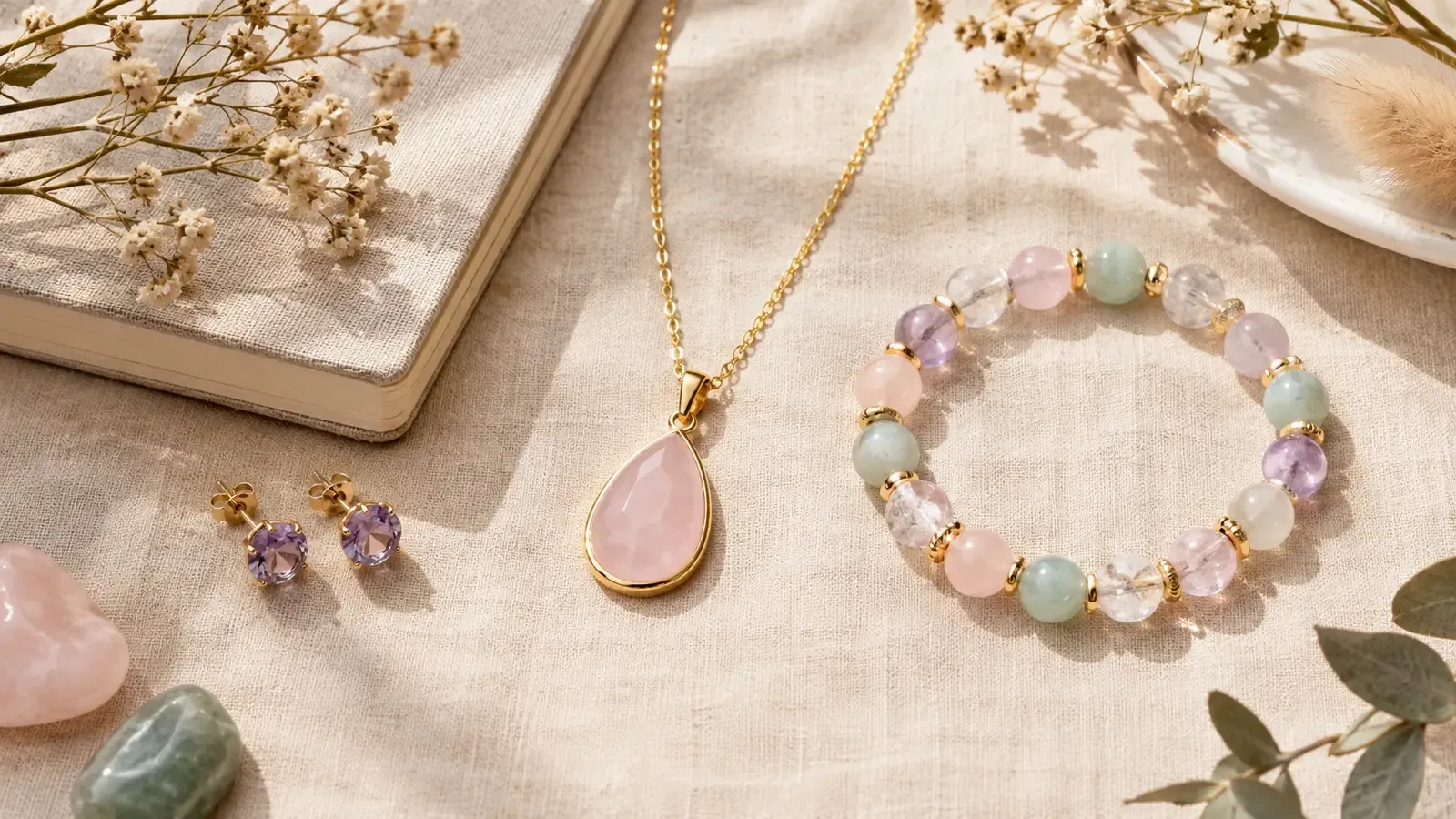
Key takeaways
Pick one gemstone niche and a clear buyer before you build a catalog.
Check current Etsy fees and listing rules on the official pages before you set prices.
Write each listing around the stone, setting, size, and care details buyers search for.
Use bulk editing and scheduled publishing to keep many listings consistent without repeating every step by hand.
Review every title, tag, and description yourself before it goes live.
Gemstone jewelry is one of the most crowded niches on Etsy, and that is exactly why it rewards careful planning. Many shops sell amethyst earrings, labradorite pendants, and birthstone rings. Buyers still choose one shop over another based on clarity, consistency, and whether the listing answers their questions. This guide walks through how to sell gemstone jewelry on Etsy, what to check before you list, and where a workspace like Listybox can take repetitive work off your plate.
Meet Mara, a hypothetical example used only to illustrate the workflow. Mara is a metalsmith who makes wire-wrapped stone pendants at home. Her goal is simple: build a small, steady shop of forty listings within two months, all with consistent titles, tags, and photos. She does not want to spend her evenings copying the same description forty times.
Start With a Narrow Gemstone Niche
Broad terms like “gemstone jewelry” put you against thousands of listings. A narrower angle is easier to explain to a buyer and easier to search for. Think about a specific stone, a style, or an occasion, such as moonstone bridal jewelry or raw crystal birthstone pendants.
Choose a Stone and a Buyer
Pick one primary stone and one or two supporting stones. Then describe who buys it. A buyer looking for a gift for a July birthday has different questions from someone shopping for everyday wear. Writing down the buyer in one sentence keeps your product choices focused.
Check Your Competitors Honestly
Search your target phrase on Etsy and open several top listings. Note how they describe stone type, dimensions, chain length, and care. Look for gaps: missing sizing details, vague photos, or no mention of metal type. Your job is not to copy them but to answer the questions they leave open.
For broader research methods, you can read our guide on Etsy Search Engine Optimization to understand how buyers phrase searches and how titles and tags work together.
Try it in your shop.
Every step from design to live listing, on one platform. Start on the free plan.
How Do You Check the Real Costs of Selling Gemstone Jewelry on Etsy?
Before you price any piece, you need to know what the marketplace charges. Fees and rules change, so the safest approach is to check the current Etsy fee page yourself rather than relying on an old figure from a blog or forum. The official fee page is the source to confirm listing, transaction, payment processing, and any optional offsite ad fees.
Start with a cost worksheet for each product. List your gemstone cost, metal or findings, packaging, shipping materials, and any tools you use. Then add the marketplace fees shown on the current official page. If you sell from outside the United States, also check how currency conversion, taxes, and customs may apply to your location and to your buyers.
Keep this worksheet in a simple spreadsheet and revisit it every time fees or your supplier prices change. A piece that looks profitable at one price can quickly become a loss once you add packaging and fees you forgot to count.
You can also read our breakdown on How Much Does Etsy Take from Sellers in 2026? for a framework to organize these costs, but always confirm current figures on the official page before you set prices.
⚠️ Do not set your prices from a fee figure you read months ago. Confirm the current official rules before every pricing review.
What Should a Gemstone Jewelry Listing Include?
Gemstone buyers are cautious. They cannot hold the piece, and stones vary in color and clarity. A strong listing reduces doubt by describing exactly what arrives.
Title and Tags
Put the main product type and stone first in the title, followed by the setting or metal. For example, “Labradorite Pendant, Sterling Silver Wire Wrap, Adjustable Chain” tells a buyer what they are getting. Tags should reflect how buyers search, such as the stone name, the occasion, and the style.
Photos and Descriptions
Show the stone in natural light, at a clear scale next to a common object, and on a neutral background. Describe the stone type, approximate dimensions, chain length, metal finish, and care instructions. Be honest about natural variation. A line that says each stone is unique sets expectations and reduces returns caused by color differences.
Mara found that her weakest listings were the ones with one photo and a two-sentence description. Adding size references and a short care note made each listing easier to understand.
Keeping Many Listings Consistent
Once you have more than a handful of pieces, consistency becomes the hard part. Each listing needs the same structure, the same care wording, and the same metal terminology. Doing this by hand across dozens of products is where many small shops lose time and make small mistakes.
This is where Listybox fits in. Its Magic Wand feature writes listing titles, tags, and descriptions for each creation, and you can edit everything before publishing. The Bulk Edit feature lets you select many listings and change one field, such as adding a care note or updating a tag set, then review the results before they go live. Editing and final control stay with you.
How Can You Build a Gemstone Product Line Without Inventory Risk?
Many sellers in this niche make pieces to order or work with a fulfillment partner, so they do not need to hold large stock of finished jewelry. Print-on-demand concepts also apply to designed items such as engraved tags, printed cards, or printed packaging inserts. Check each partner’s production times, minimum orders, and policies before you promise dates in your listings.
Listybox’s Custom Product Hub lets you clone catalog products or upload your own mockups, variations, and production SKUs. Creation Wizard then combines your designs with products so you can review each variant. For sellers who want the order handled after purchase, Zero-Touch Fulfillment can route Etsy orders to a manufacturer and update the Etsy order once it ships. Confirm the production details of any partner you use before you rely on the workflow.
Practical planning tips for a gemstone line:
Start with five to ten core designs instead of forty unrelated pieces.
Use one photo style across the whole line so the shop looks cohesive.
Write down your production lead time and state it plainly in each listing.
Track which stones and settings sell in your own shop data, then adjust the next batch.
💡 Create a listing template with fixed sections for stone, size, metal, chain, and care. Fill in the variable details for each piece and keep the structure the same.
How Should You Launch and Schedule Your Gemstone Listings?
Publishing everything on the same day can crowd your shop. Many sellers prefer to spread new listings over several weeks so each one gets attention and you can respond to customer questions.
Start by deciding your publishing rhythm, such as three new listings each week. Then prepare each listing completely before its publish date. Check the photos, tags, price, shipping profile, and processing time. Once a listing is ready, you can keep it in a queue and publish on schedule.
Listybox’s Scheduled Publish feature lets you set a time interval for a large batch of listings so they go live one by one. You still decide the order, review each listing, and can pause or edit before the schedule runs. Scheduling is a way to keep your calendar steady, not a replacement for checking your work.
Mara uses a simple rule: every Sunday she reviews the next week’s queue, reads each title out loud, and checks the stone name against the photo. That short review catches mistakes that automation would never know about.
How Do You Check Listing Quality Before You Publish?
Before a listing goes live, run through a short quality check. Confirm that the stone name is spelled correctly and matches the product. Make sure dimensions are in the same unit throughout. Check that the photo shows the piece you are describing and not a similar design. Read the care note and remove any claim you cannot support, such as healing properties, which can create problems with buyers and marketplace policies.
Also check your shop policies. Review the current Etsy seller policies and your own return and exchange terms before you publish. Do not rely on a one-line rule copied from another shop. Your policy should match your products, your production process, and the current marketplace rules.
You can also read our guide on Etsy Product Photography to plan the photo set for each piece, since jewelry photos carry most of the buying decision.
Finally, make sure your listings do not overstate what a stone is. Use plain descriptions like “natural labradorite” only if you can document it, and describe dyed or treated stones clearly.
Common Mistakes Gemstone Sellers Make
Several mistakes show up again and again in small gemstone shops. The first is a vague stone name, such as “crystal” when the item is glass or resin. The second is missing scale information, which forces buyers to guess how large a pendant is. The third is inconsistent naming across a product line, where the same stone appears under three different names.
Another frequent problem is pricing from memory. Sellers who skip the cost worksheet often discover too late that packaging, fees, and small shipping costs eat most of their margin. Reviewing your numbers on a fixed schedule helps you catch this early.
Last, many sellers ignore the follow-up side of the business. Respond to messages within your stated processing window, keep your shipping updates clear, and treat each order as a chance to earn a repeat buyer.
Turn Your Gemstone Shop Into a Repeatable Workflow
Selling gemstone jewelry on Etsy works best as a repeatable process. Choose a narrow niche, check current fees and rules on the official pages, write listings that answer buyer questions, and review each piece before it goes live. Keep your worksheet updated and treat each new batch as a small test of what your buyers respond to.
Once that process is clear, a workspace built for Etsy sellers can carry the repetitive parts. Listybox brings product creation, listing writing, bulk editing, scheduling, and print-on-demand fulfillment into one place, while you keep control of every decision. If you want to see how the steps fit together for your own shop, you can Start free - no credit card required and build your first listing at your own pace.
For readers who are still deciding where to begin, our Seller Quiz can point you toward a sensible starting path. You can also read about How to Sell Your Own Products on Etsy for more ideas on running a product line of your own.
Listybox
Listybox keeps your Etsy shop work in one place. Create products, publish listings, edit them in bulk and pass print-on-demand orders to production.
Frequently asked questions
Put this into practice in your shop.
Every step from design to live listing, on one platform. Start on the free plan.
Related posts
Want to go deeper? Read our in-depth Etsy guides · Browse 100 Etsy niche guides