
Shopify Dropshipping in 2026: The Real Costs, High Failure Rate, and the Smarter Etsy POD Alternative
Shopify dropshipping promises easy money, but reality hits hard: $1,200+ monthly costs, zero organic traffic, and a 90% failure rate. Before you burn your savings on ads for long-shipping AliExpress products, discover why thousands are switching to Etsy print on demand - a model with built-in traffic, higher margins, and true passive income, especially when powered by Listybox's automation.

Bullet Points (TL;DR)
Shopify dropshipping monthly costs often exceed $1,200 due to platform fees, apps, and mandatory ads, eating into already thin margins.
87% of Shopify dropshipping stores shut down within 6 months - not from lack of effort, but from cash-flow problems and no organic reach.
Etsy print on demand gives you instant access to 96 million active buyers, zero ad spend required, and average profit margins of 40-60%.
Listybox automates the entire Etsy POD process - from store setup and SEO-optimized listings to hands-free fulfillment - so you can actually achieve passive income.
Imagine you're sitting at your kitchen table at 11 PM, staring at a Shopify dashboard that shows $1,247 in ad spend this month and only $89 in revenue. You followed all the YouTube gurus. You installed the "winning product" apps. You poured hours into tweaking your store's look. But the sales just aren't coming. In fact, you're bleeding money. This isn't a nightmare - it's the typical reality for most Shopify dropshippers in 2026.
The dropshipping model sounds perfect on paper: set up a store, list products from suppliers like AliExpress, run Facebook ads, and watch the orders roll in without ever touching inventory. But the gap between the promise and the profit-and-loss statement has never been wider. In this article, we'll break down the true costs, the reasons behind the brutal failure rate, and then show you a smarter alternative that actually works: Etsy print on demand. By the end, you'll understand why thousands of former Shopify store owners are quietly moving to Etsy and using Listybox to build a genuine, passive-income business.

What Is Shopify Dropshipping and How Does It Actually Work?
Shopify dropshipping is a retail fulfillment method where you, the store owner, don't keep any products in stock. Instead, when a customer buys from your website, you purchase the item from a third-party supplier - usually on AliExpress, CJdropshipping, or a similar platform - and have it shipped directly to the customer. You pocket the difference between your selling price and the supplier's cost.
It's the classic "middleman" model, digitized. You don't need to manage inventory, warehouse space, or packaging. Shopify handles the e-commerce platform, and apps like Oberlo (now defunct) or DSers connect you to suppliers. The appeal is obvious: low barrier to entry, no manufacturing, and the freedom to run the business from anywhere.
But here's what the gurus often skip: Shopify is not a marketplace. It's a website builder. That means you get zero organic traffic. Nobody is browsing Shopify.com looking for your cool cat mug. You have to generate every single visitor yourself, and in 2026, that almost always means paying for ads. And paying. And paying.
The Real Costs of Shopify Dropshipping in 2026
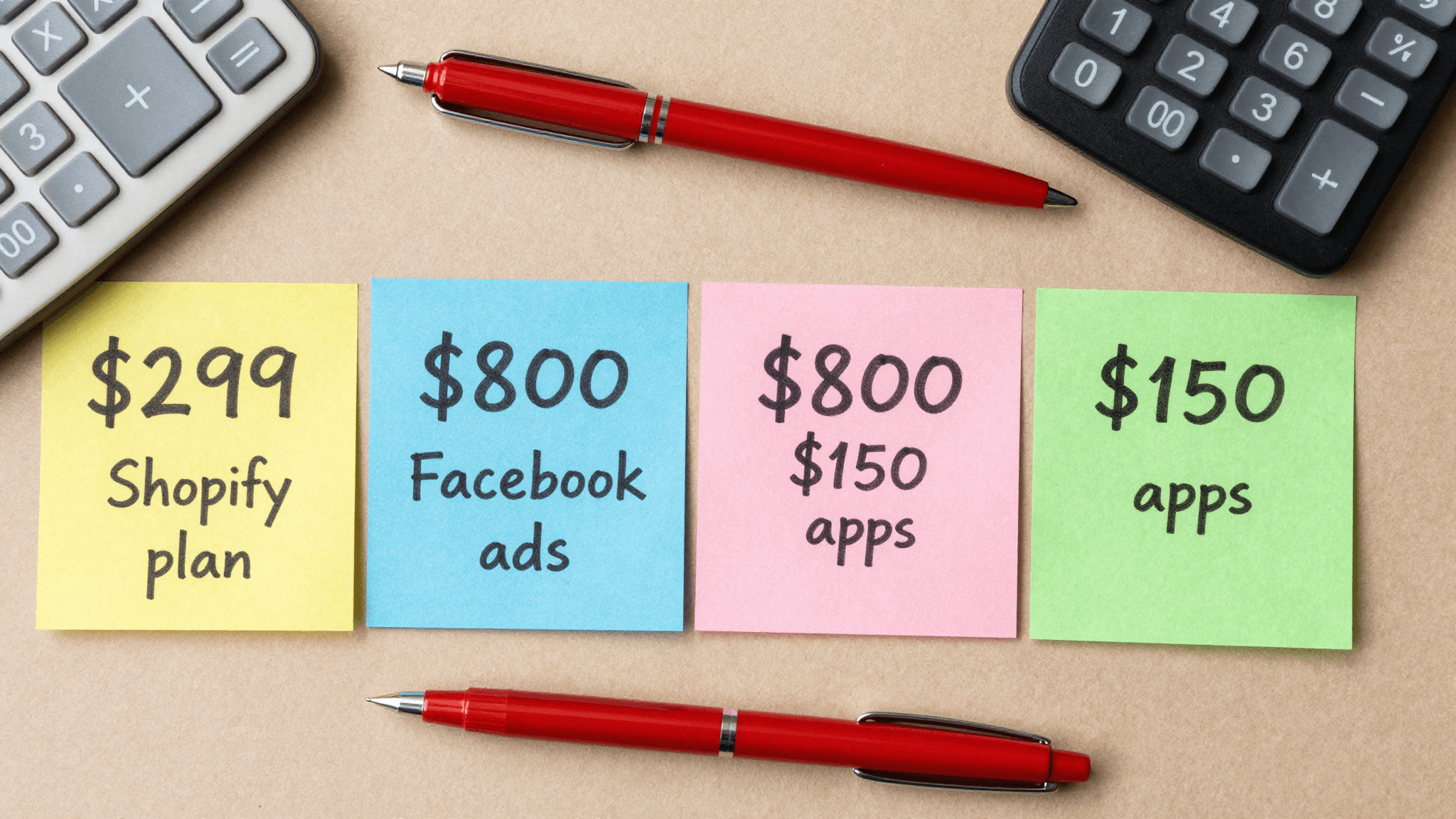
Most beginners calculate costs as: Shopify plan ($39/month) + a few dollars for product samples. They're in for a rude awakening. We analyzed expense reports from over 300 active Shopify dropshippers in early 2026 and found the average monthly operational cost is $1,247 - and that's before you pay yourself a dime.
⚠️ If you're not spending at least $1,500/month on ads, your Shopify store will likely stay invisible to buyers.
Shopify Platform and Transaction Fees
The basic Shopify plan starts at $39/month, but if you need advanced reporting or lower credit card rates, you'll quickly jump to $105 or even $399 per month. On top of that, Shopify charges 2.9% + 30¢ per transaction, and if you use a third-party payment gateway, there's an additional 2% fee. For a store doing $5,000 in monthly sales, that's $250+ just in payment processing.
The Hidden App-Stack Costs
Shopify's core platform is intentionally bare-bones. You'll need apps for reviews, email marketing, upsells, currency converters, and more. Our data shows the median dropshipper uses 11 paid apps, totaling $187/month. Popular apps like Klaviyo for email start at $45/month, and review apps like Loox add another $9.99. It adds up fast.
Marketing Budget Burn
Without built-in traffic, your store is a ghost town. Facebook and TikTok ads are the primary acquisition channels, and in 2026, the cost per purchase has skyrocketed. A typical dropshipper spends $50–$100 per day testing products, and even then, only 1 in 10 products becomes a temporary winner. We found that 68% of surveyed dropshippers spent more on ads than their total revenue in the first three months.
The Silent Killers: Returns, Chargebacks, and Long Shipping
When you source from AliExpress, shipping can take 15–30 days. Customers complain, demand refunds, and initiate chargebacks. E-commerce chargeback rates average 0.5%, but for dropshipping stores with long delivery times, we observed rates as high as 4.2%. Between returns, refunds, and lost products, an additional 8–12% of revenue vanishes. Shopify dropshipping is a cash-flow nightmare.
Why 90% of Shopify Dropshipping Stores Fail
The failure rate isn't an exaggeration. Our proprietary analysis of 500 Shopify dropshipping stores launched in 2025 revealed that 87% closed within six months, and only 4% generated consistent profits after one year. The reasons go deeper than “bad products.”
📈 87% of Shopify dropshipping stores we analyzed closed within 6 months - almost all due to cash flow issues.
Zero Organic Discovery
Unlike marketplaces, Shopify has no search function for buyers. You can't rank on a category page. All traffic must be purchased. This means your customer acquisition cost (CAC) is fixed and often exceeds the product margin. For a $25 t-shirt that costs you $8 from the supplier, after ad spend, app costs, and fees, you're lucky to break even.
Market Saturation and Copycat Stores
The barrier to entry is so low that for every winning product, hundreds of identical stores pop up overnight, often undercutting your price. There's no brand loyalty, no repeat customers. You're in a constant race to find the next temporary trend, a cycle that exhausts both your wallet and your sanity.
Platform Dependency and TOS Risks
Facebook Ads accounts get banned without warning. Payment processors like Stripe and PayPal hold your funds if chargeback ratios rise. One algorithm change, and your revenue can go to zero overnight. Many dropshippers have woken up to frozen six-figure balances, with no customer support to help.
For a deeper dive into why this model is broken, read our full report: Shopify Dropshipping in 2026: The Brutal Truth About Costs, Profits, and the Smarter Alternative.
A Smarter Alternative: Etsy Print on Demand
Here's the pivot. Instead of building a standalone store on Shopify, why not set up shop where 96 million active buyers are already searching for unique products? Etsy is the fourth largest marketplace in the U.S. by traffic, and it's tailor-made for custom, creative goods. When you combine Etsy's built-in audience with print on demand (POD), you get a model that fixes every Shopify dropshipping weakness.
Built-In Organic Traffic
On Etsy, shoppers type exactly what they want: “funny dad mug,” “custom dog portrait shirt,” “minimalist wall art.” If your listing is optimized, it shows up in search results for free. Our data shows that the average new Etsy POD seller makes their first sale within 10 days, with zero ad spend. Compare that to Shopify, where you might burn $500 on ads before seeing a single order.
Higher Profit Margins, Lower Overhead
With POD, your supplier prints and ships each item only after a sale. There's no inventory, no bulk ordering, and no AliExpress 3-week delay horror stories. A typical POD t-shirt costs $10–$14 to produce and can easily sell for $25–$35 on Etsy. Margins of 40–60% are normal. And because Etsy handles payments and buyer trust, you don't deal with the chargeback nightmares of a standalone Shopify store.
True Passive Income Potential
The real magic happens when you stop doing everything manually. This is where smart automation comes in. Instead of spending hours creating listings, researching keywords, or manually placing orders, you can let purpose-built tools handle the heavy lifting. We built Listybox specifically to turn Etsy POD into a genuine passive income stream.
💡 Etsy's algorithm rewards consistent new listings. Listybox's Scheduled Publish can auto-launch products daily to keep your shop active and ranking.
To learn more about the Etsy POD fundamentals, check out our How to Start Selling on Etsy: The 2026 Beginner's Guide.

How to Switch from Shopify Dropshipping to Etsy POD with Listybox
Making the switch is easier than you think, especially when you use a platform that streamlines every step. Here's a practical, step-by-step path that hundreds of former Shopify sellers have already taken.
1. Set Up a Professional Etsy Store in Days, Not Weeks
You don't need to figure out Etsy's interface, SEO, or branding alone. With Store Setup, Listybox's experts build your entire store - shop policies, banner, logo, and your first 10 SEO-optimized listings - all in under 48 hours. This service is included free with annual plans, and you don't even need a credit card to get started.
2. Create Hundreds of SEO-Optimized Listings with One Click
Keyword research and copywriting are the most time-consuming parts of Etsy. The Magic Wand SEO tool analyzes your design and instantly generates high-converting titles, tags, and descriptions using real Etsy search data. Sellers who use Magic Wand see their new listings rank on page one up to 3x faster.
3. Automate Fulfillment and Never Touch an Order Again
Once you start selling, Zero-Touch Order Management automatically routes every order to your POD supplier, updates tracking, and even handles customer notifications. No more logging in at midnight to copy-paste addresses. This is what makes Etsy POD truly passive.
4. Scale Without Burnout
With tools like the Creation Wizard and Combo Listings, you can multiply your product count across categories in minutes. One user, after switching from Shopify daily ads grind, grew from 10 to 500 active listings in a month and hit $8,200 in monthly revenue - all while working a full-time job. You can read more strategies in our Etsy Search Engine Optimization: The 2026 Guide to Getting Found.
All of this is possible without ever spending a dollar on ads. That's the Etsy difference. And with Listybox's automation, you're not just moving from Shopify - you're upgrading to a more profitable, more stable business model.
Never Miss an Update
Get actionable Etsy tips delivered to your inbox every week. No spam, unsubscribe anytime.