


Key takeaways
Etsy search ranking depends on a mix of title relevance, tag accuracy, listing quality, and shop performance.
Manual SEO is error‑prone and slow; automated listing tools can generate optimized content in minutes while you keep final control.
Consistent publishing with Scheduled Publish signals activity to the algorithm and helps listings index faster.
Lifestyle mockups created with Listystyle increase click‑through and keep shoppers engaged, indirectly boosting ranking.
Avoiding cluttered tags and over‑optimized titles protects your shop from algorithmic penalties.
Liam, an engineer by trade, decided to open an Etsy shop for some side income. He picked a niche he knew well - funny engineering-themed mugs and t-shirts - and uploaded a dozen designs using a print‑on‑demand provider. A month passed. His listings sat on page 7, buried beneath hundreds of competitors. Not a single sale. He had followed the “just list and they will come” advice, but Etsy never sent him any traffic.
The harsh reality is that Etsy search is not a lottery. The platform’s algorithm, often called “context specific ranking,” evaluates dozens of signals to decide who gets the top spots. Without a clear strategy, your products disappear into the void. But the good news? You don’t need to be a professional marketer or spend hours wrestling with SEO. You just need to understand the real ranking factors and use tools that do the heavy lifting while you keep creative control.
In this guide, we’ll walk through exactly what moves the needle in 2026, how to fix your current listings, and how to build a workflow that keeps your shop climbing the search results - without the burnout.
What Determines Etsy Search Ranking in 2026?
Etsy’s search algorithm has matured far beyond the old “match the keyword and pray” model. Today, two core buckets drive your position: relevance and listing quality. Relevance tells Etsy whether your product fits what the shopper typed. Quality tells Etsy whether shoppers will actually click and buy it.
The Two‑Pillar Ranking Model
Relevance starts with your title and tags. If a customer searches “funny engineer mug,” Etsy scours titles, tags, categories, and attributes to find the closest matches. A title like “Engineer Coffee Mug – Funny Gift for Engineers – Ceramic 11oz” is immediately more relevant than “Cute Mug for Anyone.” But relevance alone isn’t enough.
Listing quality measures how shoppers behave after they see your listing. If your thumbnail gets a high click‑through rate, if visitors stay on the page and read the description, and if they add to cart or purchase, Etsy registers your listing as a high‑quality result. The algorithm then pushes it higher. On the flip side, a listing that gets clicks but no engagement will quietly sink.
💡 A common trap is stuffing your title with every keyword you can think of. Etsy penalizes “keyword stuffing” that makes the title unreadable. Keep it natural and buyer‑focused.
Why Shop History and Customer Experience Matter
Your overall shop standing weaves into ranking too. Etsy tracks your message response rate, on‑time shipping, and review history. A shop with consistent five‑star reviews and fast replies earns a subtle trust boost. If you’re new, don’t panic - fresh shops can still rank quickly if individual listings are relevant and high‑quality. But as your shop matures, this “shop quality score” can separate you from competitors with similar products.
Understanding these layers is the first step. For a deeper dive into how the algorithm evaluates every signal, check out our full How the Etsy Algorithm Works in 2026: The Complete Guide.
How Do I Optimize My Etsy Listings for SEO?
Most sellers assume SEO means writing a keyword‑rich title and moving on. In reality, optimization is a multi‑layered puzzle: title, tags, categories, attributes, description, and images all talk to the algorithm. Tackling them manually for even 20 listings can eat up your weekends.
Crafting Titles That Rank and Sell
Your title is the strongest relevance signal. Place your primary keyword at the very beginning, because Etsy treats the first few words as the heaviest weight. A strong format looks like: [Primary Keyword] – [Secondary Descriptor] – [Material or Use Case]. For example, “Funny Engineer Mug – Coffee Cup for Mechanical Engineer – 11oz Ceramic.”
But here’s the hidden trap: when you’re writing these for dozens of products, your brain goes numb. You start reusing the same phrases, miss variations like “civil engineer gift” or “engineering student mug,” and inadvertently limit your reach. That’s where a tool like Magic Wand comes in. It analyzes your product and niche to generate SEO‑optimized titles, 13 tags, and a buyer‑focused description in one pass. You review and refine, but the heavy lifting is done in minutes, not hours.
The Tagging Secret That Many Sellers Overlook
Tags are the unsung heroes of Etsy SEO. You get 13 slots, and you must fill every single one with accurate, multi‑word phrases that real buyers type. Many sellers waste tags on single words like “mug,” “gift,” or even misspellings. Instead, use long‑tail tags such as “mechanical engineer gift,” “funny graduation mug,” or “engineer office decor.”
⚠️ Never copy tags from a top competitor blindly. They may be optimized for a different audience or season. Use them as inspiration, not templates.
Magic Wand automatically suggests tags based on what shoppers are actually searching for, not just what feels right. It pulls from the same type of data that powers Trend Compass, ensuring your tags match live demand. Once you have your listing content, you can send it to Etsy and keep adjusting as you see performance data.
For a step‑by‑step walkthrough on getting a brand‑new listing to rank, see How to Get Your Etsy Listing on the First Page: The 2026 Playbook.
How Important Are Tags and Titles for Etsy Ranking?
Imagine tags and titles as the map coordinates that guide Etsy’s search bot to your listing. Without them, you’re invisible. With them, you’re in the game - but only if they’re used correctly.
The Interplay Between Titles and Tags
Etsy cross‑references your title and tags to confirm relevance. If your title says “Funny Engineer Mug” but your tags contain “cute cat cup,” the algorithm gets confused and may not rank you for either phrase. Your tags must reinforce and expand the keywords in your title. This is where manual work becomes a mental puzzle: you need 13 unique yet related phrases that don’t repeat title words unnecessarily, while covering every angle a buyer might use.
The Hidden Danger of Over‑Optimization
Some sellers try to hack the system by packing the title with every possible keyword and stuffing tags with broad terms. The result is a clunky, unreadable title that turns shoppers away, lowering your click‑through rate. And since Etsy rewards engagement, a title that drives 0 clicks actually hurts your ranking. The sweet spot is a clean, natural title with one or two power keywords, plus a set of tightly related tags.
To avoid the manual guesswork, you can use Magic Wand to generate title and tag sets that are both algorithm‑friendly and human‑readable. It understands the balance between relevance and readability because it’s built specifically for Etsy’s listing structure. And because you retain editing control, you can tweak everything until it sounds exactly like your brand.
What Is Etsy’s Quality Score and How Does It Affect Ranking?
Etsy doesn’t publish a public “quality score” number, but its algorithm definitely assigns a hidden weight to how shoppers interact with your listing. Think of it as a silent signal that decides whether you rise or fall.
The Engagement Signals That Shape Your Quality Score
Every shopper action sends a signal. Clicks tell Etsy the thumbnail is attractive. “Favorites” (hearts) show the product is desirable. Adding to cart indicates purchase intent. And a final purchase is the ultimate vote of confidence. The algorithm tracks all of these, even more so after a user clicks back to search results. If many people click your listing, stay on the page for a few seconds, and then purchase or add to cart, your listing’s quality score climbs.
Conversely, if your listing gets clicks but shoppers quickly bounce (a high “pogo‑stick” effect) or never add to cart, your quality score drops. This means that visual appeal is not optional - it’s a ranking factor.
Photos That Convert and Retain
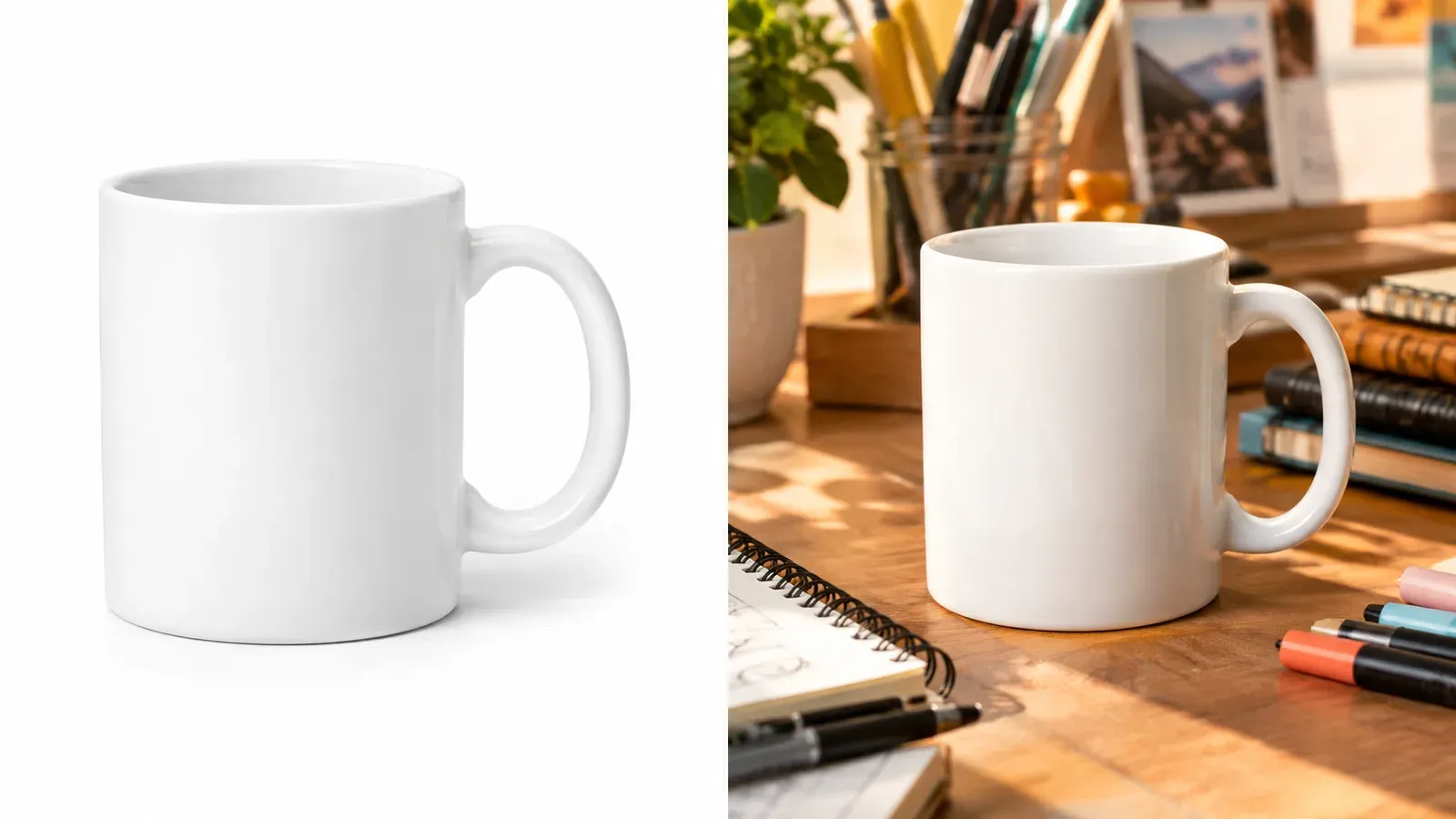
The first step is a clear, bright primary photo that stands out in search results. Etsy rewards lifestyle images that show the product in context. A plain mug on a white background might get scrolled past, but a mug on a cluttered engineer’s desk next to a protractor and blueprint draws the eye. That’s where Listystyle changes the game. Instead of spending hours staging a photo shoot, you select your product, choose a scene, and Listystyle creates realistic lifestyle mockups that you can use across your listings. Because the images look like they were shot by a professional, click‑through rates tend to improve, which feeds that positive quality signal back to the algorithm.
How Can I Use Product Photos to Improve Etsy Ranking?
Photos don’t just drive clicks - they also keep shoppers on your listing and reduce bounce. Etsy’s search algorithm monitors how long visitors spend viewing your listing after clicking from search. Strong, varied images are among the few levers you can pull to increase dwell time.
Building an Image Stack That Tells a Story
Your listing’s image stack should walk the buyer through a story: the first image grabs attention, the second shows scale or usage, the third highlights a detail or material, and later images build trust with size charts or packaging shots. The more time a potential buyer spends swiping, the more invested they become - and the algorithm notices.
A quick way to create a diverse set without a camera is Listystyle’s scene generator. You can produce mockups of your product on shelves, in kitchens, at a desk, or even outdoors - all from the same design file. Then you upload them directly to Etsy. Pair that with a Placement Editor to fine‑tune how your design sits on each product variant, and you have a consistent, eye‑catching visual line‑up.
Video: The New Ranking Booster
Etsy now prioritizes listings that include a short video. The algorithm sees a video as a signal of a more informative, higher‑quality listing. With Listystyle Video, you can turn your product images into a smooth slideshow‑style video that highlights key features. No filming or editing required. Adding a video to even a handful of your best‑selling items can lift your engagement signals - and that ripple often boosts shop‑wide ranking.
💡 If you have multiple color variations, use a combo image that shows all colors in one thumbnail. That thumbnail tends to get higher click‑throughs because shoppers in minutes see variety.
A Workflow That Builds Momentum Instead of Burnout
Knowing the ranking factors is one thing. Applying them to 50, 100, or 500 listings without losing your mind is another. The secret isn’t working faster manually - it’s building a repeatable system that automates the rote parts while you steer the creative direction.
Step 1: Create Designs with Confidence Using Trend Data
Stop guessing what will sell. Use Trend Compass to see which topics, phrases, and styles are surging in real‑time. It scans thousands of sources and surfaces ready‑to‑use designs and trend reports. You pick what aligns with your shop, and the guesswork vanishes.
Step 2: Assemble Products in Bulk with Creation Wizard
Once you have designs, open the Creation Wizard. Select your designs from My Artworks or the Artwork Gallery, choose the products you want to list them on (mugs, t‑shirts, totes, etc.), and the wizard generates all mockups and variants in one batch. You can check each creation, use the Placement Editor to adjust design placement, and then move on.
Step 3: Generate Listing Copy That Actually Ranks
Now comes the part sellers dread: writing titles, tags, and descriptions for every creation. Instead of spending hours, use Magic Wand on each batch. It reads your product and design and writes tailored SEO content. You review and approve, ensuring every listing sounds human and on‑brand, but you eliminate the tedious writing block.
Step 4: Publish on a Schedule That Feeds the Algorithm
Consistency is a quiet ranking factor. Burst‑publishing 50 listings at once and then going silent for weeks confuses the algorithm. With Scheduled Publish, you can set a drip schedule - such as “every 6 hours” or “once a day” - and Listybox will release your listings on that cadence. The algorithm sees fresh, active shop behavior, and your new listings get indexed in an orderly wave.
Step 5: Let Orders Fulfill Themselves
When a sale comes in, Zero‑Touch Fulfillment automatically routes the order to the best printer and uploads tracking to Etsy. This keeps your shipping and reviews clean, indirectly feeding your overall shop quality score. You wake up to sales notifications, not packing lists.
This workflow doesn’t force you to give up control. You choose the designs, check every listing, and set pricing. But you replace hours of manual copy‑pasting with a structured system that produces Etsy‑ready listings in minutes.
Does all of this feel like a lot to set up? You don’t have to start from scratch. With Listybox Store Setup, our expert team opens your Etsy store, configures branding, lists your first 10 products with full SEO, and gives you a personal onboarding session. See the pricing page for what this service covers and what it costs.
Next, try it yourself. The free plan includes full access to the Creation Wizard, Magic Wand, and Scheduled Publish. No credit card is needed to start. Start free – no credit card required
Why Gut Feelings Fail Without Data
Relying on intuition alone is the quickest way to spin your wheels. Without data on what’s trending, you risk filling your shop with designs nobody is searching for. The sellers who consistently rank high are those who blend creative instinct with demand signals.
The Trap of Copying Bestsellers
When Liam looked at the first page of his niche, he saw mugs with the phrase “Trust Me I’m an Engineer.” So he made a similar design. But Etsy already had 2,000 results for that exact phrase, many with hundreds of reviews. As a new listing, his product had almost no chance to climb. The smarter play is to find adjacent, rising trends - phrases like “civil engineer graduation gift 2026” or “engineer dad joke mug.” That’s exactly the type of long‑tail insight Trend Compass delivers, while also providing fresh designs you can reserve before they become saturated.
Testing Without Over‑Committing
You can test a trend with just a few creations, see how the market responds over a week, and then expand if the data supports it. Because the Creation Wizard and Magic Wand can go from design to live listing in minutes, you’re free to experiment without exhausting your time. This lean testing model keeps your shop nimble while the algorithm sees fresh content, which in itself is a positive signal.
If you’re curious about how to turn one successful design into an entire product line without reinventing the wheel, take a look at How to Turn One Design into a Multi‑Product Goldmine on Etsy (Without the Burnout).
Keeping Your Listings from Stalling
Even after you rank, listings can lose position. The algorithm is never static; it constantly re‑evaluates based on recent performance. A three‑month‑old listing that hasn’t had a sale in weeks will slowly slip beneath newer, more active competitors.
Refreshing Without Breaking What Works
Major overhauls of a listing that is already ranking can reset its history, so you should instead make small, incremental improvements. Update one or two tags to reflect seasonal shifts, swap in a fresh primary photo created with Listystyle, or add a new video. These micro‑updates signal to Etsy that the listing is still actively managed, without the risk of losing ranking authority.
The Role of Shop Promotion Outside Etsy
Ranking inside Etsy doesn’t exist in a vacuum. External traffic from social media, email newsletters, or Pinterest can boost your listing’s engagement signals, because Etsy sees visitors arriving from outside and interprets it as proof of demand. You don’t need a massive following - just a few well‑placed links can send a steady trickle of shoppers. And once they’re on Etsy, your optimized listing does the conversion work.
If you’re looking for a no‑fluff roadmap to earning income online through Etsy POD, our page How to Make Money Online: The Realistic 2026 Path with Etsy Print on Demand ties the entire strategy together.
The One Mistake That Erases All Your Progress
Many well‑meaning sellers purchase “Etsy SEO services” that promise first‑page rankings through black‑hat tactics like exchanging favorites or using bot traffic. Etsy’s trust and safety team detects these manipulations quickly. The penalty can range from a ranking demotion to a permanent shop suspension. There are no shortcuts that outsmart the system long‑term.
The only lasting method is to build real relevance and quality - and that’s where tools that speed up the legitimate work shine. With Listybox, you aren’t gaming the algorithm; you’re simply removing the friction that slows down good SEO. The result is more time to design, to interact with customers, and to grow your brand.
⚠️ Avoid services that guarantee a specific ranking position. SEO on Etsy is dynamic and personalization‑driven, so no single position is static across all shoppers.
Your Ranking Journey Starts with One Optimized Listing
Ranking high on Etsy isn’t about magic; it’s about systematically covering the signals that matter: relevance, listing quality, engagement, and consistency. Yes, doing that manually can feel like a second full‑time job. But by using a platform that automates the repetitive parts - writing SEO copy, generating lifestyle visuals, scheduling publishing - you free yourself to focus on what only you can do: building a brand that customers love.
Ready to see it in action? Start free – no credit card required and create your first optimized listing today.
Listybox
Create listings 10x faster with Listybox.
Frequently asked questions
Put this into practice in your shop.
Every step from design to live listing, on one platform. Start on the free plan.
Related posts

Want to go deeper? Read our in-depth Etsy guides · Browse 100 Etsy niche guides