

Most Comprehensive Product Lines for Maximum Delicacy: A No-Burnout Blueprint for Etsy Sellers

Key takeaways
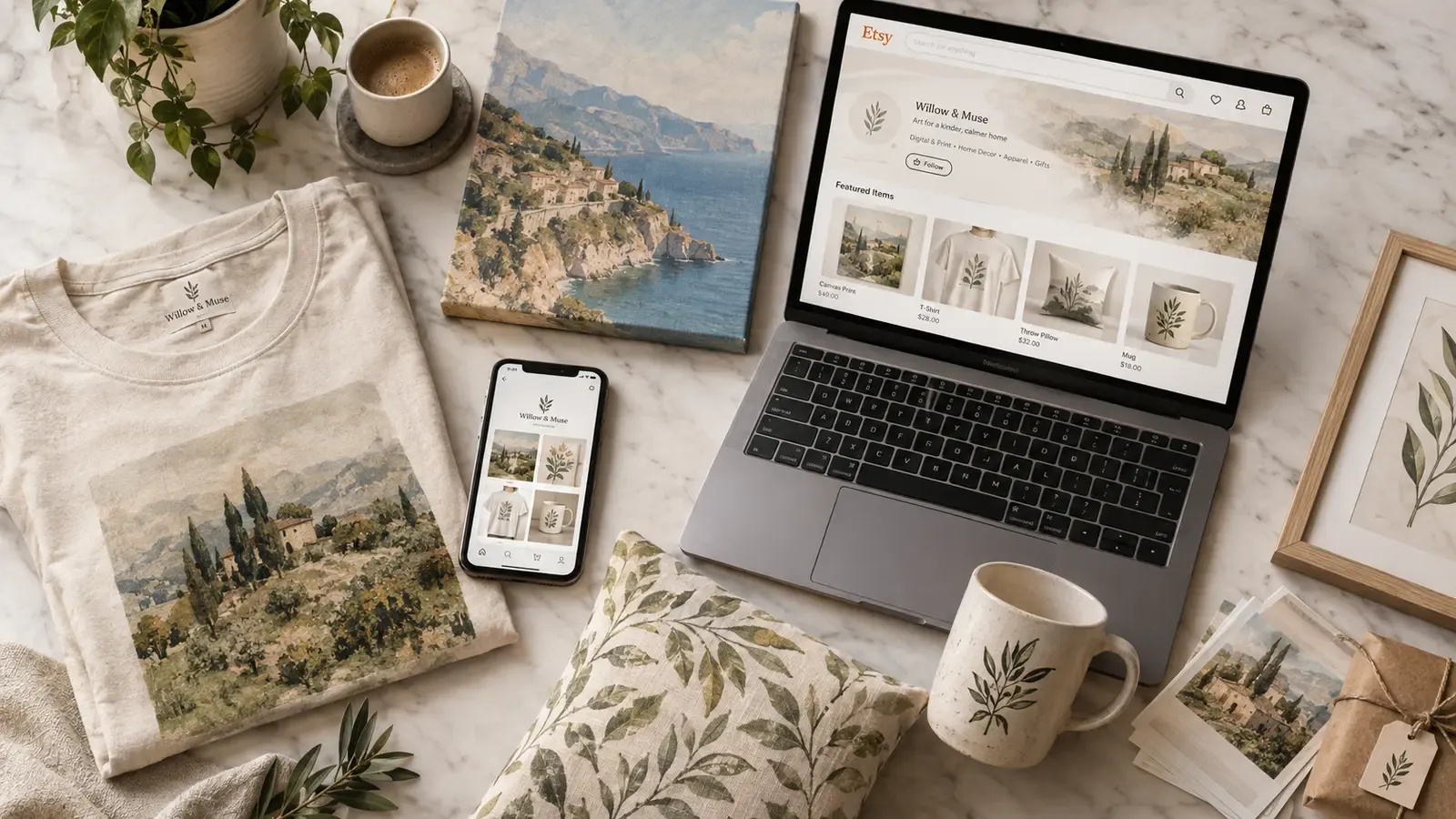
A truly comprehensive product line means turning one delicate design into multiple physical formats without losing the fine details that make it special.
Manual placement editing, background removal, and mockup creation for every fragile product variant is the fastest road to creative burnout.
Listybox’s Creation Wizard, Placement Editor, and Background Remover let you keep full artistic control while building an entire delicate collection in minutes, not hours.
Listystyle generates realistic lifestyle images that protect the perceived delicacy of your products, replacing risky physical photoshoots.
Zero-Touch Fulfillment ensures your fragile items are produced and shipped with care, even when you’re not watching.
Ava is an illustrator. Her watercolor botanicals feel like pressed flowers on paper - soft, layered, impossibly delicate. For two years she sold only digital downloads on Etsy, terrified that printing her work on a mug or a canvas would crush the very delicacy her customers loved.
Then a repeat buyer asked for a linen pillow cover. Then a ceramic ornament. Then a sheer chiffon scarf. Ava realized she was sitting on a demand for a comprehensive product line - a collection that translated her delicate aesthetic across dozens of physical formats. The thought excited her. The execution? It nearly broke her.
Building a delicate product line isn’t about slapping one design on everything and calling it a day. It’s about preserving fine linework, transparent watercolor edges, subtle gold foils, and soft gradients across products that have completely different surfaces, textures, and printing requirements. Do it manually, and you’ll drown in mockup revisions, misplaced artwork, and the nagging fear that a customer will receive something that looks nothing like your vision.
This guide walks you through exactly how to build the most comprehensive product lines for maximum delicacy - without the burnout - using a workflow that respects your art and your time.
What Does a “Comprehensive Product Line” Actually Mean for Delicate Designs?
A comprehensive product line isn’t just a long list of items. For sellers whose brand revolves around delicacy - fine art, botanical illustrations, minimalist calligraphy, vintage lace patterns, soft watercolor abstracts - it means offering enough variety to meet a customer wherever they are, while keeping the visual integrity of the design intact on every single surface.
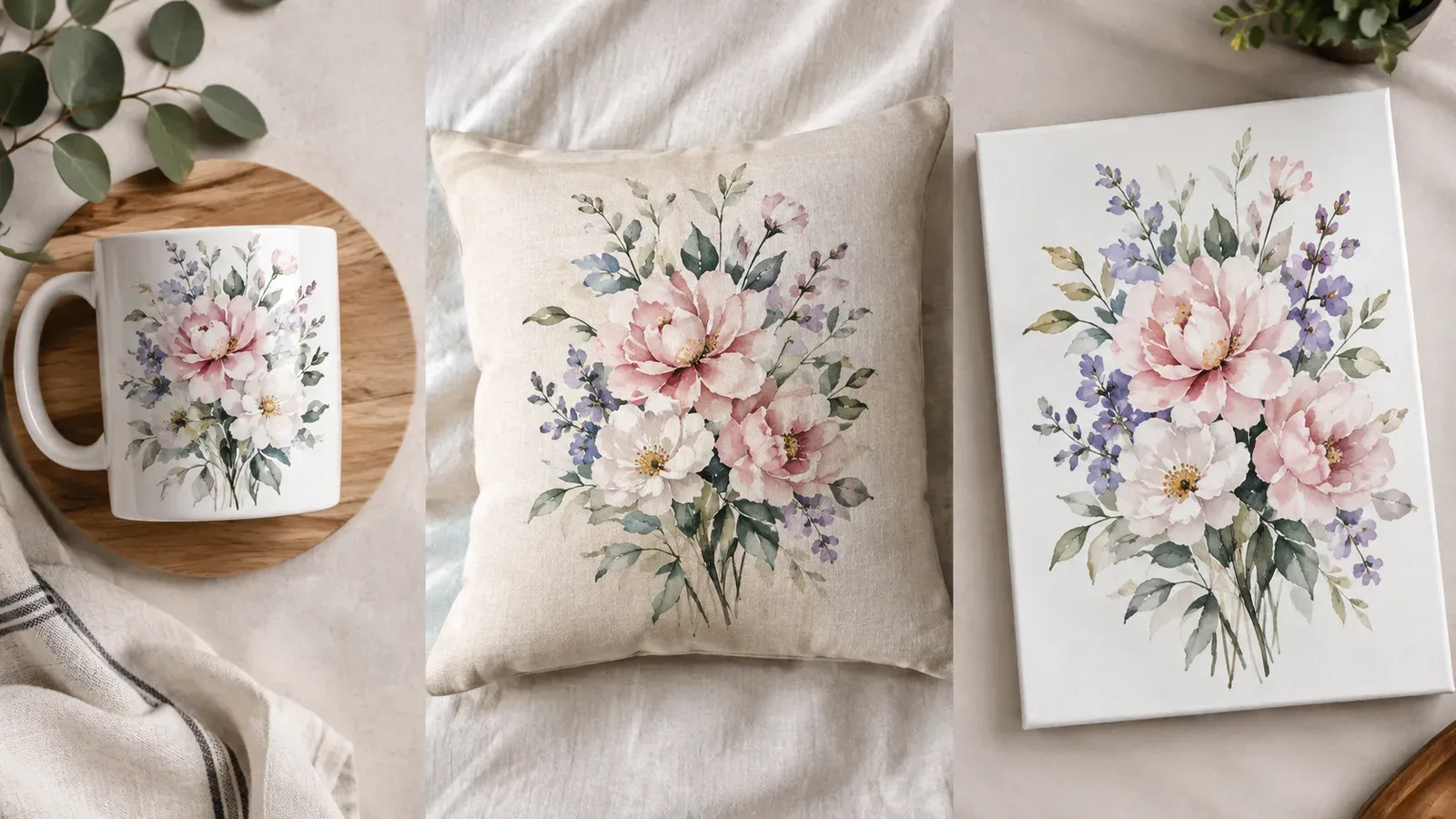
Think about a single delicate floral illustration. A buyer might want it as:
A fine art paper print (where detail and color accuracy are everything)
A ceramic mug (where the design must wrap smoothly without distortion)
A linen throw pillow (where the fabric texture can eat fine lines if not placed correctly)
A sheer scarf (where transparency and placement make or break the look)
A wooden wall hanging (where the grain interacts with the artwork)
Each product changes how the design behaves. A placement that looks perfect on a flat canvas print can look awkward on a curved mug. A transparent background that works on a white tee disappears on a natural linen tote. Scaling a delicate product line manually means you’re essentially re-designing every single listing from scratch.
💡 Practical tip: Before you add a new product type, test how your most detailed design looks on it. If fine lines vanish or colors shift dramatically, that product may need a simplified version of your artwork - not the original file.
Ava discovered this the hard way. She uploaded her high-resolution watercolor file to a mug template, only to find the delicate leaf veins had turned into a muddy green blur. She spent three evenings re-editing placement, resizing, and ordering samples. That was just one product. She had twelve more on her wish list.
This is where most sellers stall. The ambition to offer a full line of delicate products is there, but the manual execution cost - in time, energy, and sample orders - is simply too high. The hidden trap is that delicacy doesn’t scale the same way a bold, graphic t-shirt design does. Every product demands individual attention.
How Can You Scale a Delicate Product Line Without Losing Quality?
The answer isn’t to work harder. It’s to build a creation system that treats each product variant as a separate canvas, but lets you control the artwork placement, background, and mockup from one central hub. For delicate designs, three things matter more than anything else: precise placement, clean artwork edges, and mockups that don’t lie.
Precise Placement Across Dozens of Products
When you’re turning one design into twenty products, you need to decide how the artwork sits on each surface. Does it fill the printable area? Does it sit centered with a border? Does it repeat in a pattern? For delicate designs, a one-size-fits-all approach ruins the aesthetic.
Listybox’s Placement Editor gives you that control without opening a separate design tool for every variant. Inside the Creation Wizard preview screen, you can open any product mockup and drag, resize, or choose from preset fit modes. If your watercolor peony needs to sit slightly lower on a tote bag to avoid the handle seam, you adjust it once - and then apply that exact custom placement to every other tote bag in your collection with a single click. No re-uploading, no re-aligning.
This is crucial for delicacy. A fine line drawing that’s even two millimeters off-center on a mug looks unintentional. The Placement Editor lets you lock in the position that honors your artwork’s balance, then replicate it across all variants of that product type. You keep final control; the tool removes the repetitive manual labor.
Clean Artwork Edges Without a Design Degree
Delicate designs often rely on transparent backgrounds, soft shading, or hand-drawn edges that don’t end in a hard crop. When you upload a design with a white or off-white background to a product, that background becomes part of the print - and on a natural linen pillow or a cream ceramic mug, it looks like a cheap sticker.
Removing backgrounds manually in photo editing software is tedious, especially for artwork with wispy edges or semi-transparent watercolor washes. Listybox’s Background Remover, available right inside the My Artworks panel, handles this with one click. It analyzes your artwork, removes the background automatically, and saves a new transparent version next to your original - at no extra cost.
Now your delicate floral illustration can sit directly on the product surface, letting the material’s texture show through the transparent areas. That’s the difference between a product that looks mass-produced and one that feels intentionally crafted. For maximum delicacy, clean edges aren’t optional.
⚠️ Important warning: Always review the transparent version on a dark product mockup before listing. Some removal algorithms can eat into semi-transparent brushstrokes if the contrast is low.
Mockups That Preserve the Perception of Delicacy
A delicate product needs a delicate presentation. A flat, white-background mockup won’t communicate the softness of a linen pillow or the sheen of a ceramic glaze. But lifestyle photography - staged scenes with props, natural light, and contextual settings - is expensive and slow.
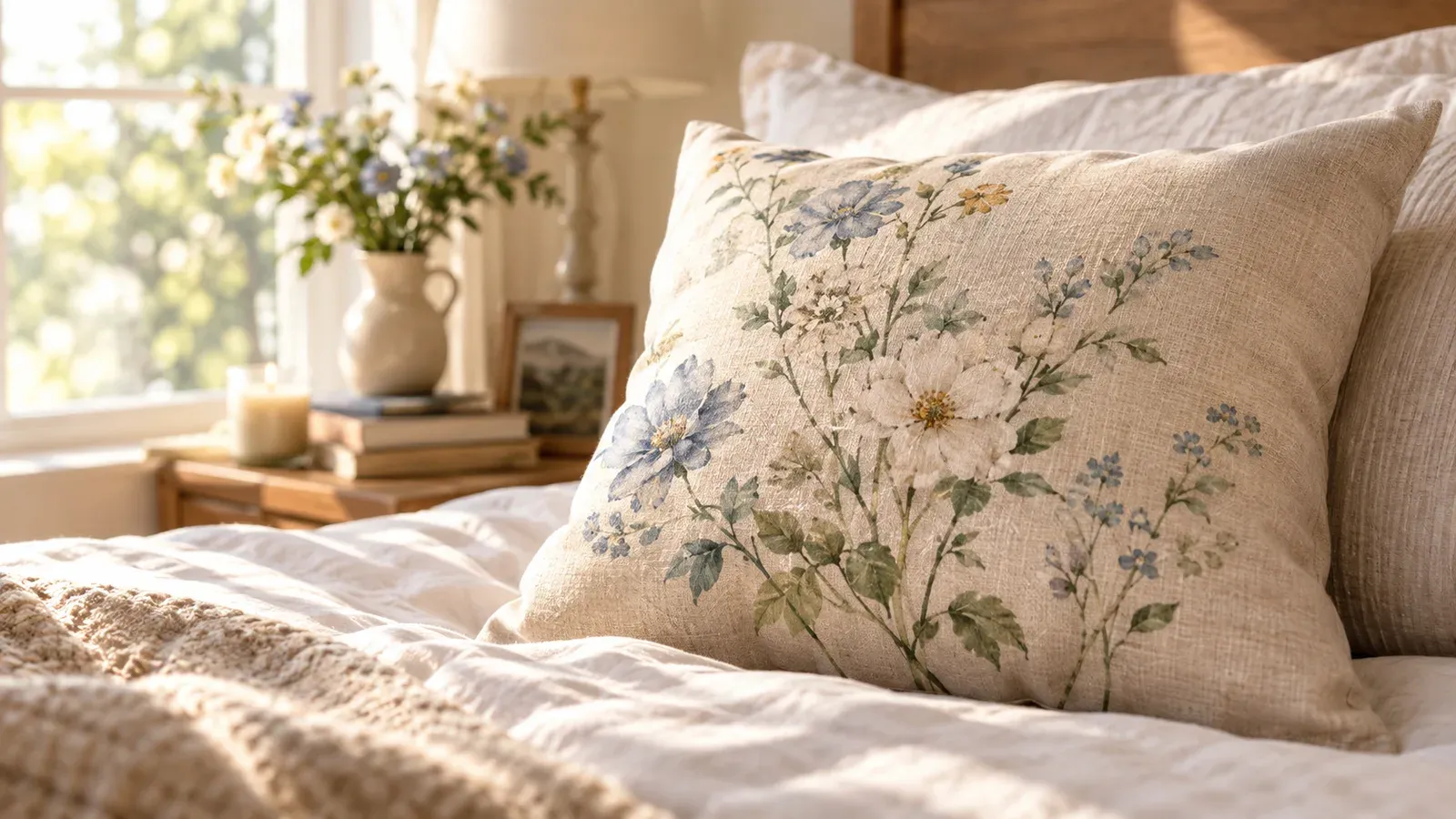
Listybox’s Listystyle solves this by generating hyper-realistic lifestyle images that understand your design and target audience. You select how many scenes you want, and the feature places your product into relevant, real-world settings: a linen pillow on a sunlit reading chair, a ceramic mug on a marble countertop with fresh eucalyptus, a sheer scarf draped over a vintage mirror. The images preserve the fine details of your artwork while showing the product in an aspirational context.
For delicate product lines, this is a game-changer. A watercolor print photographed flat on a desk says “print.” The same print shown in a softly lit bedroom with linen bedding says “lifestyle.” Listystyle lets you create that emotional connection for every product in your line without a single photoshoot.
We covered the hidden costs of free mockups in our post on Free T Shirt Mockup: Hidden Costs and Smarter Alternatives for Etsy Sellers. The same principle applies tenfold for delicate items where generic templates flatten your artwork’s nuance.
How Do You Handle SEO for a Large Line of Delicate Products?
When you’re listing twenty delicate products instead of two, the SEO workload multiplies. Each product variant needs a unique title, a full set of 13 tags, and a description that speaks to the specific buyer intent for that item. A customer searching for “watercolor floral canvas print” is not the same as someone searching for “dainty botanical mug gift.”
Writing all that copy by hand, while keeping it compelling and search-optimized, is where most delicate product lines stall. Sellers either copy-paste generic descriptions (which hurts Etsy SEO) or burn out trying to write unique copy for every listing.
Listybox’s Magic Wand handles this by understanding the specific product and design combination you’ve created. Select your creation, click once, and it generates an SEO-optimized title, 13 relevant tags, and a sales-focused description that reflects the delicacy of your artwork and the product it’s printed on. It doesn’t give you generic filler - it writes copy that actually describes the linen pillow with your watercolor peony, not just any pillow.
This matters because Etsy’s search algorithm rewards relevance. A listing that accurately describes its materials, style, and use case will always outperform a generic one. For delicate products, the language matters even more: words like “soft,” “fine art,” “botanical,” “hand-painted look,” and “minimalist” signal the quality buyers are seeking. Magic Wand weaves those signals into every listing, while you stay in control to edit and refine.
For a deeper dive into how Etsy search works for POD sellers, read our Etsy Search Engine Optimization: A 2026 Guide for Print-on-Demand Sellers.
Why Is Fulfillment the Silent Killer of Delicate Product Lines?
You’ve perfected the placement, cleaned the artwork, generated stunning mockups, and written beautiful SEO copy. A customer orders a delicate ceramic ornament with your hand-drawn gold foil detail. Then the fulfillment partner prints it off-center, packages it poorly, and it arrives chipped.
That one order can undo months of brand trust. Delicate products demand a fulfillment process that respects the fragility of both the item and your reputation.
Listybox’s Zero-Touch Fulfillment removes the manual order processing that introduces errors. When an Etsy order comes in, the system automatically detects it, routes it to the best-performing print provider for that specific product type, and sends all necessary details. When the order ships, the tracking number is pulled back, the Etsy order is marked complete, and the customer is notified - all without you touching a thing.
This is especially important for delicate product lines because you’re likely using different print partners for different items. A fine art paper print might come from one provider, while a ceramic mug comes from another. Managing those relationships and order flows manually is a recipe for mistakes. Zero-Touch Fulfillment ensures consistency across your entire comprehensive line.
If you’re still comparing production partners, our Printify vs Printful vs Gelato: The Ultimate Etsy POD Comparison for 2026 breaks down which providers handle delicate products best.
How Can You Offer Multiple Delicate Products in One Listing Without Confusing Buyers?
A comprehensive product line doesn’t mean you need a separate Etsy listing for every single product type. In fact, grouping related delicate items into a single listing can improve the shopping experience and your listing’s conversion rate - if you do it right.
Listybox’s Combo Listing feature lets you combine multiple product types (like a t-shirt, a hoodie, and a canvas print) into one Etsy listing with a variation dropdown. When a buyer selects “Canvas Print” from the menu, the product images automatically update to show your delicate design on a canvas, not a t-shirt. The mockups, the pricing, and the production details all switch accordingly.
For delicate product lines, this is powerful. A customer who loves your botanical illustration might not know they want it on a linen pillow until they see it. A Combo Listing shows them the possibilities without forcing them to search your shop. It also keeps your shop looking curated rather than cluttered with dozens of near-identical listings.
We explored this strategy in detail in How to Turn One Design into a Multi-Product Goldmine on Etsy (Without the Burnout). The same principles apply beautifully to delicate aesthetics.
What’s the Real Cost of Building a Comprehensive Delicate Line the Old Way?
Let’s be honest about what Ava faced before she changed her workflow. To launch a line of 15 delicate products from one watercolor design, she would have needed to:
Manually remove the background from her artwork for each product type that required transparency.
Create 15 different placement files, adjusting for each product’s printable area and surface quirks.
Source or photograph 15 lifestyle mockups that didn’t look cheap or generic.
Write 15 unique SEO-optimized titles, 195 tags total, and 15 product descriptions.
List each item individually on Etsy, paying the listing fee for each one.
Manually process orders across multiple print providers, tracking each shipment separately.
That’s not a weekend project. That’s weeks of work, and at the end you’re exhausted, your creative energy is drained, and you’ve probably made mistakes that will cost you in returns or poor reviews.
Etsy charges a $0.20 USD fee for listing an item for sale. Taxes may also apply.
Now imagine doing this for ten different designs. The math becomes punishing, not because of the listing fees, but because of the sheer human hours required to maintain quality across a comprehensive delicate line.
Listybox changes the equation. You upload your design once to My Artworks, a cloud-based design vault that can hold up to 5,000 of your files. The system automatically analyzes each artwork and enriches it with relevant SEO keywords. Then, inside the Creation Wizard, you select your design and all the products you want to create. One click combines them into hundreds of ready-to-list creations, complete with mockups and variants.
From there, you can use Bulk Edit to fine-tune titles or tags across multiple listings at once, and Scheduled Publish to drip them onto Etsy over days or weeks, which keeps your shop active in the algorithm without flooding it all at once.
The result is a comprehensive delicate product line that still feels handcrafted, because you made the creative decisions - placement, background removal, mockup style, copy tone - but the repetitive execution was handled by tools designed for this exact workflow.
💡 Practical tip: Use Scheduled Publish to release one new delicate product every 6 hours. This signals consistent shop activity to Etsy’s algorithm without overwhelming your audience.
A Workflow That Honors Your Art
Ava’s story doesn’t end in burnout. She now runs a shop with over 80 delicate product listings across 8 design collections. Her watercolor peonies live on linen pillows, ceramic trinket dishes, fine art prints, and sheer scarves. Each product looks like it was designed specifically for that surface, because in a way, it was.
She spends her time painting new collections, not wrestling with mockups. When an order comes in for a delicate ornament, she trusts that it will be printed and shipped with care. Her customers leave reviews praising the “beautiful, soft details” and the “gallery-quality feel.”
This workflow isn’t about replacing your artistry. It’s about removing the manual friction that keeps your delicate designs trapped in a handful of listings. If you can paint it, draw it, or design it, you can build a comprehensive product line around it without losing the delicacy that makes your work worth buying.
Ready to build your own delicate empire? Start free - no credit card required and see how the Creation Wizard, Placement Editor, and Listystyle can turn one design into an entire collection in minutes, not hours.
For more on selling art without the operational headache, read our guide on Sell Art Online Without the Struggle: The Automation Guide for Creatives.
Listybox
Create listings 10x faster with Listybox.
Frequently asked questions
Put this into practice in your shop.
Every step from design to live listing, on one platform. Start on the free plan.
Related posts

Want to go deeper? Read our in-depth Etsy guides · Browse 100 Etsy niche guides