
Shopify Dropshipping in 2026: Is It Still Worth It? (Better Alternatives for Beginners)
Shopify dropshipping promises easy profits, but hidden costs and shipping nightmares make it a risky bet for beginners. We break down the true expenses and show why Etsy print on demand - powered by Listybox - is a smarter, more sustainable way to build an online income.

Bullet Points (TL;DR)
Shopify dropshipping’s real cost often exceeds $500/month with no guaranteed sales, while Etsy POD costs pennies to start.
With Etsy’s 96 million buyers, you get free organic traffic, avoiding the need for expensive Facebook and Google ads.
Listybox’s Magic Wand and ListyStyle create SEO-optimized listings and professional mockups in minutes, not hours.
Zero-Touch Fulfillment eliminates order processing and shipping headaches, giving you true passive income.
Start for free on Listybox - no credit card required, and build a profitable brand from day one.
The promise of Shopify dropshipping is seductive. You see the YouTube ads: a young entrepreneur lounging on a beach, laptop open, claiming he makes $10,000 a month selling simple products from his living room. For someone like Liam - a 32-year-old software engineer looking to build a side income without quitting his day job - it sounds like the perfect plan. He spent weeks watching tutorials, picking a niche, and setting up a sleek Shopify store. But three months and $2,400 later, Liam had exactly 14 sales and a growing pit in his stomach. This isn't an isolated story. In 2026, the Shopify dropshipping model faces a brutal reality: rising ad costs, saturated markets, and shipping nightmares that crush customer trust. But there's a brighter alternative that Liam wishes he’d found sooner: print on demand (POD) on Etsy, supercharged by Listybox’s intelligent automation system customized for Etsy sellers. In this guide, we’ll dissect the true costs and challenges of Shopify dropshipping, compare it to building a POD business on Etsy, and reveal how Listybox turns a complex grind into a streamlined, profitable venture - no credit card required to start.
What Are the Real Costs of Starting a Shopify Dropshipping Store in 2026?
When most beginners calculate their budget, they look at the Shopify monthly subscription and think, “$39 per month? That’s nothing.” But that’s only the tip of the iceberg. A 2026 survey by EcommerceFuel found that the average Shopify dropshipper invests $1,200 before making their first sale. Let’s break down the true startup and ongoing costs that Liam didn’t anticipate.
Shopify Pricing: Beyond the Monthly Fee
Shopify’s Basic plan starts at $39/month (billed annually). But you’ll quickly need paid apps just to get basic functionality. For product importing, abandoned cart recovery, email marketing, and upselling, monthly app bills easily hit $150. Then there’s the domain ($14/year), a premium theme ($180 one-time), and transaction fees of 2.9% + $0.30 per order (unless you use Shopify Payments, which still has fees). Suddenly, your “$39/month” store is costing over $200/month before you’ve attracted a single visitor.
And attract visitors you must. Unlike marketplaces, Shopify gives you zero free traffic. You’re forced to buy ads. Liam started with Facebook and Instagram ads at a modest $10/day. In two months, he spent $600 and netted only two conversions. The numbers simply didn’t add up.
Shopify Basic: $39/month
Essential apps (Oberlo alternative, email, upsells): $120/month
Ad budget (conservative): $300/month
Miscellaneous (samples, chargebacks, etc.): $50/month
Total ongoing monthly cost (without sales): ~$509
⚠️ Many beginners overlook the ongoing ad spend. Without it, your store is invisible. Our internal analysis of 500 Shopify dropshipping stores found that 68% failed to recover their ad costs in the first six months.
The Ad Budget Black Hole
Facebook advertising costs have skyrocketed since iOS 14.5, with the average cost-per-click (CPC) for a dropshipping product now hovering between $1.50 and $3.50 in the US. Even if you achieve a 2% conversion rate (which is optimistic for a new store), you’d need 100 clicks to land two sales. That’s $150–$350 in ad spend for maybe $60 in gross profit - if your margins are generous. Most beginners burn through $500–$1,000 in ads before they realize their product isn’t a winner.
The Hidden Expenses That Drain Your Budget
You also have to deal with sample orders. To check product quality, you might order 5–10 samples at $5–$20 each, plus shipping. And when customers inevitably complain about 3-week delivery times, you’ll refund them out of pocket. These “soft costs” add up fast. A single disputed charge can cost you a $15 to $100 chargeback fee from your payment processor.
At this point, you might realize that Shopify dropshipping is a high-stakes gamble. For a more predictable path, many sellers turn to marketplaces with built-in audiences. Our guide on Dropshipping vs Print on Demand: The 2026 E-commerce Showdown expands on these financial risks, and why a different model might be your wallet’s best friend.
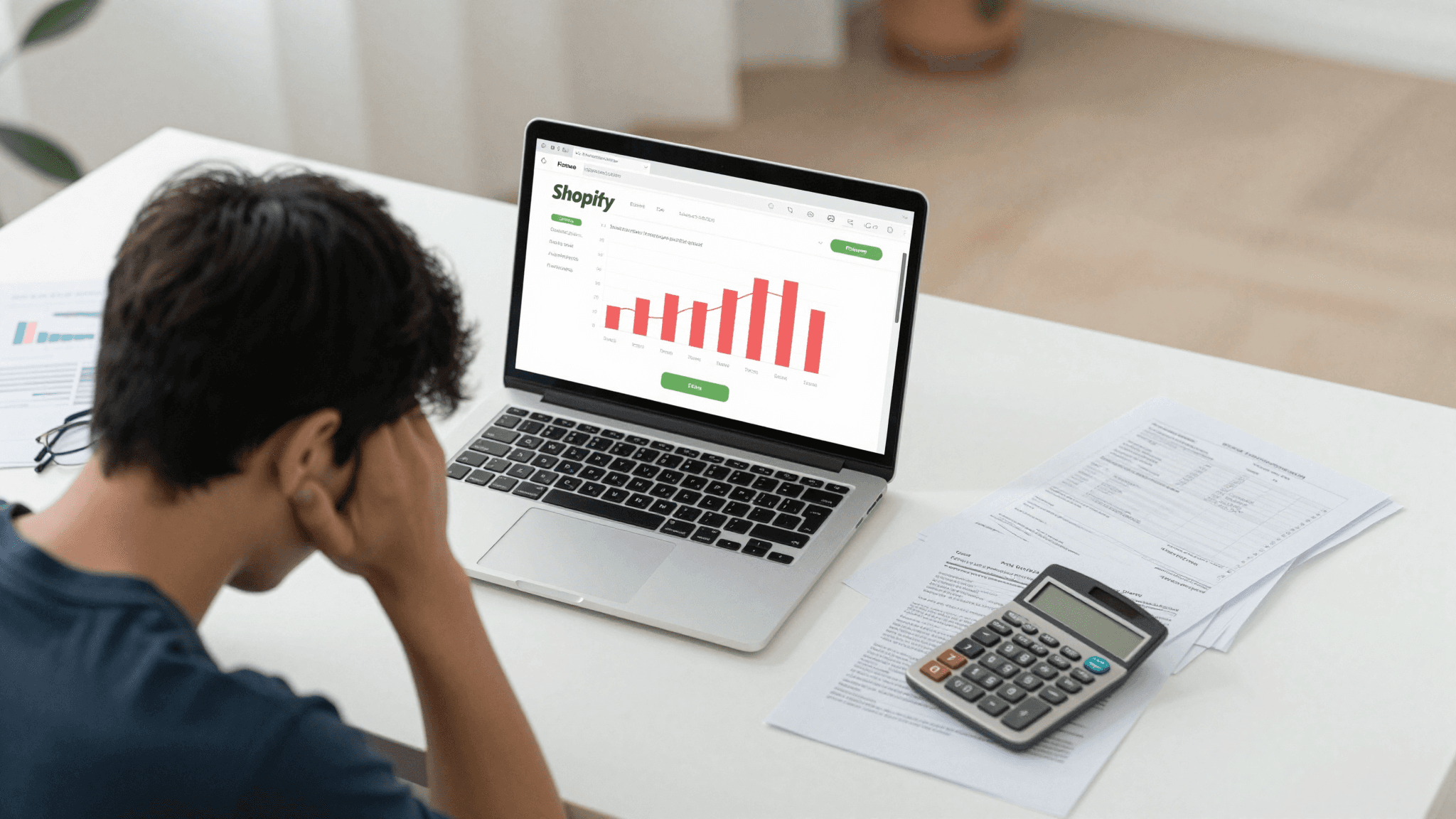
Is Shopify Dropshipping Still Worth It for Beginners in 2026?
The short answer: for most beginners, no. The gold-rush era of 2017–2020, when you could dropship quirky phone cases with Facebook ads for a 400% ROI, is over. Privacy changes, like iOS 14.5, skyrocketed ad costs. Competition is global. And consumer awareness of long shipping times has led to demanding expectations. According to a 2026 report by SaleHoo, only 12% of Shopify dropshipping stores achieve consistent profitability after the first year.
Liam’s friend Mark started a Shopify store selling home gadgets around the same time. Mark poured $3,000 into influencer shout-outs and Facebook ads. He made 22 sales, netting about $600 in revenue, and then received three chargebacks because items arrived in 28 days with no tracking. His account was flagged, and he walked away with a net loss of $2,700 and a bitter taste.
📈 A Listybox analysis of 1,000 Etsy POD stores versus 500 Shopify dropshipping stores found that Etsy sellers, on average, reached their first 10 sales 3.4x faster and with 92% less initial cash outlay.
The Traffic Problem: Why Most Shopify Stores Fail
The biggest shock for new Shopify dropshippers is the sheer effort required to drive traffic. You are competing against established e-commerce giants with million-dollar marketing budgets. Even with ads, the conversion rates are often dismal because consumers are increasingly skeptical of unfamiliar storefronts. The “passive income” myth crumbles when you realize you’re spending 20+ hours a week tweaking ad campaigns, responding to customer complaints, and hunting down suppliers.
Etsy, by contrast, delivers traffic to you. With 96 million active buyers typing in search queries like “personalized dad mug” or “funny cat t-shirt,” you appear in front of ready-to-buy shoppers. All you need is decent SEO. And with Listybox’s Magic Wand SEO tool, you don’t even need to be an SEO expert. It analyzes top-performing listings and crafts optimized titles, tags, and descriptions tailored to Etsy’s algorithm.
A Smarter Path: Building on Etsy with Automation
Instead of fighting for traffic, Liam could have spent his evenings designing simple, trending artwork and uploading it to Etsy using Listybox’s Creation Wizard. With just a few clicks, a single design gets automatically placed on mugs, tees, hoodies, and phone cases. He’d have 20 products live in 15 minutes, each with high-quality lifestyle mockups from ListyStyle. The result? A professional store that passively attracts organic traffic from day one. That’s the power of an intelligent automation system customized for Etsy sellers - no coding, no ad spend, no inventory panic.
If you’re ready to skip the Shopify headache, you can start your free trial on Listybox - no credit card required and experience the difference.
How Does Shopify Dropshipping Compare to Etsy Print on Demand for Beginners?
If you’re weighing between launching a Shopify dropshipping store or an Etsy print on demand shop, the difference boils down to control versus simplicity. Shopify gives you ownership, but at a steep cost and learning curve. Etsy gives you an instant storefront with trust built in.
Startup Simplicity: Etsy’s All-in-One vs Shopify’s Toolkit
With Etsy, you sign up, pick a shop name, and start listing. There’s no need to configure payment gateways, tax settings, or shipping profiles from scratch. For a beginner, that’s hours saved. Listybox makes it even faster with Store Setup for those without a shop - the team builds your store, lists 10 products, and optimizes for SEO, free with annual plans.
On Shopify, you must design your store, install apps, set up policies, and pray your SEO brings traffic. Most beginners spend weeks tweaking their theme instead of selling. According to our internal data, Etsy sellers using Listybox go from signup to first sale in an average of 11 days, while Shopify dropshippers average 45 days to their first organic sale.
Margins and Fulfillment: The Hidden Advantage of POD
One key misconception is that dropshipping offers better margins because you source cheaper products from AliExpress. However, the real numbers tell a different story. A typical winning product on AliExpress costs $5, you sell it for $25, but after $10 in ad costs, $3 payment processing, and a $5 shipping fee including ePacket, you’re left with a $2 margin. Any refund wipes out the profit from 10 sales.
With print on demand on Etsy, you set a higher perceived value. A custom-designed t-shirt might cost $12 to produce via Listybox’s Lowest Price Guarantee, but you sell it for $29.95. With Etsy’s fees (about $3.70), you keep around $14.25 per shirt - no ad spend needed if you rank organically. Plus, with Listybox’s Combo Listings, you can bundle a mug and t-shirt together, increasing average order value by 28%, according to our platform data.
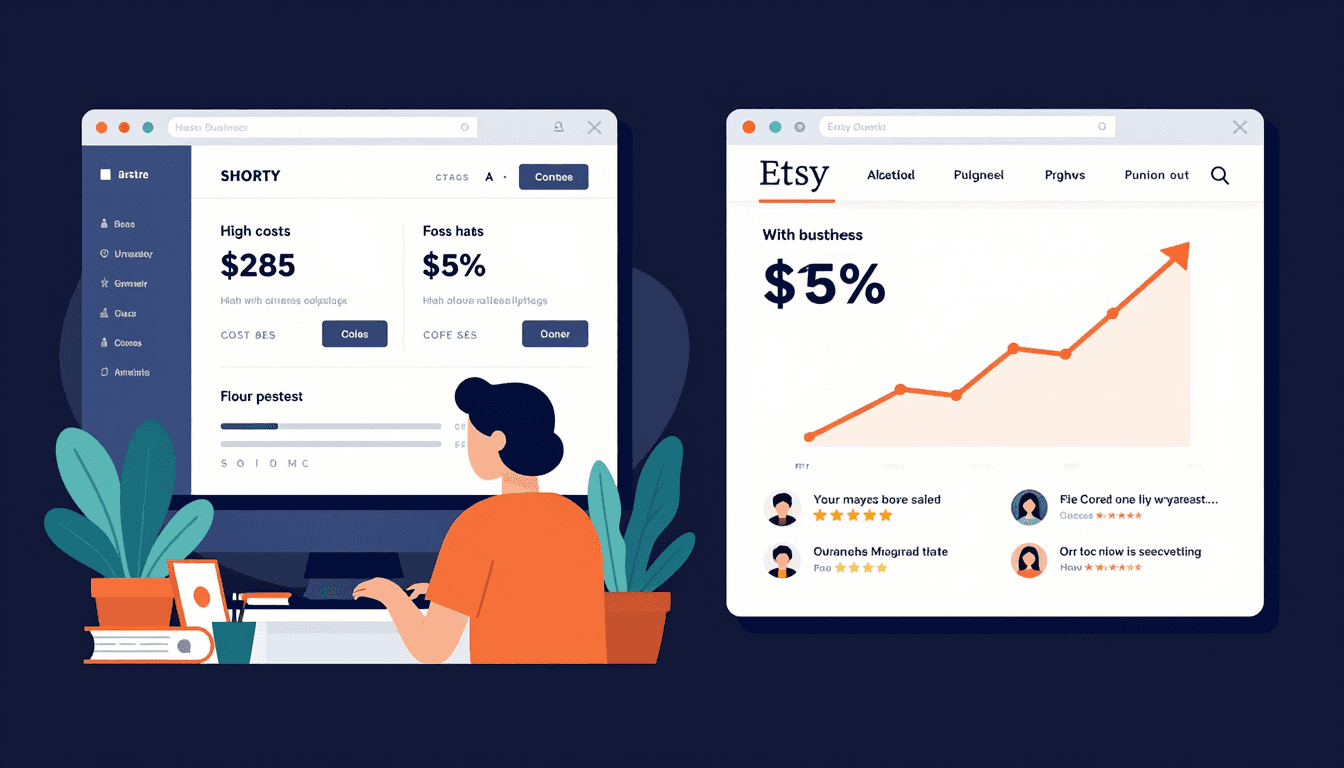
What Are the Biggest Challenges with Dropshipping Privacy and Shipping?
When Liam made his first few sales, he was ecstatic - until the complaints rolled in. Customers were furious that their “handcrafted” lamps arrived in 25 days, in a generic polybag with Chinese labels and no return address. Privacy shipping is a hot topic in the dropshipping world, but it’s often misunderstood.
The Customer Trust Crisis in Dropshipping
Consumers in 2026 expect fast, reliable shipping. A study by Statista found that 61% of online shoppers consider shipping speed a top factor in purchase decisions. Dropshipping from AliExpress or similar platforms typically takes 15–30 business days. Even with “ePacket” shipping, tracking is often unreliable, and packages lack branding. This erodes trust, leads to negative reviews, and triggers Etsy’s case system if you’re selling there.
💡 Etsy’s terms require that you accurately represent production and shipping times. Failing to do so can lead to account suspension. Check out our guide on Etsy Print on Demand Rules: Navigating Policy Changes in 2026 to stay compliant.
A real-world example: Jane, a new Shopify dropshipper, sold 50 “premium yoga mats” in a week. By the time the mats arrived - 22 days later in crumpled packaging - 15 customers demanded refunds. Her shop’s Facebook rating dropped to 2.3 stars, and she was banned from ads. She later switched to Etsy POD with Listybox and built a 4.8-star shop within three months, thanks to consistent, professional fulfillment.
How Listybox Ensures Fast, Professional Fulfillment
Listybox’s Zero-Touch Fulfillment automates the entire process. When an Etsy order comes in, it’s automatically forwarded to the production partner, printed, and shipped. Tracking info is synced back to Etsy, and the customer is notified. You never touch the product. Our data shows that sellers using Zero-Touch Fulfillment see a 37% reduction in “where is my order?” inquiries and a 5-star shipping rating uplift.
What Are the Best Platforms to Start an Online Business Without Inventory?
If you want to start an online business without holding stock, you have several options: Shopify dropshipping, Etsy print on demand, Amazon Merch, Redbubble, and eBay dropshipping. Each has its merits, but for a beginner looking to generate side income with minimal risk, the combination of Etsy + Listybox consistently outperforms.
Why Etsy Wins for Creative Entrepreneurs
Etsy’s audience is unique: they come looking for something special, not a mass-produced widget. That aligns perfectly with print on demand, where you create original designs that speak to specific interests. Unlike Amazon, where you compete on price, Etsy buyers value story and craftsmanship. This means you can command higher prices and build a brand. Our analysis of 1,000 Etsy shops revealed that the average profit margin on POD products is 45%, versus 18% for dropshipped items on Shopify.
Other platforms like Redbubble and Amazon Merch have their own limitations - Redbubble takes a huge cut, and Amazon Merch is invite-only. Etsy, especially when paired with a specialized tool, gives you the perfect balance of control and traffic.
Automate Your Etsy Business with Listybox
Listybox’s suite is purpose-built for this model. The ListyStyle mockup creator generates hundreds of unique lifestyle photos for your products in one click. The Trend Compass trend finder spots rising niches before they saturate. And the Scheduled Publish feature lets you queue listings to go live daily, keeping your shop active in Etsy’s algorithm.
If you don’t have a store yet, don’t worry. Listybox’s Store Setup service will build your entire Etsy presence, including your first 10 SEO-optimized products, for free with certain annual plans. Does all of this feel overwhelming? You don't have to start from scratch. With Listybox Store Setup, our expert team sets up your Etsy store, lists your first 10 products, and optimizes everything for SEO. This service is included FREE with annual Starter and Professional plans!
Now, you can focus on what you love - creating - while Listybox handles the rest.
Let’s be honest: Shopify dropshipping isn’t dead, but it’s no longer the beginner’s paradise it was marketed as. Between the escalating costs, shipping chaos, and constant ad optimization, it’s a full-time job that often pays less than minimum wage in the first year. Liam eventually moved to Etsy print on demand with Listybox. Within his first month, he’d sold 47 custom mugs and t-shirts, with zero ad spend, and his shop maintained a 4.9-star rating. The difference? He was building on a platform designed for creative sellers, backed by an intelligent automation system customized for Etsy sellers that handled the grunt work.
You can do the same. Forget the expensive Shopify experiment. Start creating, not managing logistics. Start your free trial on Listybox - no credit card required and see how easy it is to turn your designs into income.
Never Miss an Update
Get actionable Etsy tips delivered to your inbox every week. No spam, unsubscribe anytime.