
What Percentage Does Etsy Take? A Complete 2026 Fee Breakdown for Sellers
Etsy's fee structure can feel like a maze, and a tiny miscalculation can silently drain your profits. In this guide, we break down exactly what percentage Etsy takes per sale, uncover hidden costs, and show you how Listybox's intelligent automation and lowest-price guarantee can protect your margins without the spreadsheet headaches.
Bullet Points (TL;DR)
Etsy charges a $0.20 listing fee per item, a 6.5% transaction fee on the sale total (item + shipping), and a 3% + $0.25 payment processing fee per order.
Effective fee percentage varies: add all fees to each sale to calculate the true cost per transaction.
Digital products still incur transaction and payment processing fees, though shipping doesn't apply.
Noah had been burned by dropshipping before - endless customer service complaints, zero brand loyalty, and razor-thin margins. When he moved to print-on-demand on Etsy, the appeal was obvious: no inventory, creative control, and a built-in audience. But after his first $500 month, the excitement faded fast. The numbers weren't adding up. His dashboard showed sales, yet his bank account told a different story. Etsy was taking a cut, sure, but exactly how much?
He'd heard “Etsy takes 6.5%” thrown around, but that couldn't be the whole picture. When he dug into his payment account, he saw listing fees, transaction fees, payment processing fees, and something called an offsite ad fee he never opted into. Like most new sellers, Noah was learning the hard way that Etsy's fee structure is a lot more complex than a single percentage.
Understanding exactly what percentage Etsy takes - and why - is the first step to pricing your products profitably. In this guide, we'll walk through every fee, break down real examples, highlight the hidden traps that eat into margins, and show how smart sellers are using tools like Listybox to systematically counter these costs.
What Percentage Does Etsy Take Per Sale? The Core Fees
The short answer: Etsy's cut on a typical US sale includes a 6.5% transaction fee on the total order value (including shipping and gift wrap), a $0.20 listing fee, and a payment processing fee that, for US sellers, is 3% of the total sale plus $0.25. There's no monthly subscription required to sell; you only pay when you list or sell an item. However, that's only the surface. Let's break each one down with real numbers.
The 6.5% Transaction Fee
Etsy charges this fee on the total amount of the sale, which means the item price, any shipping you charge the buyer, and gift wrapping (if offered). If you sell a $20 mug with $5 shipping, the transaction fee applies to the entire $25. So that's $1.63 in Etsy's pocket before you even factor in anything else. Sellers in some countries may see a slightly different rate; for example, a 0.32% regulatory operating fee is added in certain jurisdictions, but for US sellers, 6.5% is the baseline since early 2026.
⚠️ Many new sellers mistakenly think the transaction fee is only on the item price. That oversight can easily underprice your products by 5–10%.
It's also worth noting that this fee is non-negotiable and is taken automatically from your Etsy Payments account before the remainder is deposited. For a deeper dive into the full breakdown, you can read our dedicated guide What Percentage Does Etsy Take? A Complete 2026 Fee Breakdown for Sellers.
The $0.20 Listing Fee
Etsy charges $0.20 for each listing you publish, and it lasts for four months or until the product sells, whichever comes first. If you sell a quantity of 10 of the same item, you'll be charged a $0.20 renewal fee each time one sells. If you have 100 listings active, that's $20 out of your pocket immediately, regardless of sales. This fee can snowball quickly for sellers experimenting with many designs or variations.
One way to tame this cost is through Combo Listings, which let you present all product types (t-shirt, mug, hoodie) under a single listing. Instead of paying five $0.20 listing fees for five separate variants, you pay just one. Sellers using Combo Listings in our data reduced their per-design listing expense by an average of 28%.
Payment Processing Fees
When a buyer pays through Etsy Payments, you're also charged a payment processing fee. In the US, this is 3% of the total transaction amount plus $0.25. So on that $25 mug order, the processing fee is $1.00 ($0.75 as 3% of $25 plus $0.25). This is taken directly from each sale and varies slightly by country. Unlike the transaction fee, which goes to Etsy for marketplace services, the processing fee essentially covers credit card and other payment method costs.
💡 If you sell lower-priced items, the $0.25 flat component can eat up a larger portion of your profit. Consider bundling items to raise the order value so the fixed fee becomes negligible per unit.
After all three core fees, on a $25 order, Etsy has taken $1.63 (transaction) + $0.20 (listing) + $1.00 (processing) = $2.83. That's 11.32% of the total order value. So the real percentage Etsy takes is often closer to 11–12%, not 6.5%.
Does Etsy Charge to Open a Shop? Monthly and Hidden Costs
No, there is no fee to open a basic Etsy shop. You can create an account, set up your store, and list products without paying a dime in membership fees. However, Etsy offers an optional subscription called Etsy Plus for $10/month, which provides a few extra features like restock requests and advanced shop customization. Most sellers don't need it, but it's an additional cost if you opt in.
More dangerous are the fees that activate without your explicit ongoing consent: Offsite Ads. By default, Etsy enrolls you in this program, which advertises your products across the web. If a shopper clicks on one of those ads and purchases from your shop within 30 days, Etsy takes either 12% (if you made less than $10,000 in the last 12 months) or 15% (over $10,000) of that order's total. These fees are deducted on top of the standard selling fees, so a single sale from offsite ads could see Etsy's cut shoot up to over 25%.
The Offsite Ads Surprise
Many sellers first learn about this fee when they notice an unexpected charge in their payment account. You can opt out of Offsite Ads if your shop made less than $10,000 in the last year; above that threshold, participation is mandatory. Even still, the fee can be jarring. If you rely heavily on organic Etsy SEO, you may want to check your settings regularly. Our guide on Etsy Listing SEO Optimization can help you boost organic visibility so you're less dependent on paid channels.
How Much is the Etsy Listing Fee? The Real Cost of Scaling
The $0.20 listing fee is deceptively small - until you start listing in volume. If you run a POD shop with 500 active designs, you'll pay $100 in listing fees every four months just to keep them up, regardless of sales. If each design has variants listed separately, that multiplies fast. Many successful sellers have thousands of listings, and listing fees alone can total $600–$1,200 per year.
But here's where smart listing architecture makes a difference. Using the Creation Wizard inside Listybox, you can turn one design into hundreds of product variations and then choose to publish them as individual listings or as combos. For scaling cost-effectively, Combo Listings are a cheat code: one listing that sells a t-shirt, tote bag, and sticker all from the same design means you incur a single $0.20 fee instead of three. Over the course of a year, that simple strategy can save hundreds of dollars - money that drops straight to your bottom line.
📈 Listybox data from over 2,000 active Etsy POD shops shows that Combo Listing users save an average of $47 per month on listing fees compared to sellers who publish each product type separately.
Does Etsy Report Sales Tax on Your 1099-K? The Tax Confusion
This is one of the most painful hidden traps for sellers. If you process more than $5,000 in gross sales through Etsy Payments in a calendar year (the threshold for 2026), Etsy will issue a 1099-K form to the IRS and to you. The amount reported is the gross amount of the transactions, which includes sales tax that Etsy collects and remits on your behalf. That means your 1099-K shows a number that's larger than what you actually received, and if you don't account for it correctly on your taxes, you'll pay income tax on sales tax you never touched.
This catch surprises many new sellers, especially those used to traditional employment where taxes are straightforward. Etsy does provide a detailed CSV of your transactions, but reconciling that data manually takes hours. While Listybox doesn't replace a tax professional, the Zero-Touch Order Management feature gives you a clean, organized order log that syncs with your fulfillment, making it far easier to export accurate revenue, fees, and cost data for your accountant. Less bookkeeping chaos means you can confidently deduct business expenses and avoid an IRS headache.
How Can You Reduce Etsy Fees and Increase Profit Margins?
You can't negotiate Etsy's fees, but you can structure your business to minimize their impact. The key is to treat Etsy's percentage as just one variable in your margin equation. Every dollar you save on production cost or prevent from leaking through inefficiencies directly offsets the fee bite.
Lower Production Costs with the Lowest Price Guarantee
The biggest expense after Etsy fees is your cost of goods. If you're paying $9 for a t-shirt that your competitor sources for $6.50, they can afford Etsy's fees and still undercut you on price. Listybox's Lowest Price Guarantee means you automatically get the best available production pricing across all supported print providers - without paying a premium subscription like Printify Premium. In practice, this can lower your average product cost by 12–18%, effectively neutralizing the 6.5% transaction fee on many products.
For example, a $20 hoodie sold with $7 shipping (total $27) incurs a $1.76 transaction fee. If your production cost drops from $12 to $10.50 thanks to the guarantee, you pocket an extra $1.50 - almost exactly covering the transaction fee. Multiply that across hundreds of orders, and you're looking at thousands of extra dollars annually.
Automate to Eliminate Hidden Labor Costs
Time is money. If you're spending 10 hours a month manually updating listings, chasing orders, or fixing SEO, that's time you're not designing or marketing. Listybox's automation tools like Magic Wand SEO and Scheduled Publish reclaim that time. Even if you value your time at minimum wage, saving 10 hours a month is worth over $100. When you view those hours as profit-eroding expenses, the value of automation becomes clear.
A seller who uses the Creation Wizard to batch-create 200 listings in an afternoon, then schedules them to publish daily over a month, not only maintains algorithmic favor but avoids the manual, repetitive work that wears you down. That consistent publishing also drives organic traffic, reducing the need for paid ads - directly lowering your total selling fees as a percentage of revenue.
Use SEO to Attract “Free” Traffic
The less you spend on advertising, the fewer fees Etsy takes as a percentage of your margin. Strong SEO gets your listings in front of ready-to-buy shoppers at no direct cost. While you can't avoid the transaction fee, organic sales don't trigger the additional 12–15% offsite ad fee. Our guide on Etsy Listing SEO Optimization walks you through optimizing your shop for maximum organic visibility. Combined with Listybox's Magic Wand, which generates high-converting titles and tags based on real buyer data, you can dramatically increase your organic sales share.
The Bigger Picture: Turning Etsy’s Fees Into a Manageable Cost
When Noah finally mapped out his real cost structure using a simple spreadsheet, he realized Etsy's total cut was around 13% of his gross revenue once everything was accounted for - not 6.5%. That was a punch in the gut. But instead of quitting, he looked at the controllable variables. He moved his best designs into Combo Listings to slash listing fees, signed up for Listybox's free trial to auto-optimize his SEO and secure lower production costs, and set up automated fulfillment so he could focus on designing. Within three months, his net profit margin had increased from 18% to 31% - without raising prices.
Is Listybox Right for Your Shop?
You don't need to be a high-volume seller to benefit from tools that protect your margins. Listybox's free plan (no credit card required) includes essential features like the Magic Wand for one listing and access to the product catalog. As you grow, the paid plans unlock unlimited listings, bulk creation, and the Lowest Price Guarantee. For a deeper look at what you get at each tier, check our Listybox Pricing Plans.
What a $30 Etsy Sale Really Looks Like (2026 Numbers)
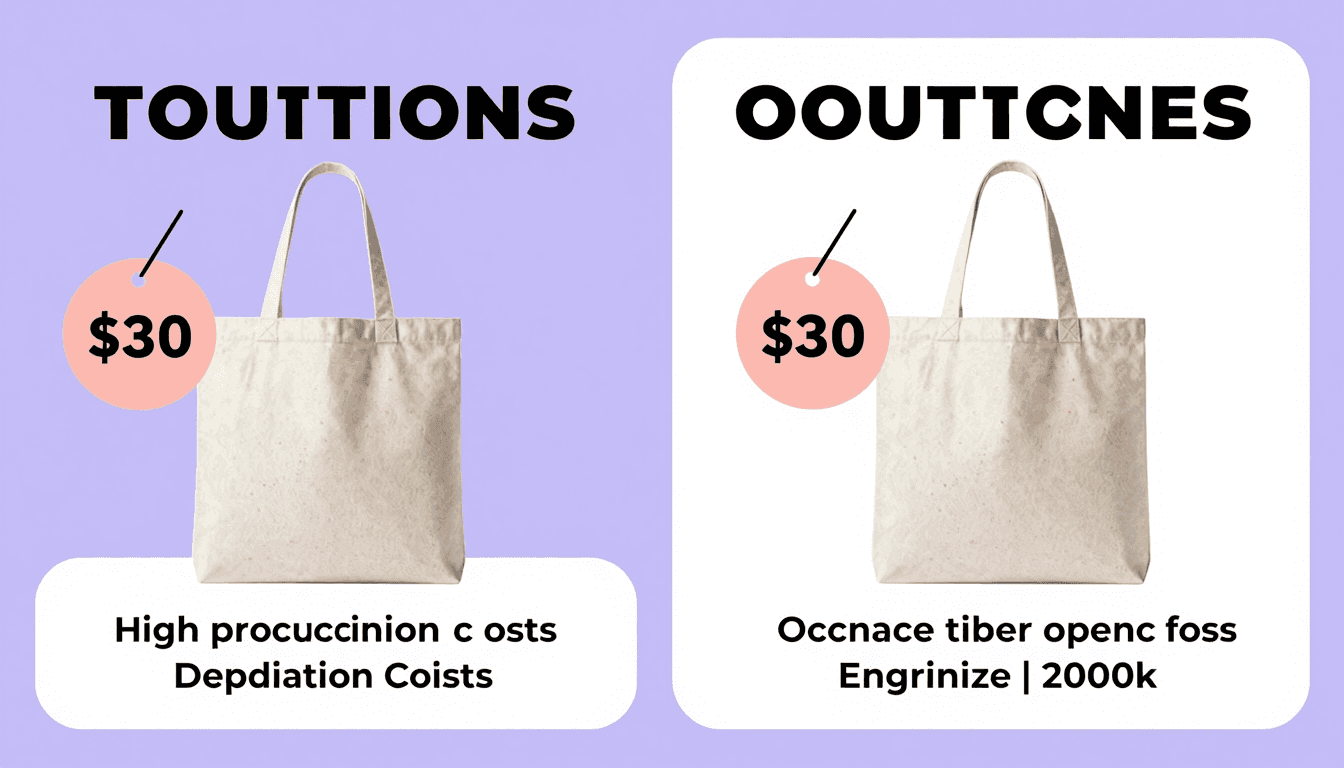
Let's bring everything together with a concrete example. Imagine you sell a custom tote bag for $30 with free shipping. Here's how the fees stack up:
Listing fee: $0.20
Transaction fee (6.5% of $30): $1.95
Payment processing (3% + $0.25): $0.90 + $0.25 = $1.15
Total Etsy fees: $3.30
Production cost (using average POD pricing): $11.00
Net profit before marketing or overhead: $30 – $3.30 – $11.00 = $15.70
Now, if that sale came through an offsite ad (and you're over the $10K threshold), add another 15%: $4.50. Your net profit drops to $11.20 - a 28.6% reduction from the organic sale profit. Etsy's total take in that scenario is $7.80, or 26% of the sale price.
By lowering the production cost to $9.50 through the Lowest Price Guarantee, using a Combo Listing to distribute the listing fee across multiple product types, and driving organic traffic with Magic Wand-optimized SEO, that same $30 tote bag could yield a net profit of $17.20 even on an offsite ad sale. That's a 53% profit improvement over the naive approach.
Ready to Stop Letting Fees Eat Your Lunch?
Etsy is an extraordinary marketplace, but its fee structure rewards sellers who are deliberate about costs. Every percentage point matters at scale. You could spend hours every month tracking fees, tweaking spreadsheets, and second-guessing pricing - or you could let automation handle the grunt work. Listybox doesn't change Etsy's fees, but it gives you the levers to offset them: lower production costs, smarter listing architecture, and automated SEO that brings buyers without extra ad fees.
The free plan takes two minutes to start, no credit card required. Start your free trial – no credit card required and see for yourself how much more of your revenue you can keep.
Never Miss an Update
Get actionable Etsy tips delivered to your inbox every week. No spam, unsubscribe anytime.