
What to Sell Online: The 2026 Guide to High-Margin E-commerce Products
Want to start an online business but stuck on what to sell? Buying wholesale inventory is risky, and guessing trends can cost you thousands. Learn how to find high-margin products you can sell with zero upfront costs using print-on-demand.

Bullet Points (TL;DR)
Starting an e-commerce business no longer requires buying risky bulk inventory or renting warehouse space.
Print-on-demand allows you to sell custom, high-margin products where you only pay for production after a customer buys from you.
Wall art, premium apparel, and personalized drinkware remain the highest-converting product categories for new sellers.
Success relies on finding specific niches rather than selling generic items to a broad audience.
Intelligent automation tools can handle product creation, market research, and order fulfillment, turning a complex business into a manageable side income.
The digital marketplace is expanding at a staggering rate. Millions of people are realizing that their 9-to-5 job might not be the only way to build financial security. You want a piece of that pie. You have the drive, the internet connection, and the willingness to learn. But the moment you sit down to start, you hit a massive brick wall: What exactly are you supposed to sell?
Choosing the right product is the single most important decision you will make as a new e-commerce entrepreneur. Pick the right item, and your store practically runs itself. Pick the wrong one, and you will spend months fighting for a single sale, draining your energy and your wallet in the process. The sheer volume of options is paralyzing. Should you sell electronics? Handmade crafts? Apparel?
This guide will break down exactly how to choose highly profitable products in 2026. We will look at the psychology of online buyers, the exact categories that yield the highest margins, and how to bypass the traditional risks of retail entirely.
The Traditional Retail Trap: Why Buying Inventory is a Mistake
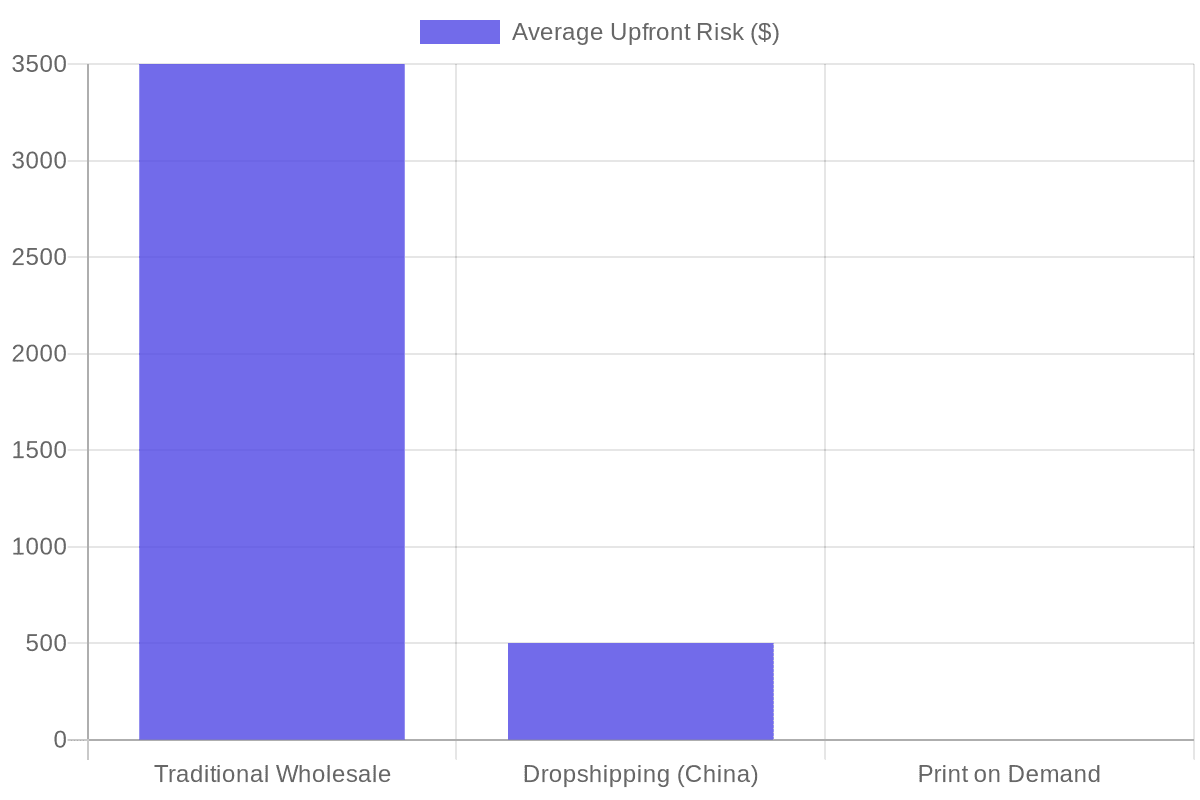
For decades, the standard formula for starting a retail business looked the same. You would find a supplier, usually overseas, and place a massive bulk order for thousands of dollars. You would clear out your garage or rent a small warehouse to store boxes of inventory. Then, you would launch your store and pray that people actually wanted to buy what you bought.
This model is incredibly risky for beginners. When you buy inventory upfront, you are making a massive gamble based on a guess. If the trend fades, or if your marketing does not work, you are left with a mountain of dead stock. Your hard-earned cash is trapped in cardboard boxes gathering dust.
Buying bulk inventory without a proven customer base is the number one reason new e-commerce businesses fail in their first year.
Furthermore, managing physical inventory is an exhausting job. Every time an order comes in, you have to find the item, pack it into a box, print a label, and drive to the post office. This manual labor scales terribly. If your store suddenly goes viral and you get 200 orders in a day, your life becomes a nightmare of tape and cardboard. You are no longer a business owner; you are a warehouse employee working for yourself.
The Print on Demand Solution: Zero Risk E-commerce
The modern alternative to the inventory trap is Print-on-Demand (POD). This business model completely rewrites the rules of e-commerce. With POD, you do not buy a single physical product until a customer has already paid you for it.
Here is how it works: You create a digital design and place it on a blank product, like a t-shirt or a mug, using a digital mockup. You list that virtual product in your online store. When a shopper buys the item, the order details are automatically sent to a professional printing facility. The facility prints your design onto the physical item, packages it, and ships it directly to your customer under your brand name.
You keep the difference between what the customer paid and the base cost of the item. There are no minimum order quantities, no storage fees, and absolutely zero packing tape involved. To understand the full landscape, you might want to read our detailed breakdown on Dropshipping vs Print on Demand: The 2026 E-commerce Showdown to see why POD offers vastly superior quality control compared to traditional overseas dropshipping.
By leveraging POD, you can test hundreds of different product ideas without any financial risk. If a design does not sell, you simply delete the listing. It cost you nothing but a few minutes of your time.
Top High-Profit Products to Sell Online This Year
Now that we have eliminated the risk of inventory, we need to focus on what actually sells. Not all items are created equal. You want products that have high perceived value, allowing you to charge a premium price and secure a healthy profit margin. Here are the top categories dominating the market.
Premium Heavyweight Apparel
The days of selling cheap, scratchy t-shirts are over. Today's consumers are highly conscious of quality and fit. They are willing to pay top dollar for apparel that feels luxurious and lasts a long time.
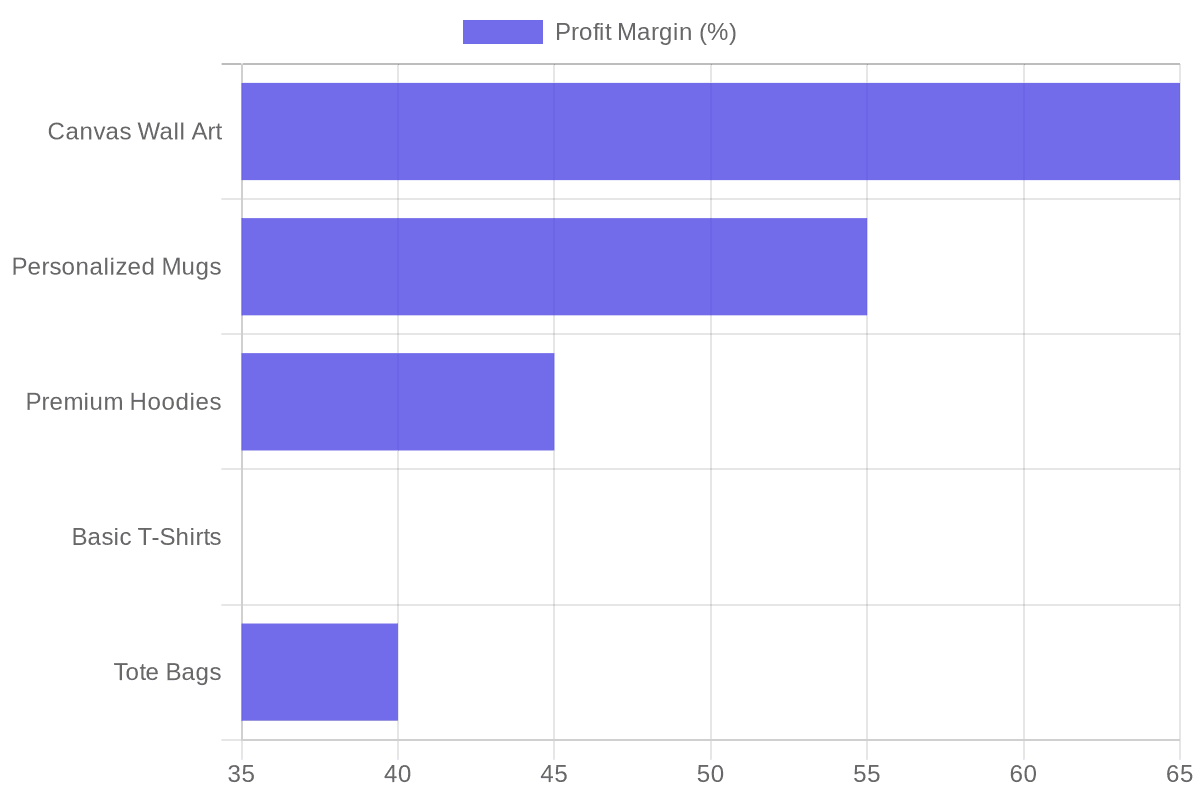
Heavyweight hoodies, oversized vintage-wash sweatshirts, and premium cotton tees are incredibly popular. The secret here is the perceived value. A standard basic t-shirt might sell for $20, leaving you with a $5 profit. However, a premium heavyweight hoodie can easily retail for $55 to $65. Even with a higher base cost, your net profit on a single hoodie can reach $20 to $25. Selling fewer items at a higher margin is the smartest way to build a sustainable business.
Museum-Quality Wall Art and Canvas Prints
If you want the absolute highest profit margins in the e-commerce space, look no further than wall art. People decorate their homes with pieces that reflect their personality, and they expect art to be expensive.
The production cost of a large, high-quality canvas print is surprisingly low compared to what customers are willing to pay. You might pay a print provider $25 to produce and ship a large canvas, but that same piece can easily retail for $85 to $120. That is a massive profit spread. Wall art is also less prone to returns than apparel, as you do not have to worry about sizing issues. For a deep dive into this lucrative category, check out our guide on How to Sell Wall Art on Etsy Print on Demand in 2026.
Personalized Drinkware and Mugs
Mugs are the ultimate evergreen gift item. They sell consistently all year round, with massive spikes during the holidays, Mother's Day, and Father's Day.
While a single mug might only yield a $6 to $8 profit, they make up for it in sheer volume. Customers rarely buy just one mug; they buy them for their entire office team, their bridal party, or their family members. The key to winning in the drinkware category is personalization. Allowing a customer to add a specific name or a custom date to a mug instantly increases its value and makes it a highly emotional purchase.
Niche Accessories and Tote Bags
Accessories like tote bags, phone cases, and desk mats are excellent add-on items. Tote bags, in particular, have seen a massive surge in popularity driven by eco-conscious consumers who want to reduce their use of plastic bags.
These items are incredibly cheap to produce and serve as walking billboards for your designs. They are perfect for targeting highly specific micro-niches, such as "plant lovers" or "book club members."
How to Find Hungry Buyers: The Power of Niche Selection
Knowing the physical product is only half the battle. The design printed on that product is what actually triggers the sale. The biggest mistake new sellers make is trying to appeal to everyone. They create generic designs like a simple flower or a plain text quote saying "Good Vibes."
The problem is that the market for "everyone" is already dominated by massive retail corporations. You cannot compete with them. Instead, you must become a big fish in a small pond. You need to target specific, passionate niches.
The riches are in the niches. A specific product for a specific person converts 4x higher than a generic design meant for everyone.
Instead of a generic dog shirt, create a shirt specifically for "Introverted Golden Retriever Moms Who Love Iced Coffee." This hyper-specific targeting speaks directly to the buyer's identity. When that specific person sees your product, they will feel like it was made exactly for them, making the purchase decision almost automatic.
Spotting Trends Before They Peak
Finding these profitable niches requires constant research. Many sellers spend hours every day scrolling through TikTok, reading news articles, and analyzing complex data tools just to figure out what people are talking about right now. It is exhausting work, and by the time you spot a trend manually, the market is often already saturated with competitors.
This is where intelligent tools change the game. Instead of guessing, you can rely on data. Listybox's Trend Compass trend finder acts as your personal market researcher. It constantly scans thousands of data sources to detect rising trends before they hit the mainstream. When a specific niche starts gaining traction, the system alerts you and even provides ready-to-sell designs tailored for that exact audience, allowing you to capture the market while the demand is high and the competition is low.
Overcoming the "I Am Not a Designer" Barrier
One of the most common fears holding people back from starting an online store is a lack of creative skills. You might know exactly what niche you want to target, but you have no idea how to use complex graphic design software.
In the past, your only options were to spend months learning design principles or to pay expensive freelancers on platforms like Fiverr or Upwork. Hiring a designer for every single product idea quickly drains your budget, especially when you need to test dozens of ideas to find a winner.
You do not need to be an artist to run a highly profitable store. The modern e-commerce landscape offers incredible resources for non-designers. With Listybox's Artwork Gallery, you gain instant access to over 100,000 professional, data-driven designs.
These are not random graphics; they are specifically crafted based on what is currently selling in the market. You simply browse the gallery, select a design that fits your niche, and apply it to your chosen products. It completely removes the creative bottleneck, allowing you to operate as a business strategist rather than a struggling artist.
Pricing Your Products for Maximum Profit
Once you have your product and your design, you need to set a price. Pricing is a delicate balance. Price too high, and you scare off buyers. Price too low, and you leave money on the table or, worse, operate at a loss after platform fees are deducted.
To calculate your true profit, you must understand your total costs. This includes the base cost of the physical item, the cost to print the design, the shipping fee, and the transaction fees charged by your selling platform. If you are selling on a marketplace, understanding these deductions is crucial. We highly recommend reviewing The Complete Etsy Fees Calculator Guide for 2026 to ensure your pricing strategy is mathematically sound.
Sellers who offer free shipping on orders over $35 see a 20% increase in their average order value, as buyers will add more items to their cart to reach the threshold.
As global retail e-commerce sales are projected to reach new heights, consumer expectations around pricing and shipping are solidifying. Buyers hate surprise shipping fees at checkout. A highly effective strategy is to absorb the shipping cost into the retail price of the item and offer "Free Shipping." A customer is much more likely to buy a $30 shirt with free shipping than a $25 shirt with a $5 shipping fee, even though the total cost is exactly the same. It is pure buyer psychology.
To ensure your margins stay healthy, you need to source your products at the best possible base price. Listybox's Lowest Price Guarantee uses collective buying power to secure top-tier production rates, meaning you get the best possible margins on every sale without having to pay for extra premium subscription tiers.
Standing Out with Professional Visuals
You can have the best product in the world, but if your photos look amateur, no one will click on your listing. In e-commerce, your image is your storefront window.
Many new sellers make the mistake of using standard, flat digital mockups provided by their print suppliers. These images look stiff, unnatural, and immediately signal to the buyer that the product is generic. When a buyer searches for an item, they are presented with a grid of dozens of competing products. If your image looks exactly like five other listings, you become invisible.
To command premium prices, your products need to look like they belong to a high-end lifestyle brand. This means showing your products in real-world settings: a mug sitting on a cozy cafe table, or a hoodie being worn by a model in an urban environment. Listybox's ListyStyle engine automatically generates these hyper-realistic lifestyle photos for your products, instantly elevating your store's perceived value and drastically increasing the likelihood that a browsing shopper will stop and click on your item.
Automating Your E-commerce Operations
Getting your store set up and your products listed is an exciting milestone. But what happens when you actually succeed?
Imagine waking up to find that a video you posted went viral, and you suddenly have 150 new orders. If you are managing your store manually, that "cha-ching" sound quickly turns into dread. You would have to manually copy and paste 150 customer addresses, send 150 orders to your print provider, wait for tracking numbers, and manually update 150 individual orders on your storefront. That is hours of mind-numbing data entry, leaving a massive margin for human error.
True passive income requires automation. Your business should work for you, not the other way around. Listybox's Zero-Touch Fulfillment acts as your personal operations director. When an order arrives, the system automatically detects it, routes it to the best print provider, and handles all the data transfer. Once the item ships, it automatically updates your store with the tracking number and notifies the customer. You literally do not have to lift a finger after the sale is made.
Ready to Launch Your Online Store?
Choosing what to sell online does not have to be a guessing game. By leveraging the zero-risk print-on-demand model, focusing on high-margin categories like wall art and premium apparel, and targeting specific passionate niches, you can build a highly profitable business from your laptop.
Does all of this feel overwhelming? You don't have to start from scratch. With Learn more about Store Setup, our expert team sets up your Etsy store, lists your first 10 products, and optimizes everything for SEO. This service is included FREE with annual Starter and Professional plans!
The tools to build a successful e-commerce empire are more accessible now than ever before in history. You do not need a warehouse, you do not need a design degree, and you do not need thousands of dollars in startup capital. You just need the right strategy and the right system to execute it.
Take the first step toward building your passive income stream today. Start your free trial - no credit card required and see how simple selling online can truly be.
Never Miss an Update
Get actionable Etsy tips delivered to your inbox every week. No spam, unsubscribe anytime.