



Key takeaways
- Etsy remains the strongest marketplace for handmade goods due to high buyer intent, despite millions of active sellers.
- Start your Etsy shop correctly with professional setup and SEO-optimized first listings to build early momentum.
- Understand all fees: Etsy charges listing, transaction, and payment processing fees that add up quickly.
- You can sell handmade designs without inventory using print-on-demand, turning one design into many products.
- Drive traffic with keyword-rich titles, lifestyle images, and consistent publishing, all of which you can prepare with Listybox.
Selling handmade crafts online sounds dreamy: create beautiful things from your kitchen table, and let customers from around the world pay you for them. But before you can make your first sale, you face a wall of questions. Etsy? Amazon Handmade? Your own Shopify store? Which one actually pays off? And once you pick a platform, how do you stand out among millions of other makers?
Meet Noah. He tried dropshipping first, got burned by long shipping times and angry customers, and then turned to handmade crafts, thinking the hard part was over. It wasn’t. The real grind began when he had to list each product manually, write SEO descriptions, and manage orders while also creating new designs. This guide answers the first big question: where to sell handmade crafts, and then shows you how to make that choice manageable.
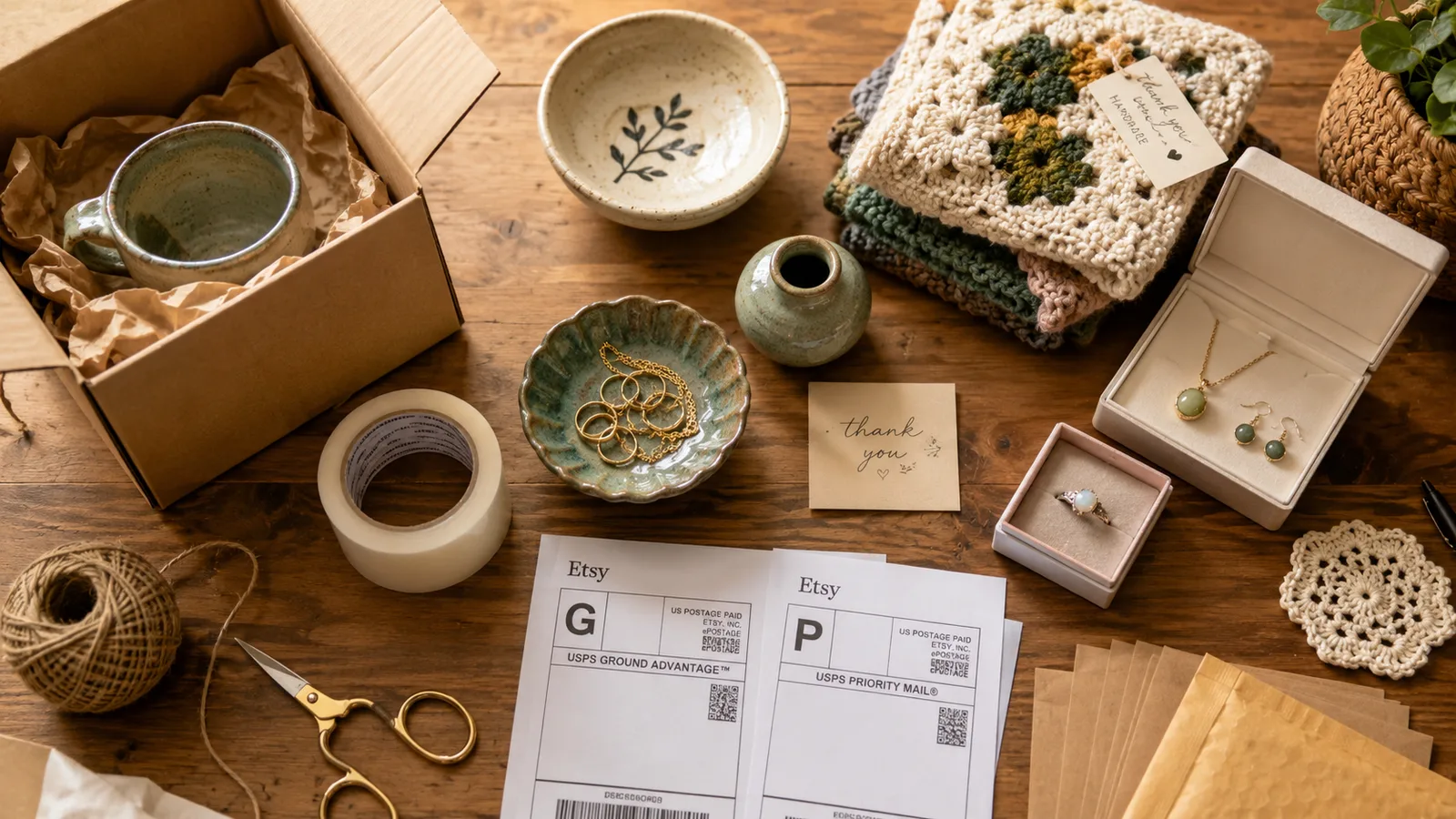
What Are the Best Marketplaces to Sell Handmade Crafts Online?
Before you commit, understand that not all marketplaces are equal. Some are built for artisans, others for mass-produced goods. For handmade items, the quality of traffic matters more than raw volume.
Etsy: The Leading Marketplace for Handmade Goods
Etsy is the default answer for most crafters, and for good reason. According to Statista, Etsy had over 9 million active sellers in 2024, and it attracts buyers specifically looking for unique, handmade, and vintage items. That built-in intent means your listing doesn’t have to convince someone to buy a handmade candle; it just has to convince them to buy your handmade candle.
But here’s the catch: with millions of sellers, competition is fierce. New sellers often struggle to get their first 100 views, let alone sales. That’s why you need more than just a store: you need a system for creating listings that Etsy’s algorithm actually shows. Learn more in our step-by-step guide to selling on Etsy.
📈 According to Statista, Etsy had over 9 million active sellers worldwide in 2024, making it both a crowded and high-intent marketplace for handmade goods.
Other Notable Marketplaces: Amazon Handmade, Shopify, and More
Amazon Handmade offers access to Amazon’s massive customer base, but it comes with stricter requirements and a $39.99 monthly fee (waived if you have a Professional selling plan). Shopify gives you full control over your brand but requires you to drive your own traffic, which is a full-time job on its own. Other options like eBay, Facebook Marketplace, and local craft fairs exist, but for online selling, they often lack the handmade-specific buyer intent that Etsy provides.
Comparing Marketplaces: Fees, Reach, and Effort
Each platform has trade-offs. Etsy charges a $0.20 listing fee and a 6.5% transaction fee, plus payment processing fees. Amazon Handmade charges a 15% referral fee. Shopify charges a monthly subscription starting at $39, plus payment processing, but no per-listing fee. The real cost, however, is your time: listing the same product on multiple platforms doubles or triples your workload. That’s why most successful handmade sellers start with Etsy and expand later, using tools to automate the repetitive parts. If you want to see the full cost picture, read how much Etsy takes from sellers.
Try it in your shop.
Every step from design to live listing, on one platform. Start on the free plan.
How Do I Start Selling Handmade Crafts on Etsy?
Once you choose Etsy, the actual work begins. Setting up a shop is not just clicking “open shop”: it’s building a brand, creating listings that convert, and managing your inventory process.
Setting Up Your Shop the Right Way
Your shop name, banner, logo, and About section all contribute to buyer trust. A professional appearance can make the difference between a sale and a bounce. But if you’re not a designer, this first step can feel overwhelming. You don’t have to start from scratch. With Listybox Store Setup, our team helps you set up your Etsy store. It is available inside a custom Enterprise+ offer, so plan a demo or write to [email protected].
💡 Before you publish your first listing, write down your shop’s story and target customer. This clarity will guide every design, description, and photo you create.
Creating Listings That Get Found
Etsy search works differently than Google. Keywords matter, but so do tags, categories, and attributes. A single listing needs a keyword-rich title, 13 tags, a detailed description, and high-quality images. Writing all of that manually takes at least 20-30 minutes per listing. If you have 50 products, that’s a full week of work just on SEO. That’s where the Magic Wand feature helps. It analyzes what’s already selling in your niche and writes the title, tags, and description for you, based on the actual product and design you’re selling. You can edit every word before publishing, so you stay in control while saving hours. To see how it works, check out Magic Wand: SEO & Copywriter.
The Hidden Time Trap of Manual Listing
Here’s where most new sellers quietly burn out. They spend evenings and weekends listing products, only to realize they have no time left to create new designs or actually make their crafts. The math is brutal: if each listing takes 30 minutes, and you want 100 listings, that’s 50 hours. That’s before you process a single order. The solution is batch creation. With the Creation Wizard, you can combine multiple designs with multiple product types in one go, generating hundreds of listing-ready images and variants in minutes. Then you can use Scheduled Publish to release them over time. Learn more in the realistic path to making money online with Etsy print on demand.
How Much Does It Cost to Sell Handmade Crafts Online?
Cost is a major factor, but many sellers focus only on fees and forget the hidden cost of time.
Etsy Fees Explained
Let’s break down Etsy’s official costs, directly from Etsy’s fee schedule. For each item you list, you pay $0.20. When you make a sale, Etsy takes a 6.5% transaction fee on the item price plus shipping. Then payment processing fees apply: 3% + $0.25 for US sellers. So on a $20 item with $5 shipping, you’d pay roughly $0.20 listing + $1.63 transaction fee + $1.00 payment processing, leaving you with about $17.17 before production and materials. That’s manageable, but it adds up.
Cost of Not Automating
The bigger cost is your time. If you spend 5 hours a week on manual listing, order processing, and customer messages, that’s 20 hours a month. If your time is worth $25/hour, that’s $500 of your own labor every month that could have gone to making more crafts or marketing. Automation tools like Listybox take over part of the repetitive work. For example, with Zero-Touch Fulfillment your Etsy orders appear in My Orders, you pay for each order there, and the tracking number is written back to your Etsy order, so you don’t have to copy addresses. That feature alone can save hours per week. To understand how it works, read Zero-Touch Fulfillment: Your Personal Chief Operating Officer.
Maximizing Profit Margins
On top of fees, your production costs matter. If you handmake each item, your cost includes materials and labor. If you use print-on-demand for items like t-shirts or mugs featuring your designs, the base cost is fixed per unit, but you can increase margin by using a provider with volume discounts. Check the Product Catalog to see what’s available.
Can I Sell Handmade Crafts Without Inventory?
What if you don’t want to store boxes of inventory or deal with shipping? That’s where print-on-demand (POD) shines.
The Magic of Print on Demand
With POD, you upload your design to a platform, and when a customer orders, a third-party printer produces and ships the item under your brand. No inventory, no upfront cost, no risk of being stuck with unsold stock. This model lets you sell handmade designs on products like t-shirts, mugs, tote bags, and even wall art, without ever touching a physical item. It’s the same creative spirit as handmade crafts, but scaled. For a deeper dive, read how to sell products without buying inventory.
How POD Works with Your Handmade Designs
Say you design a watercolor print of a mountain landscape. You can turn that single design into a poster, a canvas, a t-shirt, a mug, and a phone case. Each product variant becomes a separate Etsy listing, but they all share the same design. Creating those listings manually would take hours. Listybox’s Creation Wizard combines your design with multiple product types in one click, generating all the images and variant information automatically. Then Magic Wand writes the SEO for each one. The result: you turn one design into a whole product line in minutes, not days. See how it works in our guide to selling without inventory.
The Fulfillment Side
When an order comes in, POD means you don’t pack anything. But you still need to process the order, enter the customer’s address, and upload tracking. That’s another 5-10 minutes per order. Zero-Touch Fulfillment takes over the address entry and the tracking upload. When an Etsy order arrives, it appears in My Orders in Listybox. You pay for production and shipping there, the order goes to production, and the tracking number is written back to your Etsy order. That cuts two manual steps from every order. If you’re still on the fence, see our comparison of dropshipping vs print on demand.
How Do I Drive Traffic to My Handmade Craft Shop?
Having a shop is not enough. You need eyes on your listings.
Etsy SEO Basics That Actually Work
Etsy’s search algorithm looks at title keywords, tags, categories, and listing quality. The first few words of your title carry the most weight, so put your primary keyword there. Use all 13 tags with specific phrases buyers might search. Include attributes like color, size, and occasion. Writing this manually for every listing is tedious, but Magic Wand does it in one click. You can then review and tweak. For a step-by-step breakdown, see how to sell on Etsy step by step.
The Power of Lifestyle Product Images
A plain white background photo of a mug might get clicks, but a photo of that mug on a cozy kitchen counter with steam rising from coffee gets sales. Buyers of handmade goods want to imagine the item in their life. That’s why lifestyle images are crucial. But hiring a photographer or buying mockup subscriptions gets expensive. Listystyle generates hundreds of realistic lifestyle photos for any product you list. Learn how to use them effectively in Etsy product photography guide.
⚠️ Avoid using the same generic mockup images as everyone else. Shoppers notice repetition, and it makes your brand look low-effort. Use varied, realistic lifestyle scenes instead.
Automating Listings for Consistency
Etsy rewards shops that stay active. If you upload 50 products on Sunday and nothing for the next month, your shop looks stale. The algorithm favors shops that add new items regularly. With Scheduled Publish, you can create hundreds of listings at once, then set them to go live one per day or every few hours. For more on that strategy, read a realistic path to passive income in 2026.
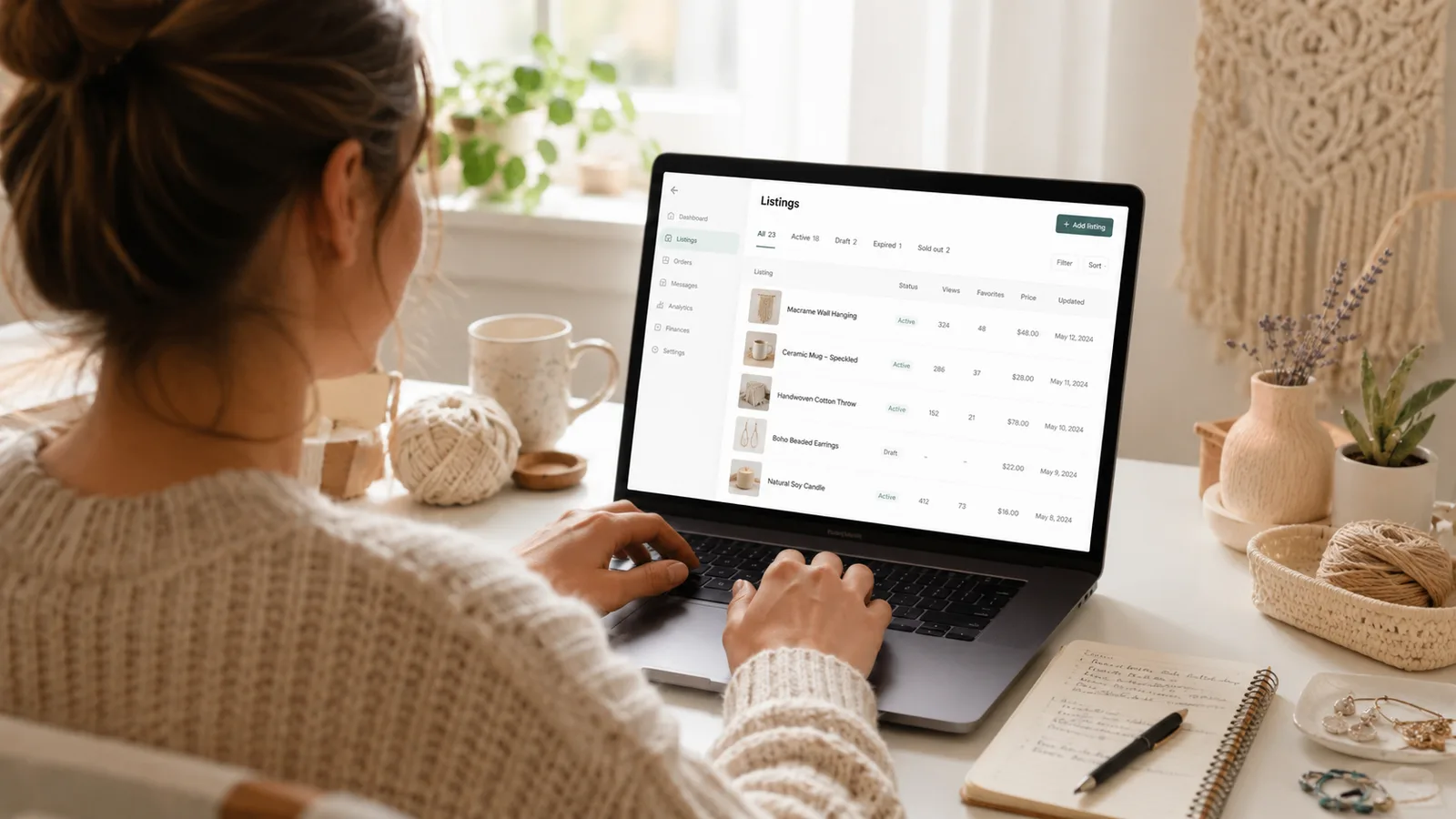
The Smart Way to Sell Handmade Crafts in 2026
Choosing where to sell handmade crafts is the first decision, but how you run your shop determines your success. You can spend countless hours manually listing, optimizing, and fulfilling orders, or you can use a platform like Listybox to handle the repetitive tasks, so you can focus on creating.
Does all of this feel overwhelming? You don’t have to start from scratch. With Listybox Store Setup, our team helps you set up your Etsy store. It is available inside a custom Enterprise+ offer, so plan a demo or write to [email protected].
Ready to see it for yourself? Start free - no credit card required and see how it works for your handmade designs.
Frequently asked questions
Put this into practice in your shop.
Every step from design to live listing, on one platform. Start on the free plan.
Related posts


Want to go deeper? Read our in-depth Etsy guides · Browse 100 Etsy niche guides