


Key takeaways
Your first sale is a trust signal for Etsy’s algorithm, not just a revenue event
A complete, branded shop with clear policies builds instant buyer confidence
SEO-optimized listings using real buyer keywords are non-negotiable for visibility
Unique product photos stop the scroll and convert browsers into buyers
Consistent publishing of new listings signals shop activity and boosts ranking
Automating repetitive tasks frees you to focus on strategy, not manual data entry
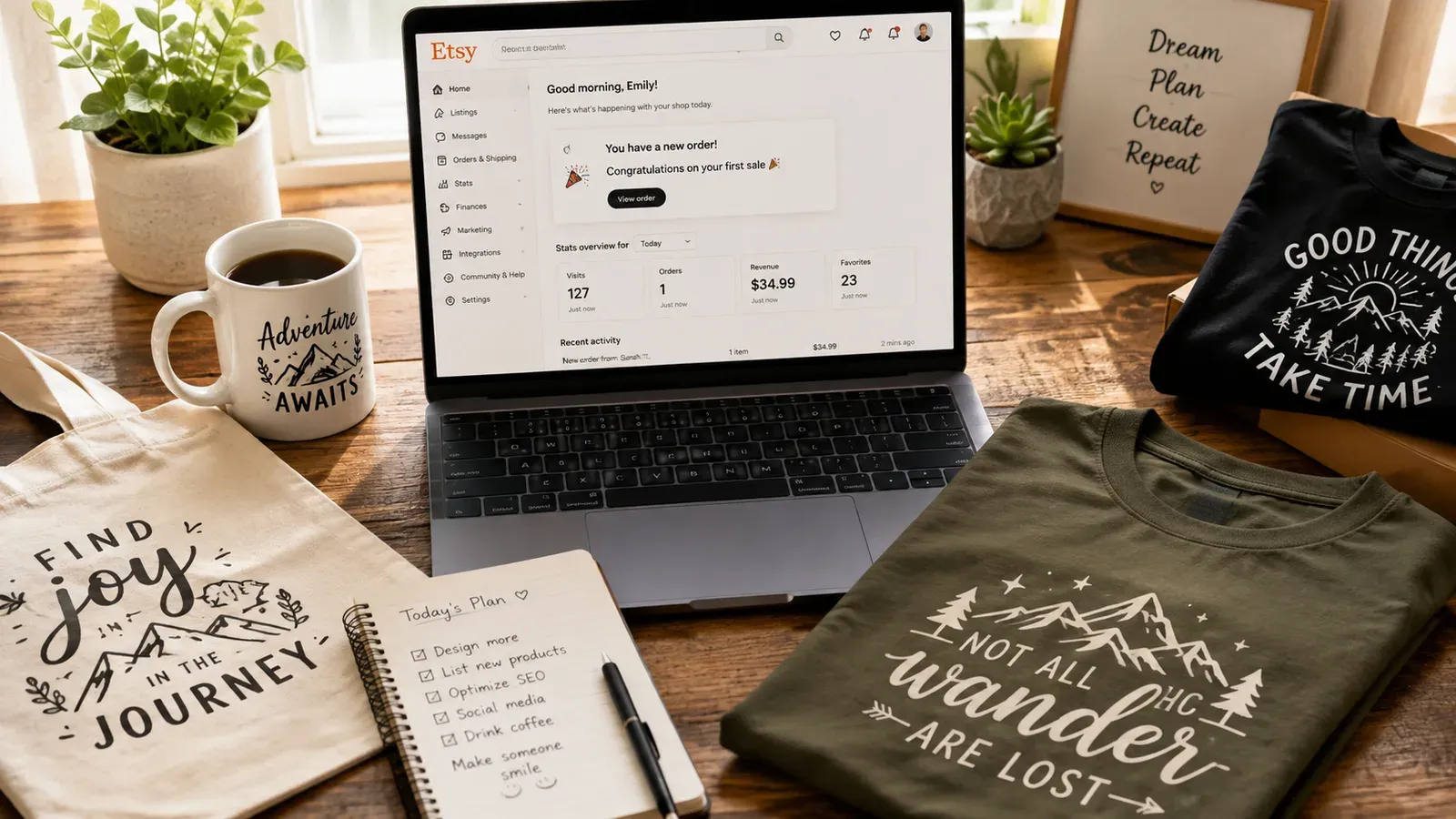
Noah stared at his Etsy dashboard, the zero next to ‘Orders’ glowing like a quiet accusation. Six months earlier, he had shut down his Shopify dropshipping store after a wave of chargebacks and supplier nightmares. Etsy print-on-demand felt different: real handmade appeal, built-in traffic, no inventory risk. He opened his shop, uploaded five t-shirt designs, and waited. A week passed. Then two. Then a month. Crickets. He had followed the ‘just list it and they will come’ advice, but the only thing coming was doubt.
Noah’s story is painfully common. Etsy is a marketplace with 96.3 million active buyers as of 2025, but it also hosts millions of sellers vying for attention. For a brand-new shop with zero sales history, breaking through the noise is a genuine challenge. The algorithm has no data to rank you, buyers have no social proof to trust you, and every day without a sale makes the mountain feel steeper. This guide unpacks exactly why that first sale is so hard and, more importantly, the step-by-step actions to make it happen, without burning yourself out in the process.

Why the First Etsy Sale Feels Impossible (And Why It’s Not Your Fault)
The gap between opening a shop and getting that first order is a psychological and technical minefield. Etsy’s search algorithm, like any marketplace engine, relies on engagement signals: click-through rate, favorites, and, most heavily, sales history. A shop with zero sales is an unknown quantity. It gets pushed to the back pages while established sellers with hundreds of reviews dominate the top spots. This creates a classic catch-22: you need sales to get visibility, but you need visibility to get sales.
Adding to the pressure, new sellers often underestimate the sheer volume of competition. According to Etsy’s own transparency report, the platform added millions of new listings every month in 2025. Your five t-shirt designs are a drop in an ocean. Without a deliberate strategy, they simply won’t be seen. Noah realized this when he searched for his own ‘funny cat dad t-shirt’ and couldn’t find his listing even after scrolling through 20 pages.
📈 Etsy had 96.3 million active buyers in 2025, but new shops compete against millions of established listings. Visibility requires active optimization, not just listing.
The emotional toll is real. Every day without a sale chips away at confidence. You start questioning your designs, your niche, your entire business model. But the problem is rarely talent; it’s process. Most first-sale failures come down to three fixable gaps: an incomplete shop foundation, weak listing SEO, and generic visuals. Let’s tackle each one.
For a deeper dive into the psychology of breaking the zero-sales barrier, read our guide on First Etsy Sales: How New Sellers Can Break Through Faster in 2026.
Try it in your shop.
Every step from design to live listing, on one platform. Start on the free plan.
What You Actually Need Before Your First Sale
Before a single buyer lands on your listing, your shop must answer their unspoken question: ‘Is this a real, trustworthy business?’ An incomplete shop looks like a scam or a hobby project. Etsy itself states in its Seller Handbook that complete shops rank higher in search. The fix is straightforward but tedious when done manually.
Your Shop’s Trust Foundation
Start with the basics: a clear shop icon and banner that reflect your brand. Write an ‘About’ section that tells a story, not just a list of products. Add your shop policies for returns, exchanges, and shipping. Buyers need to know what happens if something goes wrong. A shop without policies is a red flag.
Then, complete your ‘Frequently Asked Questions’ section. Anticipate buyer concerns: sizing, materials, production times. Each answered question removes a barrier to purchase. Noah spent a full Sunday afternoon writing policies, resizing a banner in Canva, and drafting an About page. It was necessary but exhausting, and he still worried he’d missed something critical.
💡 A complete shop with policies and an About section signals legitimacy to both Etsy’s algorithm and cautious first-time buyers.
If the setup feels overwhelming, you don’t have to start from scratch. With Listybox Store Setup, our team helps you set up your Etsy store. It is available inside a custom Enterprise+ offer, so plan a demo or write to [email protected].
For a full walkthrough of opening a shop correctly, check out How to Open an Etsy Shop Step by Step: The Complete 2026 Guide.
The Listing That Finally Gets Clicked: SEO That Works for New Shops
With a trustworthy shop in place, the next hurdle is being found. Etsy SEO is not about stuffing keywords; it’s about matching real buyer search queries. A listing titled ‘Funny Cat T-Shirt’ will drown. A listing titled ‘Funny Cat Dad T-Shirt, Cute Kitten Lover Gift, Men’s Graphic Tee’ has a fighting chance because it captures multiple long-tail search phrases.
The Manual Keyword Grind
Before Noah could write a title, he needed to know what buyers were actually typing. He spent hours on Etsy’s search bar, typing partial phrases and noting autocomplete suggestions. He cross-referenced those with tags used by top-selling competitors. He compiled a spreadsheet of 50 potential keywords, then agonized over which 13 to use as tags. The process was slow, and he still wasn’t sure he’d picked the right ones. The fear of missing a high-volume, low-competition keyword kept him up at night.
The truth is, manual keyword research for a new shop is a gamble. Without historical data, you’re guessing. Professional sellers use data-driven tools to analyze what’s actually converting. The Magic Wand feature, for instance, analyzes top-performing listings in your niche and generates a full set of SEO-optimized titles, 13 tags, and descriptions in minutes, not hours. It takes the guesswork out of your first listing’s discoverability.
Learn the fundamentals in our detailed guide: Etsy Listing SEO Optimization: Your Step-by-Step Guide to Visibility and Sales.
Writing Descriptions That Sell
A description must do two things: reinforce keywords for search and convince the human reader to buy. Lead with the most important information: what the product is, its key benefit, and any unique features. Use short paragraphs and bullet points for scannability. Answer every potential objection: size chart? Material? Care instructions? The more you answer, the fewer reasons a buyer has to leave.
For Noah, writing compelling descriptions for five products took another evening. He researched competitors, drafted, edited, and second-guessed himself. The thought of doing this for 50 or 100 products was paralyzing. This is where automation becomes not a luxury, but a survival tool.
Product Photos That Stop the Scroll
Even with perfect SEO, a listing lives or dies by its thumbnail. Etsy search results are visual grids. If your photo blends in, you’re invisible. According to a study by MDG Advertising, 93% of consumers consider visual appearance the key deciding factor in a purchase. For a new shop with no reviews, the photo is your only chance to make a first impression.
The Trap of Generic Mockups
Noah initially used the same free mockup generator as thousands of other sellers. His t-shirt designs sat on identical flat-lay backgrounds, looking like every other listing. The result? Zero clicks. Generic mockups scream ‘print-on-demand template’ and erode trust. Buyers want to see the product in a real context: a mug on a cozy desk, a hoodie being worn by a smiling person, a canvas print hanging on a living room wall.
Creating these lifestyle images manually requires expensive software, photography skills, or paying for mockup subscriptions. Noah tried Placeit, but the monthly fee added up, and he still had to manually place each design onto each mockup for every product variant. For a shop with even 20 listings, that’s hours of repetitive work.
The Listystyle feature changes this equation. It generates hundreds of unique, realistic lifestyle photos for your products in minutes, placing your design into authentic scenes. Instead of looking like every other POD shop, your listings develop a distinct visual identity. Read more about the impact in The Visual Edge: How Product Mockups Boost Etsy Sales Conversion.

From One Listing to a Shop That Sells: The Power of Consistency
A single listing, no matter how optimized, is a lottery ticket. Etsy rewards shops that are active and growing. Publishing new listings regularly signals to the algorithm that your shop is fresh and relevant. The challenge for a solo seller is time. Manually creating a new listing, complete with SEO, mockups, and pricing, can take 30-60 minutes per product. Doing that daily is unsustainable.
The Hidden Power of Scheduled Publishing
Etsy’s algorithm does not penalize you for listing too many items at once, but spreading them out keeps your shop consistently in front of buyers. Imagine spending one focused afternoon creating 30 listings, then having them automatically publish one per day for the next month. Your shop appears active every single day, even while you sleep or take a weekend off.
The Scheduled Publish feature handles this. You create listings in batches using the Creation Wizard, which combines your designs with multiple products in one click, and then set a release schedule. One hour of work becomes a month of automated growth. Learn more about this strategy in How to Turn One Design into a Multi-Product Goldmine on Etsy (Without the Burnout).
💡 Publishing one new listing daily for 30 days gives you 30 chances to be discovered, versus uploading 30 at once and then going silent. Consistency builds algorithmic trust.
Automating the Path to Your First Sale (Without Losing Control)
Noah’s turning point came when he stopped trying to do everything manually. He used a tool to handle the repetitive parts: keyword research, listing creation, mockup generation, and scheduling. He still chose his designs, set his prices, and wrote his brand story. But the soul-crushing data entry was off his plate.
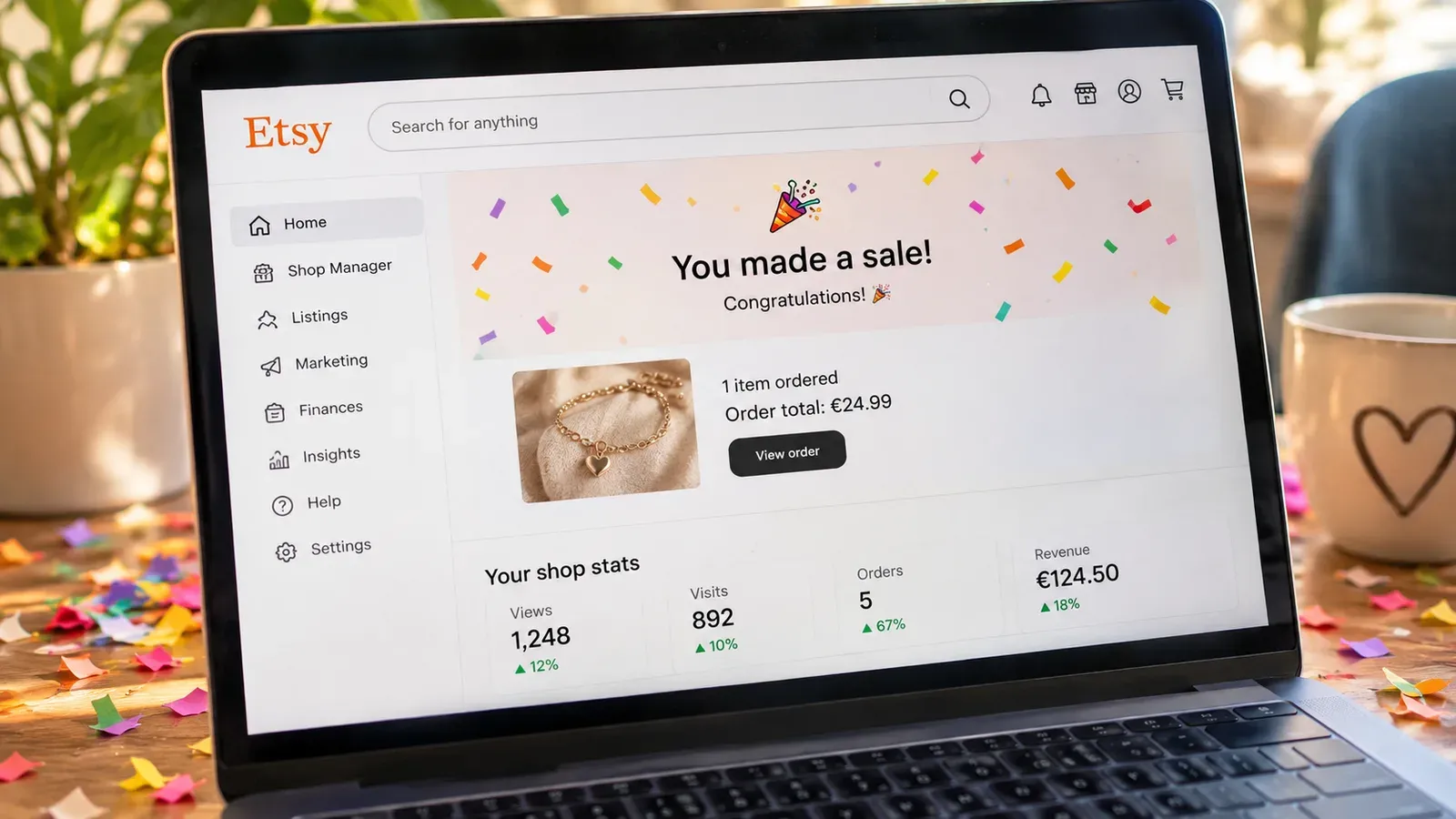
After implementing this system, Noah saw his first sale. It wasn’t magic; it was math. More optimized listings, published consistently, with unique photos, finally gave the algorithm enough signals to rank him. The sale came from a long-tail search term he hadn’t even considered, buried in a Magic Wand-generated tag.
Your first sale is a milestone, not a finish line. It proves your concept and gives you the confidence to scale. The key is to build a repeatable system that turns your creativity into visible, clickable listings without requiring 80-hour weeks. That way, you can focus on what actually grows a business: refining designs, understanding your customers, and planning your next move.
Ready to simplify the grind? Start free - no credit card required and see how much faster your first sale can arrive when the busywork is automated.
Frequently asked questions
Put this into practice in your shop.
Every step from design to live listing, on one platform. Start on the free plan.
Related posts



Want to go deeper? Read our in-depth Etsy guides · Browse 100 Etsy niche guides