
Shopify Dropshipping in 2026: The Brutal Truth About Costs vs. Reward
Thinking of starting a Shopify dropshipping store? The math has changed. Skyrocketing ad costs, supplier nightmares, and a brutal learning curve trap beginners in a cycle of losing money. Before you spend a single dollar on ads, see why a different e-commerce model offers a faster, cheaper path to your first sale.

Bullet Points (TL;DR)
Shopify dropshipping requires a minimum of $200-$500 in upfront ad spend just to test one product, with a 90%+ failure rate for beginners.
The biggest hidden cost isn't the subscription, but the customer acquisition: Facebook and TikTok ad CPMs have increased by an average of 30% since 2024.
Etsy Print on Demand eliminates the ad spend barrier by placing your products in front of 96 million active buyers who are already searching for unique items.
Long shipping times from AliExpress suppliers destroy customer trust; switching to a domestic POD model ensures 2-5 day delivery and higher repeat purchase rates.
You can start building a profitable, semi-passive income stream with Etsy POD without spending a cent on ads, using just organic traffic and smart SEO.
Liam stared at his laptop screen, the blue light illuminating a sinking feeling in his stomach. He had just spent $47 on a Shopify subscription, another $30 on a dropshipping course, and $150 on Facebook ads to test a "winning product" - a self-stirring coffee mug he found on AliExpress. The result after one week? Three thousand impressions, twelve clicks, and zero sales. His ad account was drained, his supplier was sending him confusing messages in broken English, and he was starting to think that all those YouTube gurus promising passive income from a beach in Bali were selling a dream that didn't exist.
Liam is not alone. In 2026, the term "Shopify dropshipping" still gets typed into Google over 100,000 times a month. The promise is alluring: find a cheap product from China, mark it up 3x, run some ads, and watch the money roll in. But the reality for 92% of new dropshippers is a financial loss within the first three months. The business model itself isn't dead, but the barrier to entry for a solo beginner has become a financial brick wall. Before you hand over your credit card to Shopify, you need to understand where your money actually goes. And more importantly, there is a better way.

What is the Real Cost of Shopify Dropshipping in 2026?
When you sign up for the basic Shopify plan, the $39/month fee feels manageable. This is the trap. The subscription fee is the smallest line item on your profit and loss statement. The real cost of this business model is hidden in the mechanics of finding customers. Unlike a marketplace like Etsy or Amazon, a Shopify store is a standalone website. It has no built-in traffic. Nobody knows you exist. To get a single visitor to your store, you must buy their attention.
The Ad Spend Black Hole
In 2026, the cost-per-thousand-impressions (CPM) on Facebook and TikTok has stabilized at a painfully high level. During the pandemic e-commerce boom, you could reach 1,000 people for about $5. Now, competitive niches regularly see CPMs of $25-$40. To test a single product properly, you need to drive at least 100-200 clicks to your product page. With an average click-through rate (CTR) of 1.5%, you need roughly 10,000 impressions. At a $30 CPM, that's $300 just to see if a product has potential. If it doesn't convert, that money is gone forever. You aren't paying for sales; you are paying for a chance to learn.
📈 Data from a 2026 e-commerce benchmark report shows the average beginner dropshipper loses $350 on ad testing before finding their first profitable product.
The Subscription Stack
If you want to build a legitimate brand, you can't just run a default Shopify theme. You'll need a premium theme ($250-$350 one-time), a page builder app ($29/month), an email marketing app like Klaviyo (which jumps to $60/month once you pass 1,000 subscribers), and review import apps. Suddenly, your $39 Shopify plan has become a $200/month software subscription before you've even made a single sale. This doesn't include the cost of purchasing samples from suppliers to check quality, which can cost $50-$100 per product with express shipping.
The Customer Support Nightmare
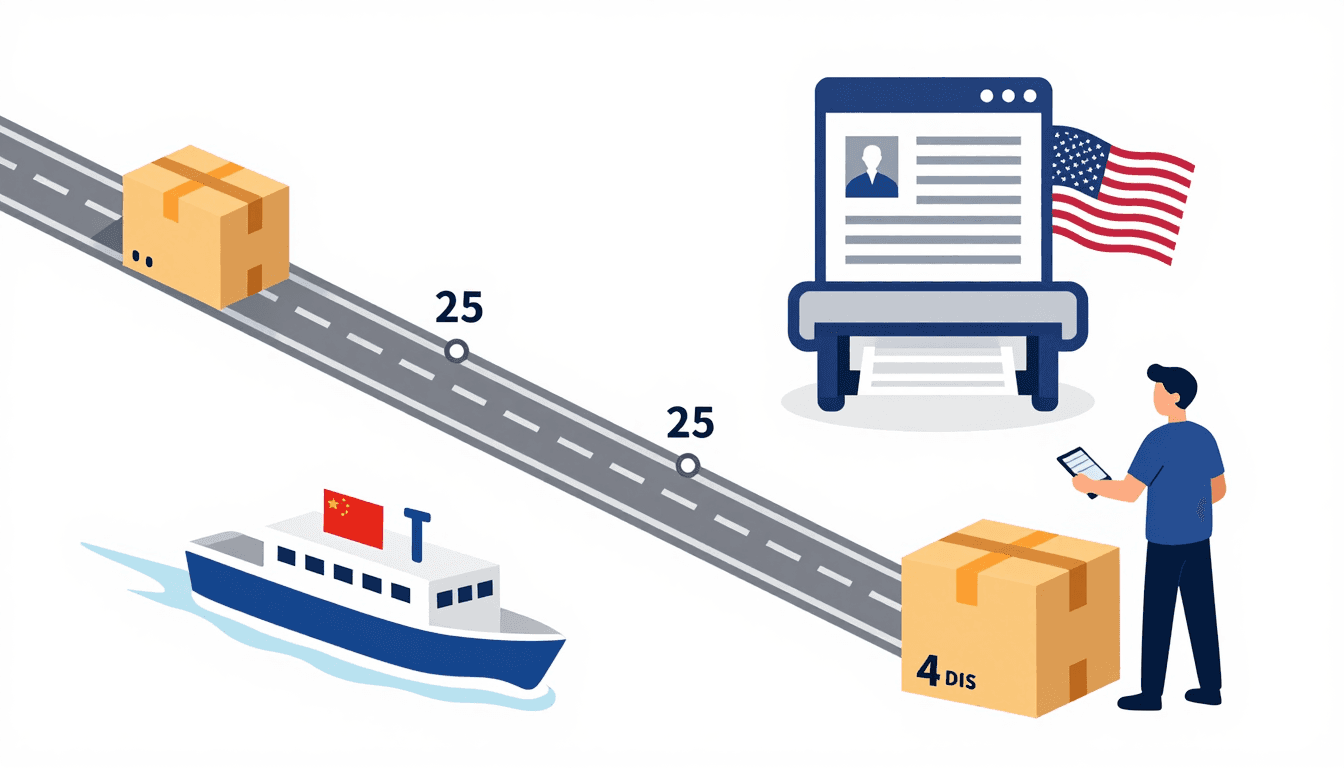
When you dropship a product directly from AliExpress to a customer in the US, the shipping time can range from 15 to 30 days. By the time the package arrives, the customer has often forgotten they ordered it, or they've filed a chargeback with their bank. Chargeback fees are $15-$25 per incident, and if your chargeback rate exceeds 1%, Shopify Payments will freeze or terminate your account. You are held accountable for the supplier's slow logistics, and your brand reputation takes the hit.
Why Do Most Shopify Dropshipping Stores Fail?
Failure isn't usually a result of laziness. It's a structural issue with the one-product or general-store dropshipping model. The internet has matured. Consumers in 2026 are savvy. They can right-click an image and "Search with Google Lens" to find your product on AliExpress for half the price. They are suspicious of stores with no social proof, generic-looking product pages, and a "Contact Us" page that leads to a Gmail address.
The Trust Deficit
Shopify gives you the tools to open a store, but it doesn't give you trust. Trust is the most expensive asset in e-commerce. Amazon and Etsy have spent billions of dollars building consumer trust. When a buyer lands on an Etsy listing, they don't worry about whether the item will arrive because Etsy's Purchase Protection program has their back. On a random Shopify store, the buyer is taking a gamble. This "trust deficit" dramatically increases your conversion costs.
A study by a leading e-commerce think tank revealed that the average conversion rate for a new Shopify store with no brand recognition is between 0.3% and 0.8%. For an established Etsy store, the average conversion rate sits between 2.5% and 4.0%. This is a massive gap. To get one sale, the Shopify store needs 300 visitors. The Etsy store might only need 30. This is the difference between paying for traffic and earning it.
The Copycat Trap
Dropshipping relies on finding "winning products." But if a product is easy for you to find on AliExpress, it's easy for a thousand other people to find it too. The moment a product starts generating profit, competitors clone your store, undercut your price by $2, and run aggressive ad campaigns against your audience. Your only defense is to outspend them on ads, which drives the CPMs even higher and pushes everyone's profit margin to zero.
For a deep dive into the structural challenges of this model, check out our analysis on Shopify Dropshipping in 2026: Why It Fails and Where Etsy POD Wins.
What are the Best Alternatives to Shopify Dropshipping for Beginners?
If you don't have a $5,000 marketing budget to burn, the best alternative is a business model that provides you with demand instead of forcing you to manufacture it. This is where the Print on Demand (POD) model, specifically on Etsy, changes the game. You are moving from a "push" marketing model (pushing ads onto strangers) to a "pull" marketing model (pulling in buyers who are actively searching).
Etsy Print on Demand: The Organic Traffic Advantage
Etsy is a search engine for handmade and unique goods. It has 96 million active buyers. These buyers type in specific queries like "funny engineer coffee mug" or "personalized sunflower shirt." If you list a product that matches that search, Etsy shows it to them for free. You don't pay for the click. You only pay a small fee ($0.20) to list the item and a transaction fee when you actually sell it.
This flips the risk equation. In Shopify dropshipping, you spend $300 to see if an audience exists for a product. On Etsy, you spend $0.20 to list it. If it doesn't sell, you've lost a few cents. If it does sell, you have a positive return on investment from day one. This is why we recommend beginners read our guide on How to Make Money Online in 2026: A Realistic Path to Passive Income.
The Product Quality Difference
Dropshipping relies on generic products from AliExpress. Print on Demand relies on products that are personalized with a design. When a customer buys a "World's Best Dog Dad" t-shirt, they aren't just buying a shirt; they are buying an emotional connection. They can't reverse image search it and find it cheaper because the design is unique to your store. This kills the price-comparison problem instantly.
Furthermore, the fulfillment is handled by local providers like Printify or Gelato. Instead of a 25-day wait from China, the customer gets the shirt in 4-6 days. You can find a detailed comparison of these providers in our guide on Printify vs Printful vs Gelato: The Ultimate Etsy POD Comparison for 2026.
💡 You don't need to hold inventory or buy a single product upfront. When a customer buys from your Etsy store, the POD supplier prints and ships the item directly to them. Your only job is to create the design and the listing.
How to Start Selling on Etsy Without Holding Inventory?
The transition from a dropshipping mindset to an Etsy POD mindset requires a shift in focus. You stop worrying about Facebook pixel data and start worrying about keyword research and design trends. The good news is that the tool ecosystem for Etsy sellers has matured to the point where you don't need graphic design skills or SEO expertise to succeed.
Step 1: The Store Foundation
You need a shop that looks trustworthy. This means a clear banner, a coherent shop name, and a complete "About" section. Etsy buyers buy from sellers, not faceless corporations. Your "About" section should tell a story. If setting up a store from scratch feels daunting, read our step-by-step guide on How to Open an Etsy Shop Step by Step: The Complete 2026 Guide.
Step 2: Finding the Product-Market Fit
Don't guess what to sell. Use data. In the dropshipping world, you use tools like Minea or AdSpy to see what ads are running. On Etsy, you look at what is already selling well. Tools that analyze Etsy's best-seller lists can show you exactly which niches are underserved. This is the equivalent of getting free market research. Our Best Selling E-commerce Products for Etsy Sellers in 2026 report breaks down the categories with the highest demand and the lowest competition.
Step 3: The Design Component
This is the part that stops most dropshippers. "I can't design." But you don't need to be an artist. The design quality bar for a "funny dad t-shirt" or an "aesthetic motivational poster" is not a Rembrandt painting. It's often just clever typography. Platforms like Canva provide templates. Better yet, you can use a library of ready-made, commercially licensed designs created by professional artists. This allows you to launch products immediately, test what sells, and then reinvest profits into custom designs later.
⚠️ Never use copyrighted images or trademarked phrases. A trademark infringement notice on Etsy can get your shop permanently banned. Always verify your phrases against the USPTO database.
How Does Etsy POD Automation Compare to Shopify Dropshipping Automation?
Shopify dropshipping automation relies on tools like DSers or Zendrop to place orders on AliExpress with one click. This solves the order fulfillment problem, but it completely ignores the marketing problem. You still have to drive the traffic yourself. Etsy POD automation solves both the traffic and the fulfillment problem simultaneously.
The Magic of Automated SEO
Etsy's algorithm rewards shops that use the right keywords in their titles, tags, and descriptions. In Shopify, you are writing meta descriptions for Google, where you compete with Amazon and Walmart. On Etsy, you are writing for a specific, buyer-intent-driven search engine. An intelligent automation system customized for Etsy sellers can analyze the keywords that actual top-selling listings are using and generate optimized copy for your products in seconds. This isn't about spinning content; it's about aligning your listing with the exact search queries that lead to a purchase.
The Visual Storefront
In dropshipping, you are often stuck with the supplier's white-background images. These look sterile and untrustworthy. On Etsy, visuals are everything. Listings with lifestyle mockups - showing a t-shirt being worn by a happy person in a sunny field, or a mug sitting on a cozy desk - consistently outsell those with flat product images by a factor of 3 to 1. The technology to generate these images has advanced significantly. You no longer need to pay a photographer or a model. You can generate hundreds of unique, high-resolution lifestyle photos that make your brand look premium and defensible.
The Fulfillment Autopilot
This is where the passive income dream actually becomes reality. In Shopify dropshipping, when you get a sale, you still have to manually process the order or rely on a clunky overlay app. In a fully integrated Etsy POD system, the moment a customer buys, the order is automatically routed to the print provider. The shipping label is created, the tracking number is synced back to Etsy, and the customer is notified without you touching a thing. This zero-touch fulfillment model turns your shop into a true asset, not a job. To understand the full potential of this setup, read our guide on Passive Income with Print on Demand: A Realistic Guide for Etsy Sellers.

The Hidden Trap of 'Winning Products'
Liam, the engineer from our introduction, eventually discovered the fatal flaw in his strategy. He wasn't building a business; he was hunting for lucky lottery tickets. The "winning product" chase conditions you to seek short-term spikes in revenue. It forces you to ignore branding, customer service, and repeat purchases. When the ad arbitrage eventually fails, you are left with nothing but a dead pixel on a server.
Building an Asset vs. Chasing a Paycheck
An Etsy shop that sells personalized pet memorial gifts is an asset. It gains reviews. It builds search ranking equity. It creates a moat around the business that a copycat cannot easily cross. A Shopify store selling a generic posture corrector is a liability. It has no moat, no organic traffic, and requires constant cash injections to stay alive.
The choice between these two paths determines whether you will be in e-commerce a year from now. The Etsy POD model allows you to start with a free account, invest your time instead of your life savings, and build a real brand that compounds in value over time. You don't need to find a winning product. You need to build a winning system.
If you are ready to stop burning money on ads and start building a real, sustainable income stream, there is a platform that handles the heavy lifting for you. It connects your shop to the best suppliers, automates your SEO, generates your visuals, and fulfills your orders while you sleep.
Never Miss an Update
Get actionable Etsy tips delivered to your inbox every week. No spam, unsubscribe anytime.