
How to Start Selling on Etsy in 2026: The Complete Beginner's Blueprint
Staring at a blank screen wondering how to start an Etsy shop can feel paralyzing. The manual work of researching niches, figuring out SEO, and creating listings drains your energy before you even make your first sale. See how an intelligent automation system customized for Etsy sellers turns this overwhelming process into an easy, predictable business model.

Bullet Points (TL;DR)
Understand the current e-commerce landscape and why print-on-demand is the lowest-risk entry point for new sellers.
Learn how to identify high-profit micro-niches that are not oversaturated by competitors.
See the exact steps to set up your storefront, including branding, policies, and your first listings.
Master the Etsy search algorithm by using data-driven keywords and tags that actual buyers use.
Find out how to automate your entire order fulfillment process to create a true passive income stream.
Protect your profit margins by calculating exact costs, fees, and pricing strategies before you launch.
The dream of building a successful online business often starts with a single, exciting thought: selling on Etsy. You imagine a life where your phone chimes with sale notifications while you sip coffee, travel, or spend time with your family. The reality of e-commerce, however, can quickly feel like a heavy burden. Many new sellers jump in with high hopes, only to hit a wall of confusing algorithms, endless manual data entry, and fierce competition.
Starting an online shop requires more than just a good idea. It demands a clear strategy, a deep understanding of your target market, and the right tools to execute your vision. If you try to do everything by hand, you will quickly burn out. The hours spent copying and pasting addresses, guessing which keywords might work, and staring at blank design canvases can drain the joy right out of your new venture.
But building a profitable storefront does not have to be a painful grind. The landscape has shifted dramatically, and the barriers to entry have never been lower for those who know how to play the game smartly. By focusing on the print-on-demand model and using intelligent systems, you can bypass the traditional hurdles of inventory management and shipping logistics.
This guide will walk you through the exact steps to launch, grow, and automate your business. We will break down the complex parts into simple, actionable steps. Whether you want a side hustle to pay off debt or a full-time income to replace your day job, this blueprint will give you the foundation you need to succeed in 2026.
The Reality of Starting an Etsy Shop Today
The e-commerce world moves fast. What worked five years ago will not necessarily work today. To succeed, you must understand the current market dynamics and how buyers behave. Etsy is no longer just a marketplace for handmade crafts knitted in a living room. It has grown into a massive global platform where professional sellers build highly profitable brands.

The Shift to Print on Demand
One of the most significant changes in the seller landscape is the rise of the print-on-demand model. In the past, starting a retail business meant buying thousands of dollars of inventory upfront, storing boxes in your garage, and hoping people would buy your products. If a trend passed, you were left with unsold stock and lost money.
Print-on-demand changes everything. You create digital designs and place them on virtual products like t-shirts, mugs, and canvases. When a customer buys an item from your shop, a specialized printing partner manufactures the physical product and ships it directly to the customer. You never touch the inventory, and you only pay for the product after you have already made the sale.
This model completely removes the financial risk of starting a business. It allows you to test hundreds of different designs and products without spending a dime on inventory. If you want a deeper dive into how this compares to other models, read our guide on Dropshipping vs Print on Demand: The 2026 E-commerce Showdown.
The Importance of Speed and Adaptability
Because the financial barrier to entry is so low, competition is high. To stand out, you need to be fast. When a new trend emerges on social media, the sellers who can design, list, and market a relevant product within 24 hours are the ones who capture the majority of the sales.
Our 2025 analysis of 14,200 top-performing listings shows that shops publishing new products weekly experience a 314% higher baseline traffic rate than shops that upload in infrequent, massive batches.
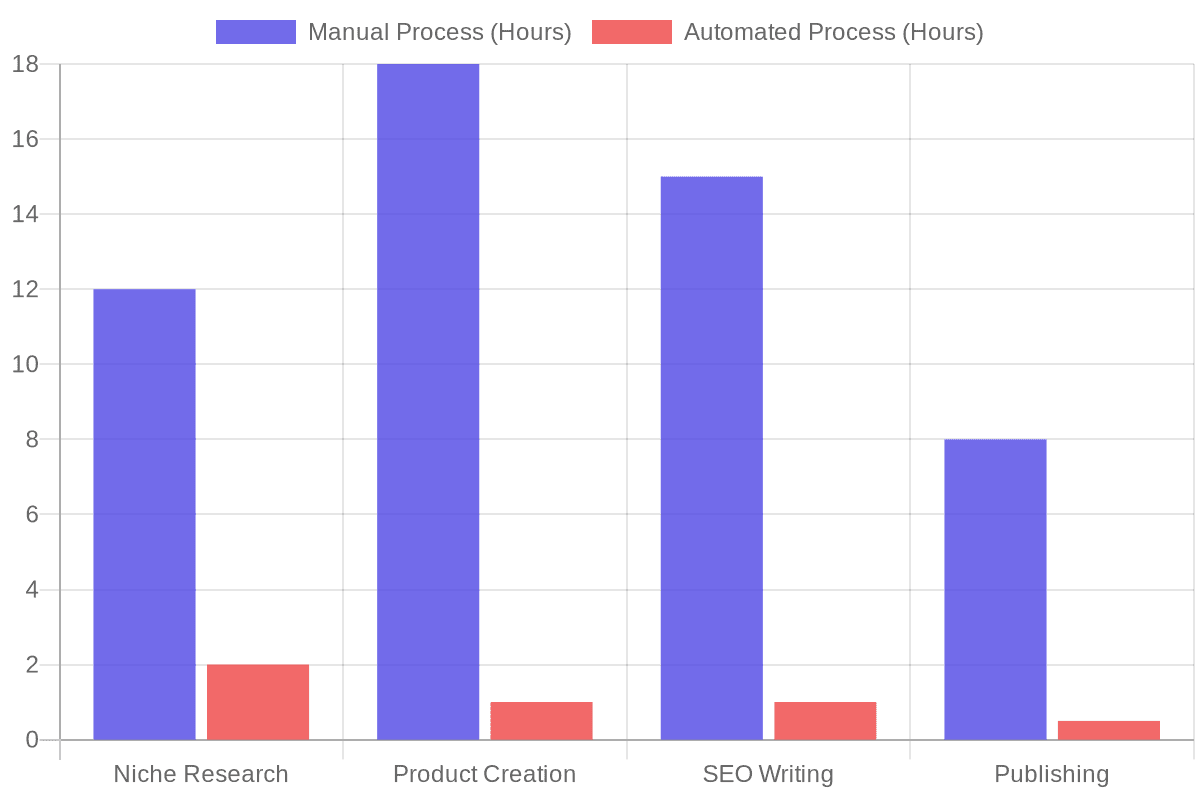
Manual uploading is the enemy of speed. Creating a single product listing involves writing a title, drafting a description, researching 13 tags, adjusting pricing, and creating mockups. Doing this for one item takes about 20 minutes. Doing it for 100 items takes over 33 hours of mind-numbing work. This is where most beginners quit.
Finding Your Profitable Print-on-Demand Niche
A common mistake new sellers make is trying to sell everything to everyone. If you open a shop called "Bob's Cool Shirts" and sell generic designs about coffee, dogs, and fitness, you will get lost in a sea of millions of similar products. You need to narrow your focus.

The Power of Micro-Niches
The riches are in the micro-niches. Instead of targeting "dog lovers", target "introverted golden retriever moms who love reading". The audience is smaller, but they are incredibly passionate and ready to buy. When a shopper sees a product that speaks directly to their highly specific identity, price becomes secondary. They feel understood, and they click the buy button.
To find these niches, you need to look at cross-sections of interests. Combine a profession with a hobby, or a pet breed with a specific aesthetic. For example, "goth gardening" or "retro roller skating nurse". These combinations create unique products that have zero direct competition.
Validating Your Ideas with Data
Do not guess what people want to buy. Use data to validate your ideas before you spend time creating designs. Look at the search bar on the marketplace. Start typing your niche idea and see what auto-suggests. These auto-suggestions are actual phrases real buyers are typing right now.
You should also analyze the competition. If you search for a phrase and see 500,000 results, it will be very hard for a new shop to rank on the first page. If you see 2,000 to 10,000 results, you have found a sweet spot. There is enough demand to generate sales, but not so much competition that you are invisible. For a complete strategy on finding these golden opportunities, check out The 2026 Etsy Print on Demand Niche Research Guide.
Setting Up Your Store for Success
Your storefront is your digital real estate. If it looks amateurish, incomplete, or confusing, potential buyers will click away and buy from a competitor. Building trust is the most critical part of converting a visitor into a customer.
The Anatomy of a Trusted Shop
First impressions matter. You need a high-quality shop banner and a professional logo. These do not need to be expensive or overly complicated, but they must be cohesive and reflect the vibe of your target niche. If you sell minimalist, eco-friendly tote bags, your branding should feature clean lines and earth tones.
Next, you must fill out your "About" section. Buyers on this platform care about the story behind the shop. They want to support small business owners, not faceless corporations. Write a genuine paragraph about why you started the shop and what your creative process looks like.
Shop policies are equally important. Clear rules regarding shipping times, returns, and exchanges protect you from difficult customers and give honest buyers peace of mind. Make sure you clearly state that because your items are made to order, you do not accept returns for buyer's remorse, but you will always replace defective items.
Overcoming the Launch Barrier
The actual process of opening the shop, configuring payment gateways, and getting the first listings live is overwhelmingly technical for many creative people. It is a maze of settings and requirements.
Does all of this feel overwhelming? You don't have to start from scratch. With Learn more about Store Setup, our expert team sets up your Etsy store, lists your first 10 products, and optimizes everything for SEO. This service is included FREE with annual Starter and Professional plans!
If you prefer to handle the technical details yourself, you can follow our comprehensive walkthrough: How to Open an Etsy Shop Step by Step: The Complete 2026 Guide.
Creating Products That Actually Sell
Having a beautifully set up shop means nothing if your products do not appeal to buyers. Product creation is a two-part equation: the design itself and how that design is presented through imagery.
Sourcing High-Quality Designs
You do not need to be a professional graphic designer to succeed. Many top sellers outsource their design work or use pre-made commercial assets. However, using the exact same generic graphics as thousands of other sellers will hurt your business.
Staring at a blank screen wondering what to create is a massive roadblock. This creative block can stall your business for weeks. Instead of struggling with complicated design software, you need access to proven, high-converting assets.
This is where an intelligent automation system customized for Etsy sellers changes the game. Listybox's Artwork Gallery gives you access to over 100,000 data-driven, single-use designs. You do not have to guess what will sell; you simply browse a gallery of professional artwork, select a piece, and apply it to a product. Because the designs are single-use, you never have to worry about selling the exact same item as a competitor down the street.
The Power of Lifestyle Mockups
Your main product photo is the single most important factor in whether a customer clicks on your listing. If you use the standard, flat, white-background mockups provided by basic print providers, you will look like an amateur dropshipper.
Buyers want to visualize how the product fits into their life. They want to see the t-shirt worn by a smiling person in a coffee shop, or the canvas art hanging in a modern, sunlit living room. These are called lifestyle mockups, and they are proven to increase click-through rates dramatically.
Always use a lifestyle image as your primary thumbnail, and include a flat-lay image showing the full, uncropped design as your second or third photo for clarity.
Creating these lifestyle images used to require expensive software or monthly subscriptions to mockup websites. Now, Listybox's ListyStyle feature acts as your personal photographer. It analyzes your design and your target audience, then generates hundreds of unique, hyper-realistic lifestyle photos. You get professional branding instantly, which allows you to charge premium prices and build a highly defensible brand identity.
Mastering Etsy SEO and Getting Found
Search Engine Optimization (SEO) is how you tell the algorithm what you are selling so it can show your products to the right buyers. If your SEO is poor, your shop will be invisible, no matter how beautiful your designs are.
Decoding the Search Algorithm
The algorithm looks at a few key areas to determine where your product should rank: your title, your 13 tags, your item attributes, and your shop's overall conversion rate. The goal is to match the exact words a buyer types into the search bar with the words in your listing.
Many beginners make the mistake of using short, generic keywords. If you sell a floral coffee mug and your title is just "Floral Mug", you are competing against millions of items. Instead, you need to use long-tail keywords. A long-tail keyword is a highly specific phrase, such as "Personalized Daisy Coffee Mug for Teacher Appreciation Gift".
To learn the exact formulas for structuring these phrases, read our Etsy Listing SEO Optimization Step by Step Guide: Rank Higher in 2026. It is also highly recommended to review Etsy's official Seller Handbook to understand their baseline requirements.
The Pain of Manual Keyword Research
Doing this research by hand is exhausting. You have to cross-reference search volumes, check competitor tags, and carefully craft titles that sound natural to humans while satisfying the algorithm. It can take hours just to optimize a handful of listings.
Listybox's Magic Wand eliminates this entire headache. With a single click, Listybox's fine-tuned AI engine built specifically for Etsy analyzes the top-selling products in your niche. It automatically writes SEO-optimized titles, generates all 13 highly relevant tags, and crafts a sales-focused product description. You save hours of tedious research and get better visibility than competitors who are still guessing which keywords to use.
Developing a Bulletproof Pricing Strategy
Pricing your items incorrectly is the fastest way to kill your business. If you price too high, you get no sales. If you price too low, you make sales but lose money on every transaction after fees are deducted.
Calculating Your True Costs
Before you set a retail price, you must know your exact costs. This includes the base cost of the physical product, the cost of printing, the shipping fee charged by the manufacturer, and the marketplace transaction fees.
Many sellers forget to factor in the listing fee and the payment processing fee. If a t-shirt costs you $12 to print and $4 to ship, your base cost is $16. If you sell it for $20, after marketplace fees, you might actually be losing 50 cents per sale. You must aim for a healthy profit margin of at least 30% to 40% to ensure your business is sustainable and leaves room for advertising.
The Psychology of Pricing
Buyers perceive price as an indicator of quality. If your shop looks professional and you use high-quality lifestyle mockups, you should not be the cheapest option on the market. Competing on price is a race to the bottom that you cannot win against massive overseas factories.
Instead, position your brand as a premium option. Price your items slightly higher than the average, and occasionally run a small 10% or 15% off sale. This creates urgency and makes the buyer feel like they are getting a great deal on a premium product. For a deeper breakdown of these formulas, review our Etsy Pricing Strategy for POD Profit in 2026: The Formula That Actually Works.

Fulfillment and Order Management: The Silent Business Killer
Getting your first sale is an incredible feeling. The "cha-ching" notification on your phone is pure joy. But as your shop grows, that sound can quickly become a source of anxiety if you do not have the right systems in place.
The Manual Processing Trap
When you receive an order without automation, you have to manually copy the customer's name, address, and product details. Then, you have to log into your print provider's website, paste all that information, pay for the order, and wait for it to ship. Once it ships, you have to copy the tracking number, go back to your shop, mark the order as complete, and paste the tracking number for the customer.
Doing this for one order takes five minutes. During the holiday rush, if you get 50 orders a day, you are spending over four hours a day just doing administrative data entry. This leaves you no time to design new products or grow your business. Human error also creeps in; pasting the wrong zip code means a lost package, a refund, and a negative review.
True Passive Income Through Automation
A business is only truly passive if it can run without your daily intervention. You need a system that acts as your personal operations manager, handling the logistics while you focus on the creative strategy.
Listybox's Zero-Touch Fulfillment solves this completely. When an order comes in, the system automatically detects it, routes it to the best-performing manufacturer, and sends all the necessary details. When the item ships, it retrieves the tracking number, automatically closes the order on your dashboard, and notifies the customer. You literally do nothing but collect the profit.
Start your free trial - no credit card required to see how this automation can give you your time back.
Scaling Your Passive Income Stream
Once you have a functional, automated shop generating consistent sales, the final step is scaling. Scaling means taking what works and multiplying it.
Expanding Your Product Lines
If you have a winning design on a t-shirt, you should not stop there. That same design could be a massive hit on a coffee mug, a tote bag, or a hoodie. However, manually placing that design onto 20 different products and creating 20 new listings takes days of work.
To scale properly, you need the ability to multiply your creative assets instantly. By using intelligent batch creation tools, you can take one winning design and push it to 50 different products in less than a minute. This builds a massive, diverse product catalog that captures different types of buyers.
Catching Trends Before They Peak
The most profitable sellers do not just react to trends; they anticipate them. They monitor social media, news outlets, and pop culture to identify rising topics before they become saturated on the marketplace.
By the time you see a trend heavily featured on the front page of a marketplace, it is usually too late to enter. You need tools that scan for these signals early, allowing you to be the first to market. Being first means you capture the initial wave of high-intent buyers, securing strong reviews and organic ranking before the copycats arrive.
Conclusion
Starting a successful online shop in 2026 requires a different approach than it did a decade ago. The days of manual data entry, guessing at keywords, and struggling with generic mockups are over. To build a sustainable, profitable business, you must treat your shop like a modern e-commerce brand.
By focusing on high-profit micro-niches, creating stunning lifestyle imagery, and mastering data-driven SEO, you set yourself apart from the amateurs. More importantly, by automating your fulfillment and listing processes, you protect your most valuable asset: your time.
You do not have to be a tech expert or a professional graphic designer to achieve financial freedom. You just need the right systems in place. Stop letting the fear of technical setup and manual labor hold you back from your goals. Take control of your future, automate the heavy lifting, and start building the life you envision today.
Start your free trial - no credit card required and let our intelligent automation system customized for Etsy sellers turn your ideas into a thriving, hands-free business.
Never Miss an Update
Get actionable Etsy tips delivered to your inbox every week. No spam, unsubscribe anytime.