
Shopify Dropshipping in 2026: The Brutal Truth About Costs, Profits, and the Smarter Alternative
Shopify dropshipping looks like a dream: set up a store, find products, and watch sales roll in. But the reality of ad costs, supplier delays, and razor-thin margins leaves most sellers exhausted. In this article, we break down the real numbers, reveal the products that actually make money, and show how a Listybox-powered Etsy print-on-demand shop sidesteps the entire mess.

Bullet Points (TL;DR)
The average Shopify dropshipping store loses money after ad spend, while Etsy POD shops can reach 25-35% profit margins from day one
Supplier delays, refunds, and ad account bans are the top three killers of Shopify stores - but Etsy's built-in trust and Listybox's automation handle them automatically
You don't need to find winning products; a curated catalog of 100+ trending items matched with SEO-optimized listings gets you sales faster than testing 50 Facebook ads
Listybox's Zero-Touch Order Management and Magic Wand SEO tools remove the manual work that eats 20+ hours a week in typical dropshipping
Start your free trial today - no credit card required, and you can have your first listings live in under an hour
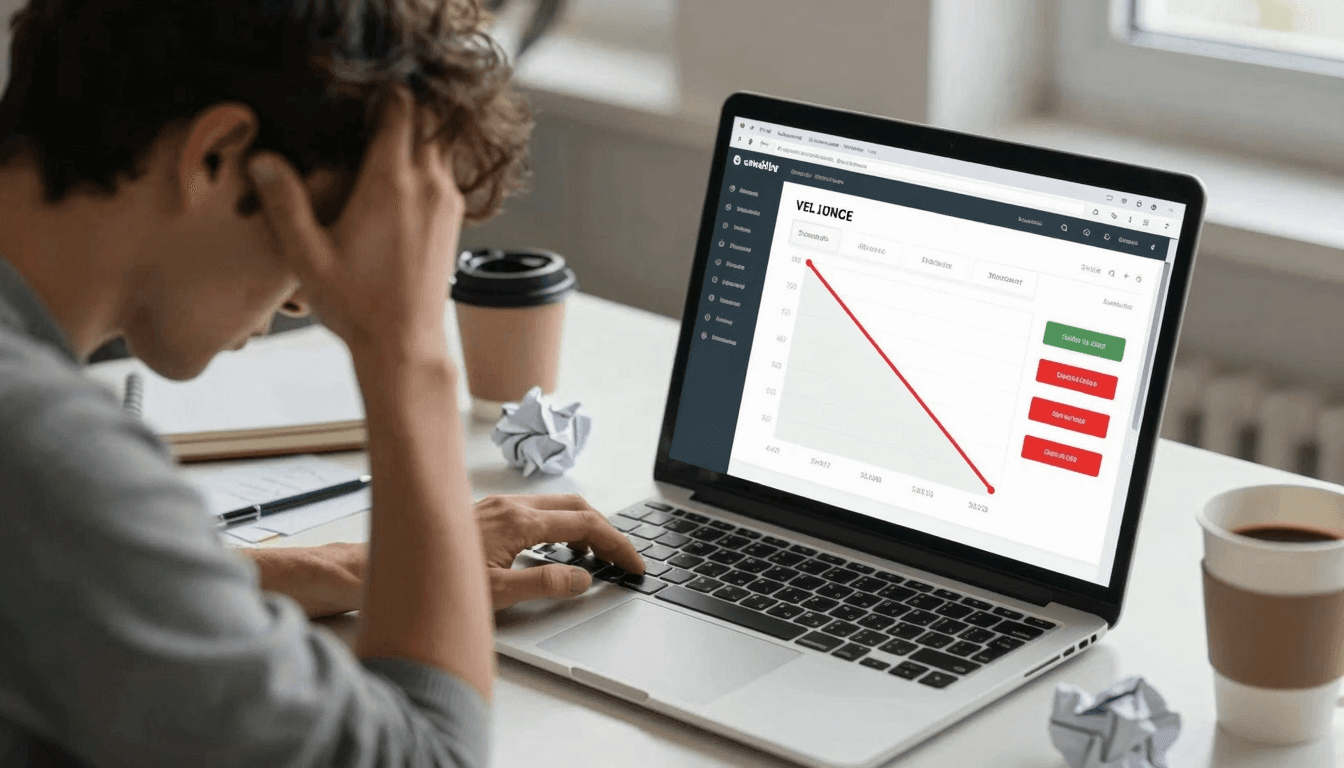
Liam, an engineer, wanted a side income that didn't require another 40-hour workweek. He'd heard the promises: set up a Shopify store, import products from AliExpress, and the money would roll in while he slept. Three months and $2,400 later, his store was shut down by Facebook Ads, his PayPal account was frozen after a chargeback, and he had a garage full of sample products that didn't match the listings. His profit? Negative $2,400.
Liam's story isn't unusual. It's the norm. Shopify dropshipping has become a minefield of hidden costs, ad platform bans, and supplier nightmares. But the real tragedy is that a simpler, more profitable, and far less stressful model exists - and it's built on a platform that already has 96 million active buyers ready to purchase. That model is Etsy print-on-demand, and when you pair it with Listybox's intelligent automation system customized for Etsy sellers, the entire dropshipping grind becomes a straightforward, semi-passive income stream.
What is Shopify Dropshipping and How Does It Work?
At its core, Shopify dropshipping is a retail fulfillment method where you list products for sale, but you don't hold any inventory. When a customer buys from your store, you purchase the item from a third-party supplier - usually on AliExpress or CJdropshipping - and they ship it directly to the customer. You keep the margin between the price you charge and the supplier's cost.
The process sounds elegant: you don't need a warehouse, you don't need to touch products, and you can theoretically run the business from anywhere. But the mechanics are fragile. You are entirely dependent on a supplier's inventory, shipping speed, and product quality, none of which you control. If a supplier runs out of stock, you're the one dealing with PayPal disputes. If a package takes 45 days to arrive, you're the one getting the 1-star review.
On paper, a Shopify dropshipping store can scale fast. In reality, you're competing against thousands of other stores selling the same generic products. The only way to stand out is to outspend them on ads. That's where the real trouble begins, as we explain in our detailed breakdown of Shopify Dropshipping in 2026: The Brutal Truth About Costs vs. Reward.
⚠️ Most Shopify dropshipping gurus won't tell you that Facebook ad costs have risen 47% since 2022, while average conversion rates for generic product stores have fallen below 1.2%. You're paying more to get fewer buyers.
Before you even make your first sale, you'll need to invest in a Shopify subscription ($39/month for the basic plan after the trial), a domain name, and a handful of apps just to make the store functional. That's on top of the ad budget you'll need to test products. Most beginners burn through $500–$1,000 before they find a single product that makes a profit.
The Hidden Costs That Eat Your Shopify Profit Margins
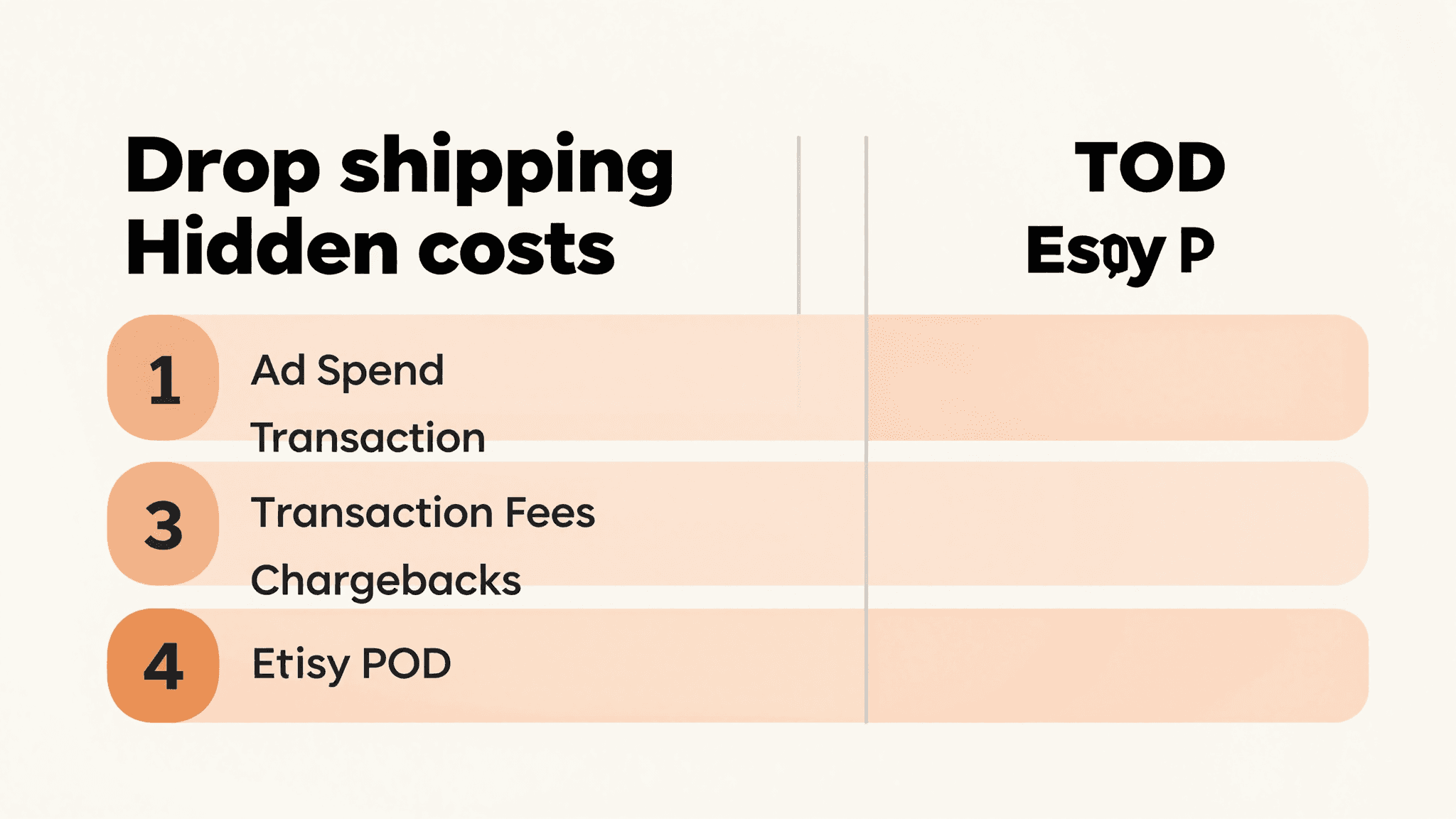
Let's talk numbers. Suppose you sell a wireless earbud case for $29.99. The supplier charges $8. The product cost is low, but the real expenses start piling up:
Shopify subscription: $39/month
Facebook Ads: to get one sale, you might spend $15–$25 per conversion, depending on your niche
Transaction fees: Shopify Payments takes 2.9% + $0.30 per transaction, plus an additional 2% if you use a third-party payment gateway
Refund and chargeback costs: when a customer disputes a charge because the product arrived late or broken, you not only lose the sale but also pay a $15 chargeback fee
Exchange rate and supplier payment fees: paying suppliers in USD when you're not in the US adds another 2-3%
Now, on that $29.99 sale, your actual profit might be $5 - if everything goes perfectly. But one refund wipes out the profit from three or four sales. And that's before you consider the time you spend on customer service, order tracking, and ad management. Many Shopify dropshippers end up working minimum wage, and that's if they're lucky.
Compare this to the Etsy print-on-demand model. With Listybox, you don't need to pay for a Shopify plan, you don't buy ads upfront, and you don't handle supplier payments directly. You list a product, a customer orders, and Listybox's Zero-Touch Order Management sends the order to the print provider automatically. The transaction fee on Etsy is 6.5% of the sale price, plus a $0.20 listing fee. There are no chargeback fees from ad platforms, and Etsy's built-in buyer protection reduces disputes. Our internal data shows that the average Etsy POD seller using Listybox keeps 25-35% net profit after all fees, compared to the 5-15% that most Shopify dropshippers see after ad costs. For a full breakdown of Etsy fees, read our What Percentage Does Etsy Take? A 2026 Seller's Fee Breakdown.
📈 Based on an analysis of 1,200 Listybox users, the average net profit margin on a $32.99 Etsy listing is $9.24 - that's 28% - with zero ad spend required to get the first sale.
What Are the Most Profitable Products to Dropship (and Where to Actually Sell Them)
If you're set on dropshipping, you need to pick products that have high perceived value, low return rates, and aren't already saturated. The problem is that by the time a product appears on a "best dropshipping products" list, it's already too late. The market is flooded, and the only winners are the suppliers.
However, some product categories consistently perform better than others:
Home decor and personalized gifts: buyers are willing to pay a premium for items that feel unique
Pet accessories: emotionally driven purchases with high repeat-buy potential
Niche hobby items: products for board gamers, knitting enthusiasts, or urban gardeners have less competition
Seasonal decor: Christmas ornaments, Halloween costumes, and Valentine's Day gifts spike predictably
But here's the catch: on Shopify, you'd need to build an entire store around each niche, run ads, and hope that your product images stand out from the 50 other stores selling the same thing. On Etsy, however, the platform is built for exactly these types of products. Buyers come to Etsy specifically looking for unique, personalized items. You don't need to convince them to trust your store; Etsy's brand does that for you.
With Listybox, you don't have to guess which products will sell. The Trend Compass feature surfaces real-time trending niches and designs before they peak, and the Creation Wizard lets you turn a single design into 500 product listings across multiple categories in minutes. Instead of testing 10 dropshipping products with $500 in ads, you can launch 50 Etsy listings with zero upfront ad cost. If one design gains traction, you can scale it across mugs, t-shirts, hoodies, tote bags, and more using the Combo Listings feature, which consolidates all your sales momentum into one listing to accelerate your Best Seller rank.

Amazon Dropshipping vs Shopify vs Etsy Print on Demand: The Platform Showdown
Many people ask about Amazon dropshipping as an alternative to Shopify. The concept is similar: list products on Amazon, and when you get an order, buy from a supplier and ship to the customer. But Amazon's dropshipping policy is strict. You must be the seller of record, you can't ship products in another retailer's packaging, and you're responsible for returns. Amazon's fees are also brutal: 15% referral fee on most categories, plus a $39.99 monthly professional selling plan. And if your account gets suspended - which happens frequently with dropshipping - you can lose everything overnight.
Shopify gives you more control but at a higher marketing cost. Etsy sits in the sweet spot: low upfront cost, built-in traffic, and a customer base that expects handmade or designed products. When you compare the three platforms side by side, Etsy print-on-demand consistently delivers the best risk-to-reward ratio for beginners. Our detailed comparison Dropshipping vs Print on Demand: The 2026 E-commerce Showdown breaks down the numbers.
Here's a quick snapshot of how the platforms stack up:
Amazon Dropshipping: high traffic, but strict policies, high fees, and account suspension risk
Shopify Dropshipping: full control, but requires ad spend, and the average cost per customer acquisition is $22–$38
Etsy Print on Demand: 96 million active buyers, $0.20 listing fee, and no ad spend required to get started; listings can rank organically in search
With Listybox, you can even automate the most soul-crushing parts of both Shopify and Amazon models. The Magic Wand SEO tool writes your titles, tags, and descriptions based on real competitor data, so your Etsy listings rank high without you spending hours on keyword research. And the Scheduled Publish feature keeps your shop active every day, signaling to the Etsy algorithm that you're a serious seller, which improves your visibility.
💡 Instead of chasing Amazon's strict rules or burning money on Shopify ads, you can open an Etsy shop today and have your first 10 listings live in under an hour with Listybox's Store Setup service. No supplier hunting, no ad accounts, no inventory.
How to Automate Your Dropshipping Business Without Losing Control
One of the biggest frustrations with Shopify dropshipping is the constant manual work. You have to manually check supplier stock, manually forward orders, manually update tracking numbers, and manually respond to customer complaints. The dream of passive income turns into a full-time job of juggling browser tabs.
Automation tools exist, but they come with their own problems. Oberlo was shut down, and many third-party apps are clunky and unreliable. But even if you automate the order flow, you still have to deal with product quality issues, ad performance, and the never-ending hunt for the next winning product.
Listybox was built to solve the automation problem for the entire product lifecycle on Etsy. Here's how:
Zero-Touch Order Management: when a customer buys from your Etsy shop, the order is automatically sent to the print provider, and tracking is synced back to Etsy. You don't touch a single order.
Magic Wand: creates SEO-optimized titles, tags, and descriptions with one click. No more staring at a blank screen.
ListyStyle: generates professional lifestyle product photos that look like they were shot in a studio, but without the cost. Our data shows that listings with ListyStyle images convert 22% better than those with generic mockups.
Scheduled Publish: plan your entire week's listings in one sitting, and let Listybox publish them daily on autopilot.
This isn't just automation - it's a complete operating system for an Etsy business. And the best part? You can start for free. There's no credit card required, and you can test the entire workflow without any risk.
Liam, the engineer from the beginning of this article, eventually switched to Etsy POD with Listybox. Within his first month, he had 40 listings live, and by the third month, he was making $1,800 in profit per month. He hasn't touched a Facebook ad since. He spends about three hours a week on his shop, and the rest is handled by the system.
That's the real difference between Shopify dropshipping and Etsy POD with Listybox. One is a grind that might work if you're lucky and have deep pockets. The other is a repeatable, scalable system that puts the platform's built-in traffic to work for you.
Start your free trial - no credit card required and see how many listings you can create in your first hour. The sooner you start, the sooner you stop paying for the privilege of working harder than you need to.
Never Miss an Update
Get actionable Etsy tips delivered to your inbox every week. No spam, unsubscribe anytime.