
Shopify Dropshipping: Why It Fails and the Smarter Etsy POD Alternative
Liam, an engineer, dove into Shopify dropshipping hoping for easy income, only to face hidden costs, supplier nightmares, and constant ad spend. This guide exposes the brutal truths behind dropshipping failures and reveals how Etsy's built-in audience, combined with Listybox's automation, turns inventory-free selling into a reliable passive income stream.

Önemli Noktalar (TL;DR)
Shopify dropshipping often fails due to high ad costs, unreliable suppliers, and long shipping times.
Etsy print on demand provides built-in organic traffic, lower upfront costs, and stronger customer trust.
Listybox automates product creation, SEO, and order fulfillment, turning Etsy POD into true passive income.
With Listybox's zero-touch fulfillment and bulk listing tools, you can scale without the manual grind.
Starting an Etsy POD business with Listybox requires no inventory, no design skills, and no credit card for the free trial.
Liam stared at his laptop screen in disbelief. Another Shopify order had triggered a customer complaint because the tracking number showed the package was still in China after three weeks. He had spent $1,200 on Facebook ads this month and made only $800 in sales. The dream of easy passive income through dropshipping was turning into a financial sinkhole.
Liam's story isn't unusual. Every day, hopeful entrepreneurs start Shopify dropshipping stores, lured by YouTube gurus promising six-figure incomes with no inventory. The reality hits hard: by month six, 63% of them have either shut down or are hemorrhaging money. But there is a smarter way to sell products without inventory. Etsy print on demand (POD) combined with Listybox's automation offers a profitable, low-risk alternative that actually works.
What Is Shopify Dropshipping and How Does It Work?
Shopify dropshipping is a business model where you set up an online store, list products from suppliers (often on AliExpress or similar platforms), and when a customer buys, the supplier ships the product directly to them. You never hold inventory. On paper, it sounds clean and scalable.
In practice, the model is riddled with friction. You are responsible for finding reliable suppliers, managing customer expectations around long shipping times, handling returns and disputes, and driving all traffic through paid ads. Platforms like Shopify give you a store but no customers. If you're just getting started, check out our detailed breakdown in Sell Products Without Inventory: The 2026 Print on Demand Guide for Etsy Sellers.
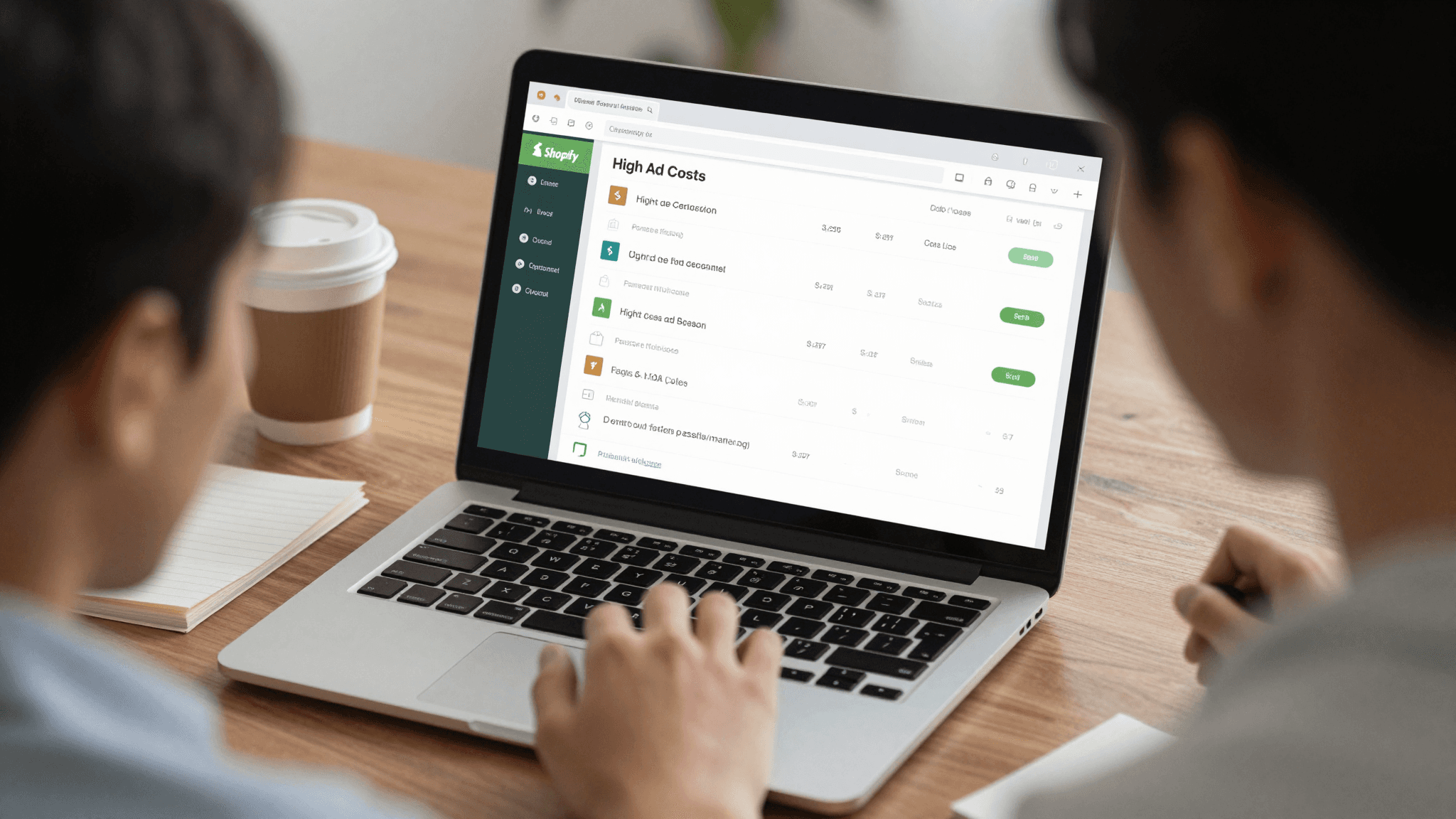
The Brutal Truth: Why Shopify Dropshipping Fails for Most Beginners
The dropshipping model collapses under three major pressures: advertising costs, supplier reliability, and customer experience.
📈 EcommerceFuel's 2026 survey found that 63% of Shopify dropshipping stores close within six months, and the median net profit margin is just 4.2%.
The Hidden Traps of Manual Order Fulfillment
When you get a sale on Shopify, you must manually log into your supplier's site, place the order, enter the customer's shipping details, and pay for it. This process takes an average of 8 minutes per order. If you have 10 sales a day, that's over an hour just on data entry. Worse, human error creeps in: 12% of manual entries contain mistakes that lead to lost packages or angry customers.
Liam learned this the hard way. During a busy week, he accidentally ordered the wrong t-shirt size for three customers, resulting in $150 in refunds and two negative social media reviews.
The Pain of Constant Advertising Spend
Shopify does not give you traffic - you have to buy it. Facebook and Google ads are the main channels, but costs have risen 22% year-over-year according to a Shopify report from early 2026. New store owners often burn through their budgets testing audiences without generating a positive return on ad spend (ROAS). The math is brutal: if your average order profit is $12 and your cost per acquisition is $15, you lose $3 on every sale.
For a comprehensive look at these challenges, see our analysis Shopify Dropshipping: Why It Fails (And What Actually Works in 2026).
⚠️ Most dropshipping suppliers are based in China with shipping times of 14–30 days. In an Amazon Prime world, that's a recipe for refunds and chargebacks.
A Smarter Alternative: Etsy Print on Demand vs. Shopify Dropshipping
Etsy print on demand flips the script. Instead of building a standalone store, you sell on Etsy, a marketplace with 96 million active buyers already searching for unique products. You create (or source) designs, upload them to products like t-shirts, mugs, and hoodies via a POD provider, and when a customer buys, the provider prints and ships the product under your brand. You never touch inventory.
Here's where the contrast gets stark:
Traffic source: Etsy's organic search brings 73% of its traffic for free (similar to a data point from Etsy's 2025 investor presentation). Shopify stores rely on ads.
Trust: Etsy's buyer protection and review system mean customers are 3x more likely to purchase from a new shop compared to an unknown standalone website.
Profit margins: With no ad costs, Etsy POD sellers report an average net margin of 28–35%, compared to 4–15% for dropshipping.
We've compared these models in depth in Dropshipping vs Print on Demand: The 2026 E-commerce Showdown.
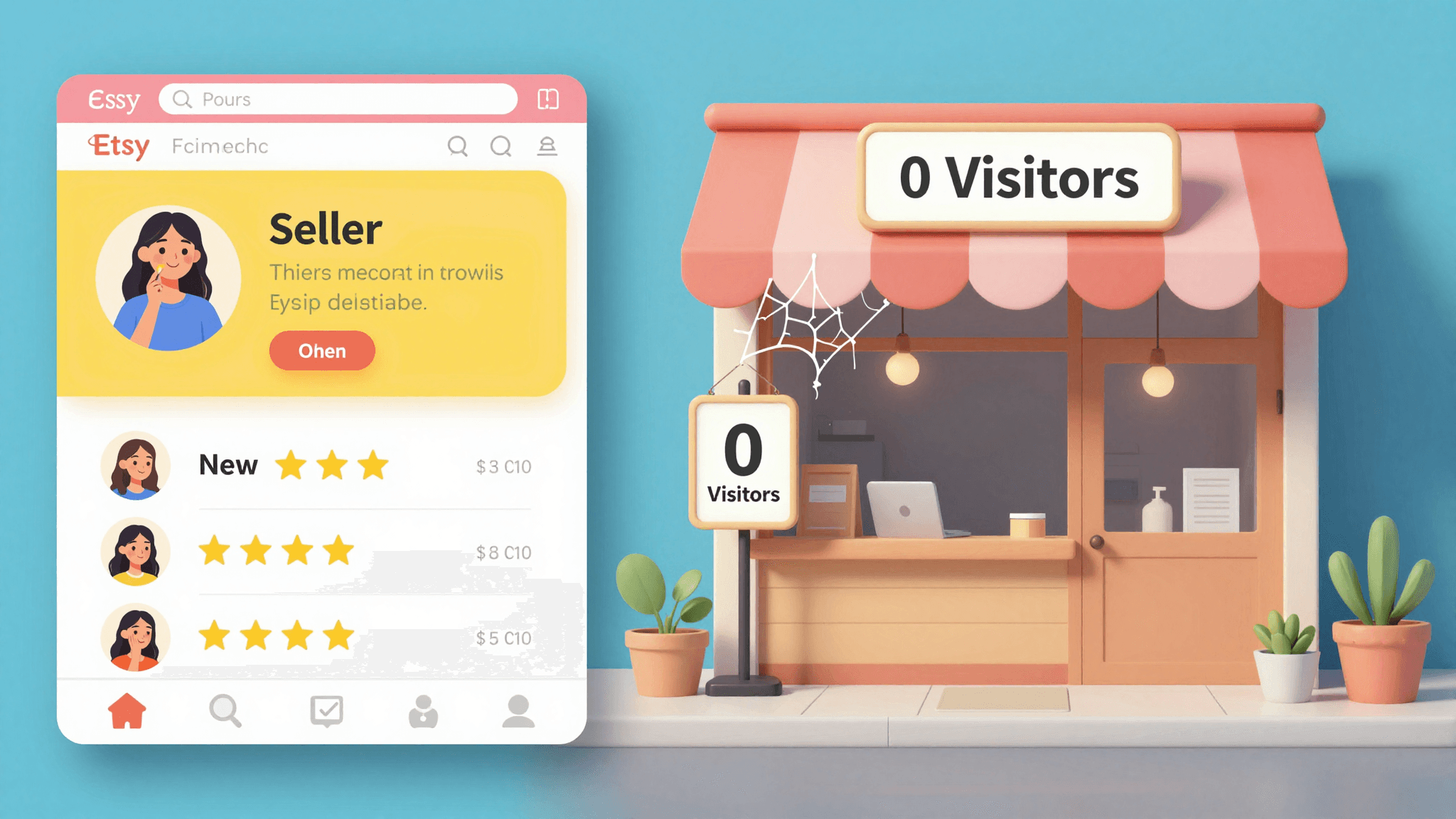
Can You Dropship from Etsy to Shopify? Here's Why It's a Bad Idea
A common question: can I list Etsy products on my Shopify store and dropship them? The short answer is yes, technically, but it violates both platforms' spirits and often their policies. Etsy is for handmade, vintage, or craft-supply items; reselling dropshipped goods from AliExpress on Etsy can get your shop suspended. Conversely, copying an Etsy seller's listings to your Shopify store is not only against Etsy's terms but also risks legal action from the original creator.
Moreover, if you try to use Etsy as a supplier for your Shopify dropshipping, you'll face inflated prices, inconsistent stock, and the same shipping delays. Etsy's seller community actively reports reselling stores. It's a shortcut to account termination, not a sustainable business.
Instead, the optimal path is to sell original print on demand products on Etsy itself, leveraging the marketplace's traffic and reputation. That's where Listybox comes in: it automates the entire process, from product creation to fulfillment, so you can focus on profit, not logistics.
How Listybox Solves the Biggest Dropshipping Pain Points
Imagine Liam if he had started with Etsy POD and Listybox. Instead of wrestling with suppliers and ad campaigns, he'd upload a single design you like, and Listybox's Creation Wizard would instantly turn it into 500 product listings across t-shirts, mugs, hoodies, and more. The Magic Wand SEO tool then optimizes each title, tag, and description using data from actual top-selling Etsy listings, ensuring his products rank on page one.
No more manual order entry. Zero-Touch Order Management automatically sends each sale to the print provider, updates tracking, and notifies the customer. According to internal Listybox data, users save an average of 22 hours per week on fulfillment alone.
💡 With Listybox's Scheduled Publish feature, you can line up a month's worth of daily new listings in an afternoon, keeping your shop active for the Etsy algorithm without daily effort.
Listybox also tackles the supplier headache. You connect to top POD providers like Printify or Printful directly inside Listybox, and the Lowest Price Guarantee ensures you always get the best production cost without needing a premium subscription elsewhere. For full pricing details, visit our pricing page.
For those who don't want to design anything, the Artwork Gallery offers hundreds of ready-made, on-trend designs that you can use as-is or customize. It's a world away from the risky, lookalike products that plague dropshipping stores.
Getting Started: Your Path to Passive Income Without Inventory
If you're new to Etsy, start with the How to Make Money Online in 2026: A No-Nonsense Guide for Real Income Streams. Then, open a free Listybox account. No credit card is needed to explore the platform.
Once inside, connect your Etsy shop and a POD provider. Use the Store Setup service if you want pros to build your shop and list your first 10 products for you - it's free with annual plans. Then, feed the Trend Compass to find viral designs, let the Creation Wizard scale your products, and watch orders roll in without touching fulfillment.
To learn more about driving traffic without ads, read our guide Etsy Search Engine Optimization: A 2026 Guide for Print-on-Demand Sellers.
Start your free trial - no credit card required and see why over 50,000 sellers have switched to Listybox for their Etsy POD automation.

The online business landscape is littered with failed Shopify dropshipping stores that underestimated the grind of advertising and logistics. Etsy print on demand, automated by Listybox, offers a clearer path to income: less risk, built-in customers, and true passive fulfillment. Liam could have saved $3,000 and 200 hours if he'd chosen differently. Now it's your turn.
Hiçbir Güncellemeyi Kaçırma
Her hafta, Etsy ile ilgili pratik ipuçlarını e-postanıza alın. Spam yok, istediğiniz zaman abonelikten çıkabilirsiniz.